


 Call Us
A Sydney business considering solar above 100kW needs to assess both the building’s electrical system and the electricity network connection before locking in a design. Ausgrid or Endeavour Energy may require technical information, export conditions, protection design and connection approval based on the site and proposed equipment. The rooftop array size, inverter capacity, export allowance and eligibility for solar incentives are related but they are not interchangeable.
Why Does Grid Connection Matter More Above 100kW?
Larger commercial solar projects can change how a facility interacts with its local distribution network. A site may generate far more electricity in the middle of the day than it consumes, or the installation could affect existing transformers, protection settings and power quality.
That means network approval can influence the practical system size, equipment and export strategy even if the roof has room for more panels.
MPV Solar’s Commercial Solar for Industrial Buildings explains the general sizing decision. This guide focuses specifically on the electrical connection pathway.
Is 100kW a Network Connection Limit?
No. The number 100kW is often mentioned because it was the historical upper system-size threshold for the Small-scale Renewable Energy Scheme before the October 2026 expansion. It is not a universal grid-connection allowance for every Sydney property.
A network assesses electrical characteristics relevant to its own rules, including inverters, connection voltage, export arrangements and network conditions. Incentive rules may refer to solar PV capacity and certificate eligibility. The two decisions need separate checks.
What Is the Difference Between Panel Capacity, Inverter Capacity and Export Limits?
Solar panel capacity (kW DC): The nameplate capacity of the installed panel array.
Inverter capacity (kW or kVA AC): The equipment’s output rating, which influences the maximum power delivered into the site’s AC electrical system.
Export limit: The power the site is permitted to send into the public network, subject to its connection agreement and controls.
A business can generate electricity onsite for internal loads even when its export allowance is limited, provided the approved system can control exports appropriately. But a zero-export design still needs technical assessment and must not be assumed to avoid approval obligations.
What Does Ausgrid Check for a Commercial Solar Connection?
The requirements depend on the specific connection. Ausgrid’s public solar connection information distinguishes simpler applications from those needing technical assessment. Larger or more complex projects need earlier planning and more supporting information than a small complying domestic system.
Potential considerations include the point of connection, total inverter nameplate capacity, network capacity, export proposal, protection and commissioning evidence. The relevant Ausgrid pathway should be confirmed for the site’s actual design rather than inferred from a general threshold.
What About Endeavour Energy?
Endeavour Energy also requires a suitable connection application and technical review where applicable. It directs customers to use an experienced licensed installer to manage design and the application process.
A site in Parramatta or Greater Western Sydney may be under a different network than one on the Lower North Shore. Check the distributor responsible for the property before making assumptions about approval stages or export capacity.
What Electrical Infrastructure Might Need Upgrading?
The building’s switchboard, main switch, protection systems, cabling and metering may have been designed for a different electrical load or generation profile. Depending on the project, engineers may need to examine transformer capacity, the electrical supply, protection coordination and any high-voltage infrastructure.
Some facilities can integrate solar with relatively modest electrical works. Others may require substantial changes. A generic “price per kW” cannot reliably account for these site-specific works.
MPV Solar would review this information before confirming the proposed Commercial Solar configuration.
Does a Business Need Permission to Export Solar Electricity?
The site’s approved connection conditions determine the export arrangement. Solar exports may be limited or controlled, and technical conditions can vary with the size, network and connection point.
For some sites, using most of the electricity onsite can make a larger system commercially attractive even with modest export permission. For other sites, poor daytime demand or strict export conditions may make an oversized array difficult to justify.
This is why MPV Solar combines interval electricity data, expected solar generation and network constraints when reviewing commercial projects.
What Role Does Interval Meter Data Play?
Commercial interval data shows when the business uses energy, not just its total monthly bill. It can reveal weekday peaks, weekend baseloads and shutdown periods that affect solar self-consumption.
For example, a factory that operates only Monday to Friday may export a large proportion of its solar generation on weekends. A refrigeration facility operating every day may have a more constant use for it.
Can Adding a Commercial Battery Help With Export Constraints?
Sometimes. A battery can absorb some surplus solar and discharge later, provided its power rating, usable energy, control scheme and connection approval are suitable. It does not automatically eliminate network constraints or make every proposed system acceptable.
The battery’s financial value should be modelled separately against solar-only operation, tariffs and actual usage. See Commercial Battery Storage Sydney and Commercial Battery Payback & ROI.
What Changed for 100kW–1MW Solar Incentives in October 2026?
The Clean Energy Regulator confirms that eligible mid-scale solar systems installed from 1 October 2026 can fall under the expanded Small-scale Renewable Energy Scheme. Eligible mid-scale projects have a fixed five-year STC deeming period, while applications are expected to open in mid-to-late November. Participants need to consider the appropriate certificate pathway and eligibility requirements.
That change may improve project economics, but does not remove network, electrical or installation-compliance obligations.
How Early Should a Business Begin Connection Planning?
As early as the feasibility stage. Network studies, approval documentation, engineering, switchboard availability and potential augmentation can influence both timing and budget. There is no fixed timeframe that applies to every 100kW, 250kW, 500kW or 1MW project.
Do not sign off a system size solely because of available roof space or a rebate threshold. First establish whether the proposed solar generation and export strategy suit the site.
What Should MPV Solar Assess First?
Useful inputs include a recent electricity bill, 12 months of interval data if available, existing single-line electrical drawings, main switchboard and transformer details, roof plans, current solar equipment, proposed future equipment and the site’s operating hours.
MPV Solar can then examine technical feasibility, connection pathway, preliminary sizing and commercial priorities together. See 250kW Solar System Sydney or 500kW Commercial Solar System for size-specific considerations.
Considering commercial solar over 100kW? Start with the site’s energy data and electrical drawings so MPV Solar can assess grid-connection feasibility before final system design.
Complete Solar Solutions
Solar Installations, Repairs & Cleaning Across Sydney
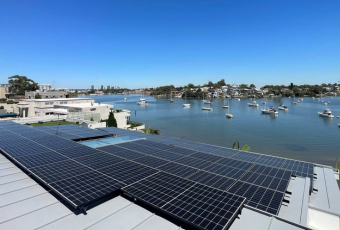
Solar Installations
Professional solar panel installation in Sydney for homes, businesses and strata properties.
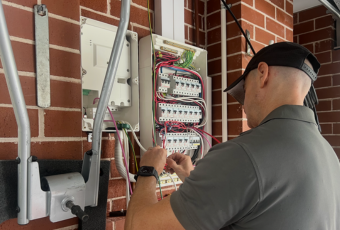
Solar Repairs
Reliable solar repairs in Sydney to fix faults, improve performance and keep your solar system working safely.
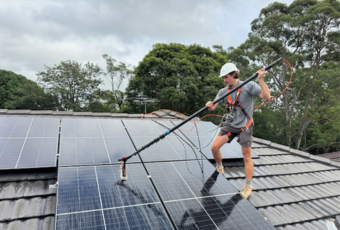
Solar Cleaning
Professional solar panel cleaning in Sydney to help improve efficiency, output and long-term system performance.
Commercial Solar Grid Connections FAQs
Planning a commercial solar installation in Sydney? We answer common questions businesses ask about grid connection approvals, Ausgrid and Endeavour Energy requirements, export limits, system sizing, electrical upgrades and connecting larger commercial solar systems to the grid.
Can a Sydney business install more than 100kW of solar?
Potentially. Feasibility depends on electricity usage, roof and structural conditions, electrical infrastructure and the network’s approval of the proposed connection.
Does 100kW mean the site can export 100kW?
No. Panel size, inverter output and approved export capacity are separate concepts. The export allowance must be confirmed through the network connection process.
Do I need Ausgrid approval for a 250kW solar system?
A grid-connected project of that scale requires the relevant connection assessment and approvals for its Ausgrid site and configuration. Specific technical requirements are determined for the project.
Is Endeavour Energy’s process the same as Ausgrid’s?
Not necessarily. Both require compliant connections, but processes, technical studies and conditions can differ. Use the distributor responsible for the site’s location.
Can a zero-export system avoid network approval?
Do not assume so. A zero-export control strategy can affect the application, but a connected generator may still require approval and compliance review.
Will an old commercial switchboard need replacement?
Not always. A detailed electrical inspection and design will establish whether upgrades to protection, cabling, metering, switchgear or the main board are required.
Does a commercial solar battery remove export limits?
No. Storage can absorb some surplus energy but remains subject to equipment, controls and network connection requirements.
Does a 500kW commercial solar system qualify for STCs in 2026?
Eligible mid-scale solar installed from 1 October 2026 can access the expanded SRES, subject to the Clean Energy Regulator’s detailed eligibility and application rules.
How long does a commercial solar connection approval take?
There is no reliable universal timeframe. It depends on the distributor, application completeness, technical studies and whether network works are needed.
What information does MPV Solar need to begin?
Electricity bills, interval data, existing electrical and roof drawings, site operating hours, present solar specifications and planned new loads help establish feasibility.



MPV Solar is committed to providing industry-leading solar energy solutions across Sydney, backed by a proven track record of successfully completing over 5,000 projects. As a family-owned business, we prioritise personalised service and truly value our clients, ensuring that each system is tailored to meet your unique energy needs.
Copyright 2026. All Rights Reserved.
Created by Codex Digital and Yakka Consulting
Get in Touch
MPV Solar
Unit 3, 43-51 College St,
Gladesville NSW 2111
info@mpvgroup.com.au
(02) 9817 0333
Monday – Friday
8:30 – 5:00pm

