Call Us
A Sydney Business Guide to Commercial Solar Panels, Payback, Rebates and Battery Options
With electricity costs continuing to affect business overheads, more companies are searching for commercial solar Sydney, commercial solar panels Sydney, commercial solar cost Sydney, business solar rebates NSW, solar for businesses Sydney, commercial battery storage Sydney and solar ROI for business.
For many businesses, solar is no longer just about sustainability. It is about reducing operating costs, improving cash flow, using roof space more effectively and gaining more control over future electricity expenses.
A well-designed commercial solar system can help your business use solar power during operating hours, reduce grid electricity use and improve long-term return on investment. For some businesses, adding commercial battery storage can also help store excess solar energy, reduce evening grid use, manage peak demand and support EV charging or future energy upgrades.
This guide explains commercial solar costs in Sydney, what affects ROI, what business solar rebates may apply, which system sizes are common, and whether battery storage is worth considering for your business.
Quick Answer: Is Commercial Solar Worth It for Sydney Businesses?
Yes, commercial solar can be worth it for many Sydney businesses, especially businesses that use electricity during the day.
Commercial solar panels usually deliver the strongest return when solar generation matches business operating hours. This is why warehouses, workshops, offices, industrial facilities, retail stores, hospitality venues, medical centres, schools, strata common areas and commercial buildings can be strong candidates for solar.
The more solar power your business uses on-site, the less electricity you need to buy from the grid.
Commercial solar may help your business reduce electricity bills, improve solar ROI, support sustainability goals, lower grid reliance and create a more predictable long-term energy strategy.
The best result depends on correct system sizing, quality components, professional installation, site-specific design and a proper review of your electricity usage.
What Is Commercial Solar?
Commercial solar refers to a solar power system designed for a business, commercial property, strata building, industrial site or organisation.
Unlike a small residential solar system, a commercial solar system is designed around business electricity usage, operating hours, roof space, tariff structure, peak demand, site load, switchboard capacity and future energy needs.
A commercial solar installation may include solar panels, commercial inverters, system monitoring, switchboard integration, export control, commercial battery storage and EV charging infrastructure.
The goal is simple: generate electricity on-site so your business can use less power from the grid.
For most Sydney businesses, the strongest savings come from using solar power directly during the day rather than exporting excess solar back to the grid.
Why Commercial Solar Is a High-Value Opportunity in Sydney
Sydney is well suited to commercial solar because many businesses operate during daylight hours.
That means commercial solar generation often lines up with business energy use.
Offices use power for lighting, air conditioning, computers, servers, lifts and common areas. Warehouses use power for lighting, ventilation, machinery, loading equipment, refrigeration and office spaces. Retail and hospitality venues use power for refrigeration, kitchen equipment, lighting, air conditioning, dishwashing and point-of-sale systems.
The more energy your business uses while the sun is available, the more valuable commercial solar can become.
Commercial solar in Sydney can also help businesses reduce exposure to future electricity price increases, improve environmental performance, support ESG goals, reduce emissions and strengthen their sustainability position with customers, tenants, suppliers and staff.
Commercial Solar Cost Sydney: What Does a Business Solar System Cost?
mercial solar cost in Sydney depends on the size of the system, the type of building, roof access, electrical requirements and installation complexity.
A small commercial solar system for a retail shop, office or workshop may be very different from a large commercial solar installation for a warehouse, factory, strata building or industrial site.
Commercial solar costs are affected by system size, panel quality, inverter capacity, roof material, roof pitch, roof access, switchboard condition, cable runs, export limits, monitoring requirements, installation timing and whether battery storage or EV charging is included.
As a general guide, many Sydney businesses compare commercial solar system sizes such as 30kW, 50kW and 100kW because these are common search and quoting points for small to medium commercial sites.
However, the cheapest commercial solar quote is not always the best value.
A commercial solar system needs to be designed around your actual electricity usage. Poor sizing, cheap components, weak monitoring or rushed installation can reduce performance, savings and long-term reliability.
MPV Solar can assess your site, review your electricity bills and recommend a commercial solar system designed around your business, not just your roof size.
How Much Do Commercial Solar Panels Cost in Sydney in 2026?
There is no single fixed price for commercial solar panels in Sydney because every business site is different.
A 30kW commercial solar system may suit a smaller business, workshop, retail property or office with moderate daytime usage.
A 50kW commercial solar system may suit a larger office, warehouse, hospitality site, medical centre, school, strata common area or commercial building with stronger daytime demand.
A 100kW commercial solar system may suit larger warehouses, industrial sites, manufacturing facilities, cold storage sites, commercial buildings and businesses with substantial daytime electricity consumption.
The final price will depend on your roof, switchboard, inverter setup, energy usage, access requirements and whether additional electrical work is required.
The smarter question is not only “how much does commercial solar cost?”
The better question is: how much can commercial solar save your business each year, and how quickly can the system pay for itself?
A well-designed commercial solar proposal should include expected generation, estimated self-consumption, savings assumptions, rebate treatment, payback period, warranties, monitoring and installation details.
30kW Commercial Solar System Sydney
A 30kW commercial solar system can be a strong option for small to medium businesses with consistent daytime electricity use.
This size may suit retail stores, small warehouses, workshops, offices, medical centres, childcare centres, strata common areas and small hospitality venues.
A 30kW solar system can help offset lighting, air conditioning, refrigeration, equipment, office loads, computers, pumps and other daytime usage.
The key question is whether the business can use enough solar power during the day. If most of the solar energy is used on-site, the return can be stronger. If a large portion is exported, the system may need to be resized or paired with battery storage.
MPV Solar can review your electricity usage and roof space to confirm whether a 30kW commercial solar system is suitable for your Sydney business.
50kW Commercial Solar System Sydney
A 50kW commercial solar system is often considered by businesses with larger roof space and higher daytime energy use.
This size may suit warehouses, offices, retail centres, hospitality venues, strata buildings, workshops, schools, medical centres and light industrial facilities.
A 50kW system can help reduce grid electricity use during operating hours and may provide a strong return when the business has steady daytime demand.
Before installing a 50kW commercial solar system, it is important to review switchboard capacity, roof structure, export limits, network requirements, system monitoring and whether battery storage may be useful now or later.
A 50kW system should be designed around the business load profile, not just the available roof area.
100kW Commercial Solar System Sydney
A 100kW commercial solar system is commonly considered by larger commercial and industrial sites.
This size may suit warehouses, manufacturing facilities, large offices, strata complexes, schools, industrial buildings, cold storage facilities and businesses with high daytime electricity demand.
A 100kW system can offer significant long-term savings, but the design needs to be carefully managed.
The project may involve more detailed electrical review, export control, monitoring, network requirements, installation staging, roof access planning and safety considerations.
Businesses considering 100kW commercial solar should also think about future battery storage, EV charging, fleet electrification and peak demand management.
MPV Solar can help Sydney businesses assess whether a 100kW commercial solar system is the right size for their site.
Business Solar Rebates NSW: What Incentives May Apply?
Businesses in NSW may be able to access solar and battery support depending on the system size, technology and eligibility requirements.
For eligible small-scale solar systems, Small-scale Technology Certificates, known as STCs, may help reduce the upfront cost of installation.
For larger commercial solar systems, Large-scale Generation Certificates, known as LGCs, may be relevant depending on the system size and accreditation pathway.
Eligible business battery installations may also be able to access support through the Cheaper Home Batteries Program where the battery is connected to new or existing rooftop solar and meets the program requirements.
This is why searches for business solar rebates NSW, commercial solar rebates Sydney and commercial battery rebate NSW are increasing.
The correct rebate pathway depends on your system size, battery size, installation requirements, certificate eligibility and whether the project falls into small-scale or large-scale arrangements.
MPV Solar can help explain which rebate or incentive pathway may apply to your commercial solar or commercial battery storage project.
STCs vs LGCs for Commercial Solar
size and scheme requirements.
Smaller eligible systems may receive STCs, which can reduce the upfront cost of installation when assigned through the installer or registered agent.
Larger systems may fall under large-scale arrangements and may be eligible for LGCs if they meet the relevant accreditation requirements.
For business owners, the practical point is this: the rebate pathway affects the quote, paperwork, payback and system design.
Before signing a commercial solar contract, make sure the proposal clearly explains whether STCs or LGCs apply, how the value is treated, and what assumptions have been used in the ROI calculation.
Solar ROI for Business: How Commercial Solar Payback Works
Solar ROI for business depends on how much energy the system generates, how much of that energy the business uses, how much grid electricity costs, and how much the system costs to install.
A business that uses most of its solar power during the day will usually see a stronger return than a business that exports most solar energy back to the grid.
This is because using your own solar power can offset electricity you would otherwise buy from your retailer.
Commercial solar ROI is influenced by daytime energy usage, electricity rates, system size, installation cost, rebate value, feed-in tariffs, maintenance, operating hours, demand charges and whether battery storage is included.
A strong commercial solar ROI starts with a proper review of your energy usage.
MPV Solar can review your electricity bills and site usage to help estimate commercial solar savings, payback and return on investment for your Sydney business.
Why Daytime Energy Use Matters for Commercial Solar ROI
Daytime energy use is one of the biggest factors in commercial solar value.
Solar panels produce power during daylight hours. If your business operates during the day, you may be able to use a large portion of that solar power directly.
This is known as solar self-consumption.
The more solar power your business uses on-site, the less electricity you need to buy from the grid.
Businesses with strong daytime energy use often have a better commercial solar business case because solar generation lines up with operating hours.
This is why commercial solar can be especially suitable for warehouses, factories, workshops, offices, retail sites, hospitality businesses, medical centres, childcare centres, schools, strata common areas and industrial buildings.
Commercial Solar and Peak Demand Charges
For some businesses, electricity bills are not only based on total energy usage. They may also include peak demand charges.
Peak demand charges are linked to the highest level of electricity demand during a billing period or demand window. This can be important for businesses with machinery, refrigeration, air conditioning, lifts, pumps, compressors, large equipment or high short-term loads.
Commercial solar may help reduce demand from the grid during sunny periods, but it may not always reduce peak demand charges if your peak demand occurs outside solar production hours.
This is where commercial battery storage may become useful.
A battery may help manage demand peaks by discharging stored energy when site demand is high. Whether this makes financial sense depends on your tariff, load profile and battery size.
If demand charges are a major part of your bill, MPV Solar can help review whether solar alone is enough or whether commercial battery storage should be considered.
Commercial Battery Storage Sydney: Is a Battery Worth It for Business?
Commercial battery storage can be valuable for some Sydney businesses, but it should be assessed carefully.
A battery may help store excess solar energy for use later in the day, reduce evening grid usage, manage peak demand, improve solar self-consumption, support backup requirements and prepare for EV charging.
However, a battery is not always the right first step for every business.
If your business uses most of its electricity during the day, a well-sized solar-only system may already deliver strong returns.
If your business has evening operations, high peak demand charges, critical loads, excess solar generation, backup needs or future EV charging requirements, commercial battery storage may be worth considering.
The best approach is to model solar and battery together.
MPV Solar can review your usage and explain whether commercial battery storage makes financial and practical sense for your site.
Commercial Solar With Battery Storage: When It Makes Sense
A commercial solar and battery system may suit businesses that want more control over when they use solar energy.
Battery storage may be worth considering if your business operates after sunset, has high demand charges, wants backup support, exports a lot of excess solar, needs better energy resilience or is planning EV charging.
A battery may also help businesses store daytime solar energy for later use rather than exporting it at a lower rate.
For sites with critical equipment, battery backup may support selected loads, depending on system design.
The key is correct sizing.
A battery that is too small may not deliver enough value. A battery that is too large may not charge or cycle effectively.
A commercial battery should be designed around your load profile, tariff, solar system size, backup needs and future energy plans.
Commercial Solar for Warehouses in Sydney
Warehouses are often strong candidates for commercial solar in Sydney.
Many warehouses have large roof areas and strong daytime electricity use. Solar can help offset lighting, ventilation, machinery, refrigeration, loading equipment, office areas, electric forklifts and general operations.
A warehouse solar system may need to consider roof structure, roof access, cable runs, switchboard capacity, export limits, installation timing, safety and future battery or EV charging requirements.
For warehouses with high daytime demand, commercial solar panels can help reduce operating costs and improve long-term energy control.
Commercial Solar for Offices and Corporate Buildings
Office buildings often use significant power during daylight hours.
Lighting, air conditioning, lifts, computers, servers, meeting rooms, common areas and tenant spaces can all contribute to commercial energy use.
A commercial solar system can help reduce daytime grid consumption and support sustainability reporting.
For offices and corporate buildings, solar design may need to consider tenant usage, common area loads, metering, roof access, switchboard integration, monitoring and reporting requirements.
Commercial Solar for Workshops and Industrial Sites
Workshops and industrial sites can have high energy demand from machinery, tools, compressors, equipment, lighting, ventilation and production processes.
Commercial solar may help reduce daytime energy costs and improve the return on unused roof space.
For these sites, solar design needs to consider load profile, switchboard capacity, operating hours, safety, equipment demand, access and future commercial battery storage.
Battery storage may also be useful where the business has peak demand charges, evening operations or high-value loads outside solar production hours.
Commercial Solar for Retail and Hospitality Businesses
Retail and hospitality businesses often have high daytime and evening energy use.
Restaurants, cafes, supermarkets, shops and hospitality venues may use power for refrigeration, cooking equipment, lighting, air conditioning, dishwashing, point-of-sale systems and back-of-house equipment.
Commercial solar can help offset daytime loads, while a battery may help extend solar value into evening trading hours.
For hospitality venues, solar design should consider trading hours, roof space, energy spikes, kitchen equipment, refrigeration and whether battery storage could support later-day usage.
Commercial Solar for Strata Common Areas
Strata buildings can use commercial solar to reduce common area electricity costs.
Solar may help power lighting, lifts, pumps, car park ventilation, security systems, intercoms, access control, pool equipment and shared facilities.
For strata properties, solar design needs to consider common property loads, owner approval, metering, roof access, committee decision-making, payback, maintenance and long-term value for owners.
Commercial solar for strata common areas can be a practical way to reduce shared electricity costs and improve building sustainability.
Commercial Solar for Schools, Medical Centres and Community Facilities
Schools, medical centres, childcare centres and community facilities often use electricity during daylight hours, making them suitable for commercial solar.
Solar can help offset air conditioning, lighting, computers, medical equipment, refrigeration, administration areas and shared facilities.
These projects need careful planning around safety, access, operating hours, compliance, shutdowns and minimal disruption.
MPV Solar can work with businesses and organisations to plan commercial solar installation around operational needs.
Commercial Solar and EV Charging for Businesses
Commercial solar can also support EV charging.
As more businesses add electric vehicles, staff charging, customer charging or fleet charging, electricity demand may increase.
A commercial solar system can help offset some daytime EV charging demand, especially if vehicles are on-site during business hours.
For some businesses, combining commercial solar, battery storage and EV charging can create a smarter long-term energy strategy.
This may suit offices, retail centres, warehouses, workshops, industrial facilities, strata buildings and businesses planning fleet electrification.
MPV Solar can help design solar and EV charging infrastructure that considers current usage and future growth.
What to Check Before Installing Commercial Solar
Before installing commercial solar, businesses should review their electricity bills, energy usage, roof space, switchboard capacity, tariff structure, operating hours and future energy plans.
It is also important to check roof suitability, structural condition, access, electrical capacity, export limits, metering, monitoring, shutdown requirements and whether battery storage should be included now or planned for later.
A good commercial solar proposal should include more than a system size and price.
It should explain expected generation, estimated savings, self-consumption assumptions, rebate pathway, payback period, warranties, monitoring, installation method and maintenance requirements.
Before signing, ask whether the system has been designed around your actual load profile and whether the ROI estimate is based on realistic usage assumptions.
Why Choose MPV Solar for Commercial Solar in Sydney?
MPV Solar provides professional commercial solar installation across Sydney, helping businesses reduce energy costs and make smarter use of their roof space.
As part of MPV Group, MPV Solar brings together solar and electrical expertise under one team. That matters for commercial projects because solar installation is not just about panels on a roof.
A commercial solar system needs to work with your switchboard, roof structure, operating hours, energy load, monitoring, safety requirements and future plans.
MPV Solar can support commercial solar projects for warehouses, offices, workshops, strata common areas, retail sites, hospitality venues, schools, medical centres and industrial facilities.
Our team can assess your site, review your electricity usage, explain commercial solar cost factors, discuss rebate options and recommend a practical system designed around your business.
Get a Commercial Solar Quote in Sydney
If your business is comparing commercial solar Sydney, commercial solar panels Sydney, commercial solar cost Sydney, business solar rebates NSW, solar for businesses Sydney, commercial battery storage Sydney, 30kW commercial solar Sydney, 50kW commercial solar Sydney, 100kW commercial solar Sydney or solar ROI for business, MPV Solar can help.
A well-designed commercial solar system can reduce energy costs, improve long-term ROI and give your business more control over electricity use.
Whether you operate a warehouse, office, workshop, strata building, retail store, hospitality venue, medical centre, school or industrial site, MPV Solar can design a commercial solar solution suited to your business.
Talk to MPV Solar today about commercial solar installation, business solar rebates and battery storage options for your Sydney site.
Complete Solar Solutions
Solar Installations, Repairs & Cleaning Across Sydney
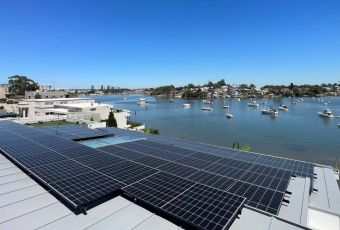
Solar Installations
Professional solar panel installation in Sydney for homes, businesses and strata properties.
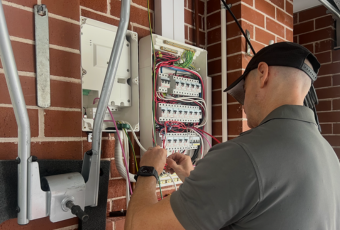
Solar Repairs
Reliable solar repairs in Sydney to fix faults, improve performance and keep your solar system working safely.
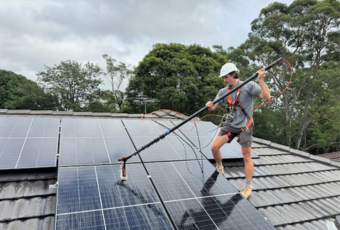
Solar Cleaning
Professional solar panel cleaning in Sydney to help improve efficiency, output and long-term system performance.
FAQs Commercial Solar Sydney
Common Questions about Commercial Solar System Installations in Sydney.
Is commercial solar worth it for Sydney businesses?
Yes, commercial solar can be worth it for Sydney businesses that use a lot of electricity during the day. The strongest returns often come from businesses that can use solar power on-site rather than exporting most of it back to the grid.
How much does commercial solar cost in Sydney?
Commercial solar cost in Sydney depends on system size, roof type, access, switchboard condition, inverter setup, installation complexity, monitoring requirements and whether battery storage is included. Common commercial system sizes include 30kW, 50kW and 100kW, but every site should be quoted individually.
What is the best commercial solar system size for a business?
The best commercial solar system size depends on your electricity usage, daytime demand, roof space, operating hours, tariff structure and future plans. A system should be sized around your load profile and business case, not just the available roof area.
How much does a 30kW commercial solar system cost in Sydney?
A 30kW commercial solar system cost in Sydney depends on roof access, panel quality, inverter setup, switchboard condition and installation requirements. It may suit small to medium businesses with consistent daytime electricity use.
How much does a 50kW commercial solar system cost in Sydney?
A 50kW commercial solar system cost in Sydney depends on site conditions, system design, electrical capacity, export requirements and monitoring. It may suit larger offices, warehouses, strata common areas, workshops, retail sites and hospitality venues.
How much does a 100kW commercial solar system cost in Sydney?
A 100kW commercial solar system cost in Sydney depends on roof space, electrical design, network requirements, export control, installation access and system monitoring. It may suit larger warehouses, industrial facilities, strata buildings and high-use commercial sites.
Are there business solar rebates in NSW?
Businesses may be able to access solar or battery incentives depending on system size, eligibility and current program rules. Eligible small-scale systems may receive STC support, while larger systems may fall under other certificate arrangements. Battery support may also be available for eligible systems.
What is solar ROI for business?
Solar ROI for business measures the return a business receives from installing solar compared with the system cost. It is influenced by electricity savings, self-consumption, system performance, rebates, electricity prices, battery storage and operating hours.
How long does commercial solar take to pay back?
Commercial solar payback depends on installation cost, electricity rates, system size, daytime self-consumption, rebates, feed-in tariffs and maintenance costs. Businesses with strong daytime energy use often achieve a stronger return.
Can commercial solar reduce peak demand charges?
Commercial solar may help reduce some grid electricity use during daylight hours, but peak demand reduction depends on when your highest demand occurs. If peak demand happens outside solar production hours, commercial battery storage may be needed.
Is commercial battery storage worth it?
Commercial battery storage may be worth it for businesses with evening operations, high peak demand, excess solar generation, backup needs or future EV charging. It should be assessed using your actual load profile and tariff structure.
Can businesses get battery rebates?
Eligible businesses may be able to access battery support through current battery programs if the battery and installation meet the rules. Eligibility can depend on battery size, usable capacity, solar connection and installation requirements.
What businesses benefit most from commercial solar?
Businesses with strong daytime energy use often benefit most from commercial solar. This can include warehouses, offices, workshops, factories, retail stores, hospitality venues, medical centres, schools, childcare centres, strata common areas and industrial facilities.
Can strata buildings install commercial solar?
Yes, strata buildings can install commercial solar for common area electricity use, subject to approvals, metering arrangements, roof suitability and system design. Solar can help reduce shared energy costs for lighting, lifts, pumps, ventilation and common facilities.
Can commercial solar support EV charging?
Yes, commercial solar can help support EV charging, especially where vehicles are charged during the day. Businesses planning fleet charging, staff charging or customer charging should consider solar, battery storage and EV charging together.
Does my business need a battery with commercial solar?
Not always. Some businesses get strong returns from solar alone, especially if they use most of their electricity during the day. A battery may be useful if your business has evening energy use, peak demand charges, backup requirements or excess solar generation.
Who installs commercial solar panels in Sydney?
MPV Solar installs commercial solar panels across Sydney for businesses, strata properties, warehouses, offices, workshops, retail sites, hospitality venues and industrial facilities. The team can assess your site and recommend a practical solar solution.
How do I get a commercial solar quote in Sydney?
To get a commercial solar quote, MPV Solar will usually review your electricity bills, site details, roof space, energy usage and future requirements. This helps design a solar system that suits your business and provides a clearer estimate of cost, savings and ROI.
Blog
Related articles
Catch up on the latest MPV Solar news and insights.



MPV Solar is committed to providing industry-leading solar energy solutions across Sydney, backed by a proven track record of successfully completing over 5,000 projects. As a family-owned business, we prioritise personalised service and truly value our clients, ensuring that each system is tailored to meet your unique energy needs.
Copyright 2026. All Rights Reserved.
Created by Codex Digital and Yakka Consulting
Get in Touch
MPV Solar
Unit 3, 43-51 College St,
Gladesville NSW 2111
info@mpvgroup.com.au
(02) 9817 0333
Monday – Friday
8:30 – 5:00pm