Call Us
Is Your Switchboard Ready for an EV Charger? Sydney Homeowner Guide
Before installing a home EV charger, make sure your switchboard and electrical supply can safely support the additional demand.
Buying an electric vehicle is exciting. Discovering that your home’s electrical system is not ready to charge it? Less so.
Your existing switchboard may be able to handle an EV charger without major changes. However, some Sydney homes will require a new dedicated circuit, updated safety protection, dynamic load management or a complete switchboard upgrade before installation can proceed.
The answer depends on:
- The age and condition of your switchboard
- Your home’s available electrical capacity
- Whether you have single-phase or three-phase power
- The charging speed you want
- Other high-demand appliances in the home
- Whether you already have solar panels or a battery
- The location of the charger
- Whether a garage sub-board is involved
- Your future electrification plans
Dedicated home EV chargers commonly operate between 7 kW and 22 kW. Because they are directly connected to the home’s electricity supply, they must be installed by a licensed electrician and may require an upgrade to the switchboard or supply connection.
The charger attached to the garage wall is only one part of the installation. The electrical infrastructure behind it is what determines whether it can operate safely and reliably.
Can My Existing Switchboard Handle an EV Charger?
Possibly, but it needs to be professionally assessed first.
A modern switchboard with suitable safety switches, sufficient physical space and adequate electrical capacity may be able to support a 7 kW charger with relatively minor additional work.
An older, crowded or already heavily loaded switchboard may need upgrading.
A licensed electrician should check:
- The age and general condition of the switchboard
- The type of existing circuit protection
- Whether there is space for a new EV charging circuit
- The condition of the wiring and earthing
- The home’s existing maximum electricity demand
- The size and condition of the consumer mains
- The available electrical supply
- Existing solar and battery connections
- Whether load management is required
- Whether the planned charger is suitable for the property
The NSW Government recommends obtaining a professional switchboard assessment when installing a major new electrical appliance such as an EV charger. It also identifies older homes with an original panel or fuse box as properties where an upgrade may be needed.
A Charger’s Maximum Rating Is Not the Whole Story
A charger may be advertised as 7 kW, 11 kW or 22 kW, but the number printed on the product does not confirm that your home can supply that output.
The actual charging capacity can be limited by:
- Your home’s electricity connection
- Whether the property has single-phase or three-phase power
- The charger configuration
- The EV’s onboard AC charger
- Load-management settings
- The electricity being used elsewhere in the home
This is why MPV recommends completing an EV charger electrical assessment before purchasing a charger solely based on its maximum advertised speed.
Does an EV Charger Require a Dedicated Circuit?
A fixed Level 2 EV charger will generally require its own appropriately designed circuit.
A dedicated circuit allows the charger to be supplied and protected separately from general power points, lighting and other appliances. It also gives the electrician greater control over cable sizing, circuit protection, isolation and charger configuration.
A dedicated EV charging circuit may include:
- Appropriately sized electrical cabling
- A separate circuit breaker
- Suitable residual-current protection
- An isolation device where required
- Labelling at the switchboard
- Charger-specific protective equipment
- Load-management or monitoring equipment
- Testing and commissioning
The exact design depends on the charger manufacturer’s requirements, the property and the installation method.
Australian Government guidance confirms that a dedicated home charger is directly connected to the home’s power supply and must be installed by a licensed electrician.
Can an EV Charger Share an Existing Power Circuit?
A permanently installed wall charger should not simply be added to a convenient general-purpose power circuit without an electrical assessment and appropriate circuit design.
An EV charger can operate for several consecutive hours and place sustained demand on the electrical system. This is different from many household appliances that operate intermittently or for shorter periods.
The safest and most reliable approach is to design the circuit specifically for the charger and the property’s available capacity.
Will an EV Charger Overload My Electrical Supply?
A properly assessed and designed EV charger installation should not overload the home’s electrical supply.
The risk arises when a charger is installed without adequately considering the home’s other electrical loads.
A Sydney household may already be running:
- Ducted air conditioning
- Electric hot water
- An induction cooktop
- Electric ovens
- Pool or spa equipment
- A home battery
- Underfloor heating
- Heat-pump appliances
- Workshop machinery
- A second EV charger
These appliances may not operate at maximum demand simultaneously every day. However, the electrical system still needs to be designed around realistic load conditions.
An electrician may recommend:
- Limiting the charger output
- Installing dynamic load balancing
- Scheduling charging outside peak household periods
- Upgrading the switchboard
- Upgrading the consumer mains
- Applying for an electricity supply upgrade
- Choosing a 7 kW charger rather than a higher-capacity unit
The aim is not necessarily to install the most powerful charger available. It is to install the charger that works safely and practically within your home.
Can I Run an EV Charger and Air Conditioning at the Same Time?
In many homes, yes. Whether you can operate both simultaneously depends on:
- The capacity of the electrical supply
- The size of the air-conditioning system
- The output of the EV charger
- Other appliances operating at the same time
- Whether the property has single-phase or three-phase power
- Whether dynamic load balancing is installed
For example, a home may be able to run its air conditioning and a 7 kW charger under normal conditions but approach its supply limit when the oven, hot-water system, pool pump and other equipment are also operating.
This does not automatically mean you need a larger electricity connection.
A dynamic load-management system may allow the charger to temporarily reduce its output when household demand rises. Once demand falls, the charger can increase its output again.
That means the car continues charging without requiring the homeowner to manually switch appliances on and off.
What Is Dynamic Load Balancing for an EV Charger?
Dynamic load balancing, also called EV charger load management, monitors how much electricity the home is using and adjusts the charger’s output in response.
Imagine the household’s electrical supply as a lane with a fixed traffic limit.
When the air conditioning, oven and hot-water system are all drawing electricity, the charger slows down to leave enough capacity for the home. When those appliances switch off, more capacity becomes available and the charger can speed up again.
Dynamic load balancing can help:
- Prevent the home from exceeding its available capacity
- Coordinate EV charging with household demand
- Support charging during periods of high appliance use
- Reduce the need for an expensive supply upgrade
- Manage two chargers at the same property
- Integrate charging with solar and battery systems
- Prepare the home for future electrification
Government EV guidance recommends considering smart charging and energy-management systems that can automatically control when and how an EV charges according to electricity prices, available solar and the wider home-energy setup.
Is Dynamic Load Balancing Always Required?
No. A home with sufficient available electrical capacity may not need it. In other properties, it may be one of the most practical ways to install a charger without substantially upgrading the electrical supply.
The decision should be based on measured or properly assessed household demand, not guesswork.
Do Older Sydney Homes Need a Switchboard Upgrade for an EV Charger?
Not every older home needs a switchboard upgrade, but older properties are more likely to require additional work.
Sydney has a large number of homes built before modern household electrical loads became common. Their original electrical systems were not designed for combinations of:
- Large air-conditioning systems
- Electric cooking
- Solar panels
- Home batteries
- Pool equipment
- Heat-pump hot water
- Multiple home offices
- EV charging
An older switchboard may also have:
- Ceramic fuses
- Limited or outdated circuit protection
- Insufficient space for a new charging circuit
- A mixture of older and newer electrical work
- Ageing wiring
- Inadequate capacity for planned electrification
- No clear allowance for future circuits
The NSW Government specifically recommends considering an upgrade when a home is more than 25 years old and still has its original electrical panel or fuse box. It also advises using a licensed electrician to assess current and future electrical needs.
Does an Old Fuse Box Automatically Mean the Charger Cannot Be Installed?
No, but it is a strong sign that the electrical system should be inspected before proceeding.
The charger installation may create an opportunity to modernise the switchboard, improve circuit protection and prepare the home for future solar, battery or electrical upgrades.
The goal is not to replace equipment unnecessarily. It is to confirm that the entire charging circuit, from the electricity supply to the vehicle, is appropriate for sustained use.
Signs Your Switchboard May Need Attention
Arrange an assessment before installing an EV charger when:
- The switchboard still contains ceramic fuses
- There is little or no room for an additional circuit
- Safety switches are missing from some circuits
- Breakers trip when several appliances operate together
- The switchboard makes buzzing or crackling sounds
- There are signs of heat, scorching or deterioration
- The home has undergone several electrical additions
- The property has not been rewired for many years
- You are also adding solar, a battery or electric appliances
- You are planning to charge more than one EV
- You do not know whether the home has single-phase or three-phase power
Flickering lights, unusual noises and issues around an older switchboard are also identified by the NSW Government as reasons to seek a professional assessment.
Do not open or inspect internal switchboard components yourself. Switchboard assessment and electrical work should be completed by a licensed electrician.
Can an EV Charger Be Connected Through a Garage Sub-Board?
Potentially, yes. A garage sub-board can sometimes supply an EV charger, but the electrician must first confirm that the sub-board and the cable feeding it have sufficient capacity.
The assessment should consider:
- The size of the cable supplying the garage
- The distance from the main switchboard
- Existing garage circuits and loads
- Available capacity at the main switchboard
- Voltage drop along the cable route
- Circuit-protection requirements
- Whether the garage supply is single-phase or three-phase
- Whether the sub-board needs upgrading
- Whether load management is required
A sub-board with spare physical space does not necessarily have spare electrical capacity.
For example, a detached garage may already supply lighting, power points, a workshop, a pool pump or an air-conditioning unit. The charger’s additional sustained load must be considered alongside those circuits.
What Happens if the Garage Supply Is Too Small?
Depending on the property, the electrician may recommend:
- Replacing or upgrading the cable feeding the sub-board
- Installing a lower-output charger
- Limiting the charger’s maximum current
- Adding dynamic load balancing
- Running a new dedicated circuit from the main switchboard
- Upgrading the garage sub-board
- Relocating the charger closer to the main electrical supply
The best option will depend on installation cost, charging requirements and how the property may be used in the future.
Do I Need Three-Phase Power for an EV Charger?
Not necessarily. Many Sydney homeowners can charge effectively using a 7 kW single-phase charger. For a vehicle parked at home overnight, this may provide more than enough time to replace the energy used during normal daily driving.
Three-phase power becomes more relevant when:
- You want an 11 kW or 22 kW AC charger
- Your vehicle can accept higher-rate three-phase AC charging
- You regularly drive long distances
- You have more than one EV
- Faster turnaround is genuinely necessary
- The property already has three-phase power
- The home has several other large electrical loads
Dedicated residential chargers commonly operate between 7 kW and 22 kW, but the vehicle itself may limit the actual charging rate. Australian Government guidance recommends checking the vehicle manufacturer’s charging requirements before selecting a charger.
Installing a 22 kW charger will not provide 22 kW charging if the car can only accept 7 kW or 11 kW AC.
Learn about the difference between one phase and three phase power.
Will I Need to Upgrade the Electricity Connection to My Home?
Most residential EV charger installations will begin with an assessment by a licensed electrical contractor.
In some cases, the switchboard may be suitable but the electricity connection supplying the property may need modification or upgrading.
This may occur where:
- The planned load exceeds the available supply
- The consumer mains require upgrading
- Three-phase power is being requested
- Multiple chargers are planned
- The property has significant existing electrical demand
- Distributor approval is required for the proposed work
Ausgrid advises that all electrical work within the property must be completed by a licensed electrical contractor. The contractor can determine whether a connection application is required. Where the supply needs to be modified or upgraded, Ausgrid may need to assess the additional load and approve the connection work.
Your electrician should explain whether distributor involvement is required and manage or coordinate the appropriate application process.
How Much Does a Switchboard Upgrade for an EV Charger Cost?
The cost depends on the existing switchboard, the capacity required and the scope of the electrical work.
The NSW Government currently provides an indicative switchboard upgrade range of approximately $1,500 to $4,000, although complex upgrades, larger boards, consumer-main work or three-phase changes can cost more.
A quote may need to account for:
- A new switchboard enclosure
- Modern circuit breakers and safety switches
- Additional space for the EV charging circuit
- Metering changes
- Consumer-main upgrades
- Earthing improvements
- Relocation or accessibility work
- Solar and battery connections
- Three-phase conversion
- Distributor or supply work
A switchboard upgrade should be designed around more than the charger being installed today.
Consider your potential future needs, including:
- A second EV
- A larger solar system
- Battery storage
- Electric hot water
- Induction cooking
- Additional air conditioning
- Pool heating
- Home automation
- Vehicle-to-home technology
A slightly larger, thoughtfully designed switchboard can help reduce unnecessary rework later.
What Happens During an EV Charger Electrical Assessment?
A thorough assessment should consider both the current installation and the homeowner’s future plans.
Step 1: Discuss Your Vehicle and Driving Needs
The electrician should ask:
- Which EV do you own or plan to purchase?
- How far do you normally drive each day?
- How long is the vehicle parked at home?
- Do you need overnight charging or rapid turnaround?
- Are you likely to add a second EV?
- Does the vehicle support single-phase or three-phase AC charging?
Step 2: Inspect the Electrical System
The inspection may cover:
- Main switchboard condition
- Available circuit space
- Existing safety protection
- Supply type and capacity
- Major household electrical loads
- Solar and battery connections
- Main switchboard and sub-board configuration
- Proposed charger cable route
- Garage or carport electrical infrastructure
Step 3: Assess the Charger Location
The installer should consider:
- Where the vehicle is normally parked
- The position of the vehicle’s charging port
- Cable length
- Indoor or outdoor exposure
- Wall-mounting options
- Pedestrian and vehicle movement
- Distance from the switchboard
- Wi-Fi or communications access
- Whether a future vehicle may park differently
Step 4: Recommend the Right Charging Design
The recommendation may include:
- Charger type and output
- Dedicated-circuit requirements
- Switchboard work
- Load management
- Solar integration
- Battery coordination
- Cable route
- Supply upgrade requirements
- Future capacity for a second charger
A good assessment should explain not only what is required, but why.
Can Solar Panels Help Manage EV Charging Demand?
Solar panels do not remove the need for a suitable switchboard or properly designed charging circuit.
However, solar-aware charging can change when and how much electricity the charger draws from the grid.
A compatible smart charger may be configured to:
- Charge when excess solar is available
- Reduce charging when household consumption rises
- Avoid or limit peak-period grid imports
- Follow a set charging schedule
- Coordinate with a home battery
- Prioritise the home, battery or EV according to your preferences
The NSW Government encourages homeowners with rooftop solar to charge during the day to use their own generated electricity.
The charger, inverter, battery and monitoring equipment need to be assessed as one coordinated system. A charger cannot automatically use excess solar simply because solar panels are present.
Should You Upgrade the Switchboard Before Buying the Charger?
It is usually better to arrange the electrical assessment before committing to a particular charger.
Buying first can create problems when:
- The charger’s output exceeds the home’s practical capacity
- Three-phase power is required but unavailable
- The charger cannot support dynamic load balancing
- The charger is not compatible with the solar-energy system
- The cable route is more complicated than expected
- The chosen unit lacks the required weather rating
- A different charger would better support a second EV
- The vehicle cannot use the charger’s maximum output
The charger should be selected around the vehicle, property and electrical infrastructure, not the other way around.
Book an EV Charger and Switchboard Capacity Assessment
Do not wait until your new EV arrives to discover that your switchboard, garage supply or electrical connection needs upgrading.
MPV can assess your home before installation and provide clear recommendations covering:
- Switchboard capacity
- Dedicated circuit requirements
- Charger size and compatibility
- Dynamic load balancing
- Single-phase or three-phase charging
- Solar and battery integration
- Garage sub-board suitability
- Future electrical demand
Book an EV charger and switchboard capacity assessment with MPV and make sure your Sydney home is ready to charge safely, efficiently and reliably.
Complete Solar Solutions
Solar Installations, Repairs & Cleaning Across Sydney
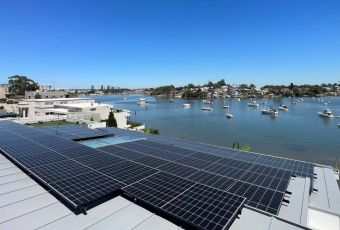
Solar Installations
Professional solar panel installation in Sydney for homes, businesses and strata properties.
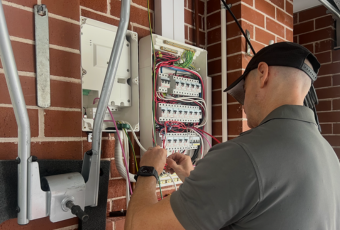
Solar Repairs
Reliable solar repairs in Sydney to fix faults, improve performance and keep your solar system working safely.
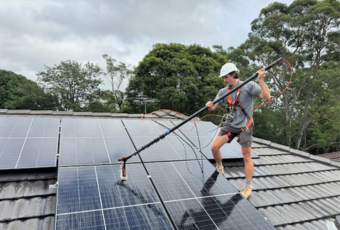
Solar Cleaning
Professional solar panel cleaning in Sydney to help improve efficiency, output and long-term system performance.
FAQs About Switchboards and EV Chargers
Find answers to the most common questions Sydney homeowners ask about switchboard capacity, dedicated circuits, load management and EV charger installation.
Can my existing switchboard handle an EV charger?
It may be able to. A licensed electrician must assess the switchboard’s age, condition, circuit protection, available space and electrical capacity. The electrician should also consider the home’s other major electrical loads before recommending a charger.
Does a home EV charger need a dedicated circuit?
A permanently installed Level 2 home EV charger will generally require its own appropriately designed and protected electrical circuit. The circuit must be installed by a licensed electrician in accordance with the charger requirements and applicable electrical standards.
Do I need a switchboard upgrade for a 7 kW EV charger?
Not always. Many modern switchboards can support a 7 kW charger, provided the home has sufficient available capacity and appropriate circuit protection. An older or crowded switchboard may require upgrading.
Will an EV charger overload my home?
A properly assessed installation should not overload the home. Where available capacity is limited, the electrician may recommend limiting the charger’s output, installing load management or upgrading part of the electrical system.
Can I use my air conditioning while charging my EV?
Usually, yes. The answer depends on the size of the charger, the air-conditioning system, the home’s electricity supply and the other appliances operating at the same time. Dynamic load balancing can automatically reduce EV charging output when household demand increases.
What is dynamic load balancing?
Dynamic load balancing monitors electricity consumption within the home and adjusts the EV charger’s output to stay within the property’s available capacity. It can help prevent overload and may reduce the need for a larger supply upgrade.
Can an EV charger connect to a garage sub-board?
Yes, when the garage sub-board, its supply cable and the main electrical system have sufficient capacity. An electrician must inspect the complete supply path before confirming whether the sub-board is suitable.
Do older Sydney homes need a new switchboard for an EV charger?
Some do, but the age of the home alone does not determine the answer. Homes with ceramic fuses, outdated protection, limited circuit space or ageing wiring are more likely to need electrical work before a charger is installed.
Do I need three-phase power for an EV charger?
Not for a typical 7 kW home charger. Higher-capacity 11 kW or 22 kW AC charging generally requires three-phase power, and the EV must also support the higher AC charging rate.
Can load management avoid a switchboard upgrade?
It may help avoid certain capacity or supply upgrades, but it cannot correct an unsafe, damaged or non-compliant switchboard. The electrician must first determine whether the existing equipment is suitable.
Should I arrange an assessment before buying an EV charger?
Yes. An assessment can confirm the available supply, suitable charger output, circuit requirements, solar compatibility and whether switchboard or sub-board work is needed before you purchase equipment.
Can my solar system and EV charger work together?
Yes, provided compatible charging and monitoring equipment is installed and configured correctly. A solar-aware charger can potentially adjust charging according to excess rooftop solar generation, household demand and battery priorities.
Who can install an EV charger in NSW?
A fixed home EV charger must be installed by a licensed electrician. Ausgrid also advises using a licensed electrical contractor who can determine whether changes to the property’s electricity connection require distributor approval.
Contact MPV Solar on 98170333.
Blog
Related articles
Catch up on the latest MPV Solar news and insights.



MPV Solar is committed to providing industry-leading solar energy solutions across Sydney, backed by a proven track record of successfully completing over 5,000 projects. As a family-owned business, we prioritise personalised service and truly value our clients, ensuring that each system is tailored to meet your unique energy needs.
Copyright 2026. All Rights Reserved.
Created by Codex Digital and Yakka Consulting
Get in Touch
MPV Solar
Unit 3, 43-51 College St,
Gladesville NSW 2111
info@mpvgroup.com.au
(02) 9817 0333
Monday – Friday
8:30 – 5:00pm