Call Us
Commercial Solar Payback Period: How Long Until Solar Pays for Itself?
One of the first questions businesses ask MPV Solar is: “How long will commercial solar take to pay for itself?” The answer depends on considerably more than the price of the panels.
Commercial solar payback is determined by the relationship between:
project cost + incentives + electricity generation + electricity consumption + electricity tariffs.
Current Australian industry modelling commonly puts commercial solar payback somewhere around the 3–5 year range for many small-to-medium business projects, but the result can vary significantly by site and system size. A business-specific calculation is far more useful than a generic industry average.
How is commercial solar payback calculated?
At its simplest: Payback period = net project cost ÷ annual financial savings
For example: If a commercial solar system costs $200,000 after applicable incentives and saves $50,000 per year: $200,000 ÷ $50,000 = four-year simple payback
But real commercial solar modelling should go further. It should consider:
- system degradation
- maintenance
- electricity tariff changes
- self-consumption
- export income
- demand charges
- financing
- business operating hours.
What affects commercial solar ROI most?
1. Solar self-consumption
This is one of the biggest factors. Electricity used directly by the business replaces electricity that would otherwise be purchased from the grid.
2. Electricity tariff
The more a business pays for electricity, the greater the potential value of each solar-generated kilowatt-hour consumed onsite.
3. Operating hours
Businesses operating heavily during daylight hours may achieve higher self-consumption.
4. System size
Oversizing can sometimes weaken payback if large quantities of electricity must be exported at a low value.
5. Commercial solar rebates
Applicable incentives can reduce upfront capital cost and therefore improve payback.
6. Installation complexity
Switchboard upgrades, difficult roofs, electrical works or network requirements can increase project cost.
Is commercial solar worth it in Sydney?
For many businesses with significant daytime electricity consumption, solar can provide a compelling financial case. Australian Government guidance notes that businesses can use rooftop solar to reduce electricity bills, protect against electricity price increases and reduce the cost of charging electric vehicles. The key is proper system sizing.
Why self-consumption matters more than exporting solar
Imagine your business buys electricity from the grid at a substantially higher rate than it receives for exporting solar. Using one kilowatt-hour of solar onsite can therefore be considerably more valuable than selling that same kilowatt-hour back to the grid.
That is why MPV Solar looks closely at interval meter data. We want to answer: When your solar is generating, where is the electricity going?
Does a larger system have a better payback?
Not always. A 500 kW System does not automatically deliver twice the financial return of a 250 kW system.
If the additional generation cannot be efficiently consumed or exported, the larger project may have a longer payback.
This is why MPV Solar can model several commercial solar sizes against the same electricity profile.
Instead of asking: “What’s the biggest solar system we can install?”
Ask: “Which solar system gives our business the strongest outcome?”
Can batteries improve commercial solar payback?
Sometimes, but not automatically. Battery storage may help businesses:
- increase solar self-consumption
- shift energy use
- reduce certain peak costs
- manage tariffs
- use stored solar outside daylight hours.
However, the additional battery investment also affects overall project economics. Solar-only and solar-plus-battery scenarios should therefore be compared separately.
Get a commercial solar ROI assessment
MPV Solar can assess your:
- electricity bills
- interval meter data
- operating hours
- roof area
- electrical infrastructure
- future electricity demand
- solar options
- battery options.
We can then compare potential commercial solar system sizes and help determine the likely savings and payback for your business.
Find Out What Commercial Solar Could Save Your Business
The best commercial solar investment isn’t necessarily the biggest system, it’s the one designed around your electricity use, operating hours and financial objectives.
MPV Solar can assess your electricity bills, interval data, tariffs, roof space, existing electrical infrastructure and future energy demand to model different commercial solar system sizes and estimate potential savings and payback.
Whether you’re comparing 100 kW, 250 kW, 500 kW or larger commercial solar systems, we can help you understand which option could deliver the strongest return for your business.
Want to know what solar could look like financially for your site? Request a commercial solar ROI assessment with MPV Solar.
Complete Solar Solutions
Solar Installations, Repairs & Cleaning Across Sydney
Solar Installations
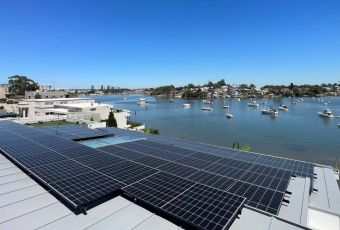
Professional solar panel installation in Sydney for homes, businesses and strata properties.
Solar Repairs
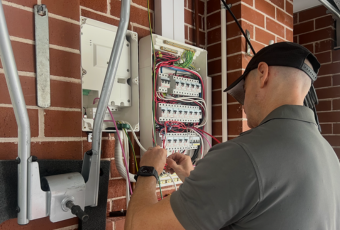
Reliable solar repairs in Sydney to fix faults, improve performance and keep your solar system working safely.

Solar Cleaning
Professional solar panel cleaning in Sydney to help improve efficiency, output and long-term system performance.
Commercial Solar Payback FAQs
What is a good payback period for commercial solar?
There is no universal target, although commercial solar projects can often achieve substantially shorter paybacks than the expected operating life of the system.
How do I calculate commercial solar ROI?
Compare the net project cost with projected electricity savings and other financial benefits over the expected operating life of the system.
Does the commercial solar rebate improve payback?
Yes. An upfront incentive reduces net installation cost and can therefore shorten the simple payback period.
Why does daytime electricity use matter?
Businesses can often save more by consuming solar directly rather than exporting it, so daytime consumption can have a significant influence on ROI.
Can I calculate solar payback from my electricity bill?
A bill provides useful information, but interval meter data provides a much clearer picture because it shows exactly when electricity is being consumed.
Should I include EV charging when calculating commercial solar ROI?
Yes. If your business expects to add EV chargers or an electric fleet, that additional electricity demand should be included in future modelling.
Blog
Related articles
Catch up on the latest MPV Solar news and insights.



MPV Solar is committed to providing industry-leading solar energy solutions across Sydney, backed by a proven track record of successfully completing over 5,000 projects. As a family-owned business, we prioritise personalised service and truly value our clients, ensuring that each system is tailored to meet your unique energy needs.
Copyright 2026. All Rights Reserved.
Created by Codex Digital and Yakka Consulting
Get in Touch
MPV Solar
Unit 3, 43-51 College St,
Gladesville NSW 2111
info@mpvgroup.com.au
(02) 9817 0333
Monday – Friday
8:30 – 5:00pm