Call Us
Is Commercial Battery Storage Worth the Investment?
For a Sydney business considering battery storage, one question usually comes before all others:
How long will the battery take to pay for itself?
There is no single commercial battery payback period that applies to every business.
Two businesses can install similar batteries and achieve very different returns because battery ROI depends on when electricity is used, how much solar is exported, electricity tariffs, peak demand charges, battery utilisation and available incentives.
The strongest commercial battery projects are generally those where the battery has a clear financial job to perform.
That could mean:
- storing excess solar for later use
- reducing expensive grid electricity purchases
- managing peak demand
- shifting energy into higher-cost periods
- increasing solar self-consumption.
If you are still deciding whether storage belongs alongside your solar system, start with Commercial Solar + Battery: Is It Worth It for Sydney Businesses?.
How Is Commercial Battery Payback Calculated?
At its simplest, commercial battery payback compares the net cost of the battery against the savings it generates each year.
A basic calculation is: Net battery investment ÷ annual battery savings = indicative payback period
But working out those annual savings is where commercial battery analysis becomes more complex.
Potential savings can come from several areas: solar self-consumption + reduced grid purchases + demand-charge savings + tariff optimisation
while available incentives can reduce the upfront project cost.
Battery degradation, maintenance, operating strategy and system life should also be considered when assessing the overall commercial battery ROI.
This is why a reliable business battery payback calculation should be based on the site’s actual electricity data rather than a generic online estimate.
What Drives Commercial Battery ROI?
Several factors have a significant impact on whether a commercial battery generates a strong return.
1. How Much Excess Solar Your Business Produces
A business that exports large amounts of unused solar electricity may have an opportunity to store some of that energy instead.
The battery can charge while excess solar is available and discharge later when the business would otherwise purchase electricity from the grid.
This can increase the amount of solar energy consumed onsite.
Businesses considering both technologies should read Commercial Solar + Battery: Is It Worth It for Sydney Businesses? to understand how solar generation and battery storage can be modelled together.
2. When Your Business Uses Electricity
Timing matters just as much as total electricity consumption.
A business that operates almost entirely during strong solar-generation hours may already achieve high solar self-consumption without a battery.
Another business may continue operating into the late afternoon or evening after solar generation drops.
That second load profile may create a much stronger battery use case.
3. Your Electricity Tariff
Electricity purchased from the grid does not necessarily have the same value throughout the day.
Where a business is exposed to higher electricity costs during certain periods, storing lower-cost or excess solar electricity and using it later may improve the economics of battery storage.
The greater the value difference between when the battery charges and when it discharges, the more opportunity there may be to generate savings.
4. Peak Demand Charges
For some commercial properties, electricity costs are influenced not only by how many kilowatt-hours are consumed, but by the site’s highest electricity demand during specific periods.
This can make battery storage particularly valuable for businesses experiencing short but expensive demand spikes.
A commercial battery can potentially discharge during those periods to reduce the site’s grid demand, a strategy commonly known as peak shaving.
MPV Solar explains this in more detail in How Batteries Can Save Your Business on Peak Demand Charges.
5. Available Commercial Battery Incentives
Incentives can materially change commercial battery payback because they reduce the initial capital cost of the project.
From 1 September 2026, eligible NSW businesses can access a new battery incentive for qualifying commercial battery systems.
Businesses installing eligible new or additional solar alongside the battery may receive a higher incentive than eligible battery-only projects.
For eligibility, project timing and incentive requirements, read NSW Commercial Battery Incentives 2026: What Sydney Businesses Need to Know.
Can a Commercial Battery Reduce Peak Demand Charges?
Potentially, yes. For businesses on an applicable demand tariff, even a relatively short period of high electricity demand can contribute to higher electricity costs.
Consider a site where several large electrical loads operate simultaneously.
Instead of drawing all of that additional power from the grid, a suitably designed battery may discharge during the peak period and reduce the site’s maximum grid demand.
Importantly, this means the battery’s discharge power can be just as important as its storage capacity.
A large battery in kWh does not automatically provide good peak-demand savings if it cannot deliver the required power at the right time.
For businesses where demand charges represent a meaningful part of the electricity bill, read How Batteries Can Save Your Business on Peak Demand Charges before deciding on system size.
Does Storing Excess Commercial Solar Improve Payback?
It can. Without battery storage, excess electricity generated by commercial solar may be exported to the grid where permitted.
Battery storage creates another option.
Instead of exporting all surplus production, some electricity can potentially be stored and used later when the business would otherwise buy electricity from the grid.
The financial benefit depends on the difference between: the value of exporting one kWh of solar and the value of avoiding one kWh of grid electricity later.
The larger that difference, and the more often the battery can make that energy shift, the stronger the potential contribution to commercial battery ROI.
Businesses with large rooftops should also review Warehouse Solar Installation Sydney to understand how roof space, electricity consumption and system sizing interact.
What Businesses Can Achieve the Strongest Battery Payback?
There is no single ideal industry, but certain electricity profiles can make commercial battery storage particularly worth investigating.
Warehouses and Distribution Facilities
Warehouses may have large solar systems and substantial roof space, but electricity consumption can continue after peak solar generation.
Sites exporting significant midday solar while maintaining strong afternoon loads may benefit from assessing battery storage.
For more on designing solar for these sites, read Warehouse Solar Installation Sydney.
Manufacturing and Industrial Businesses
Production equipment, motors, HVAC and machinery can create concentrated electricity demand and short peaks.
For some sites, the battery opportunity may therefore involve both solar energy shifting and demand management.
Cold Storage and Refrigeration
Refrigeration loads can operate throughout the day and night, giving stored solar electricity more opportunity to be used after the sun goes down.
Commercial Offices
Large afternoon air-conditioning loads can remain high as solar generation begins declining.
Businesses With High Demand Charges
Where a meaningful portion of the electricity bill comes from maximum demand rather than energy consumption alone, batteries may provide an additional savings opportunity through peak shaving.
The best commercial battery candidate is therefore not necessarily the business with the highest electricity bill.
It is the business with an energy profile a battery can economically improve.
When Might a Commercial Battery Have a Longer Payback?
Battery storage will not automatically improve the financial performance of every commercial solar project. Payback may be less attractive where:
- most solar generation is already consumed directly
- very little excess solar is available to store
- electricity use drops substantially after daylight hours
- demand charges are low or do not apply
- electricity tariff differences are small
- the battery is oversized
- the battery cycles infrequently
- the battery is installed without a defined operating strategy.
This is an important reason to compare commercial solar only versus commercial solar + battery before investing.
For some sites, allocating more capital to solar may initially produce the stronger return.
Explore MPV Solar’s Commercial Solar Sydney solutions if solar is still the primary opportunity for your site.
Does a Bigger Commercial Battery Deliver a Better ROI?
Not necessarily. This is one of the most common misconceptions about battery storage.
A larger battery provides more storage capacity, but that extra capacity only creates value if the business can regularly charge and discharge it effectively.
For example, installing 200 kWh of storage does not automatically make financial sense if the business only has enough surplus solar or high-cost electricity demand to make regular use of 80 kWh.
An oversized battery may:
- cost more upfront
- spend more time partially unused
- cycle less efficiently
- extend the payback period.
Commercial battery sizing should therefore start with:
How much energy can we economically shift each day? rather than: How large a battery can we install?
How Should a Business Size Solar and Battery Together?
The solar array and battery should not be designed in isolation. MPV Solar can assess:
Solar
- existing solar capacity
- proposed solar capacity
- annual generation
- excess exports
- inverter capacity
- available roof space.
Electricity Usage
- interval meter data
- daytime consumption
- afternoon and evening consumption
- seasonal demand
- operating hours.
Peak Demand
- maximum demand
- timing of demand peaks
- duration of demand spikes
- applicable tariffs.
Battery
- usable kWh capacity
- charge rate
- discharge power
- cycling requirements
- control strategy.
Financial Factors
- electricity tariffs
- export value
- demand charges
- project cost
- available incentives.
For businesses considering larger rooftop systems, our Commercial Solar Rebates Australia 2026 guide explains the changing commercial solar incentive environment.
Businesses comparing larger system sizes can also explore our 250 kW Solar System Sydney guide.
How Do NSW Battery Incentives Affect Commercial Battery Payback?
The new NSW incentive can reduce the upfront investment used in the payback calculation.
From 1 September 2026, qualifying NSW businesses may be eligible for an upfront discount on commercial battery storage.
Businesses installing qualifying new or additional solar alongside the battery may access a larger incentive than eligible battery-only projects.
This makes incentive eligibility an important part of the ROI calculation, particularly for businesses already considering new solar or expanding an existing system.
Read NSW Commercial Battery Incentives 2026: What Sydney Businesses Need to Know before finalising project timing.
If you’re also considering a larger solar system, our Commercial Solar Rebates Australia 2026 guide explains the incentives affecting commercial solar projects.
Battery-Only or Commercial Solar + Battery?
For most businesses, these scenarios should be assessed separately.
Battery-Only May Make Sense When:
- significant demand-charge savings are available
- tariff differences create a strong energy-shifting opportunity
- an existing solar system already produces excess electricity
- additional solar is impractical.
Solar + Battery May Make More Sense When:
- the business is installing commercial solar anyway
- surplus solar can charge the battery
- electricity use extends beyond solar-generation hours
- additional solar improves the overall energy model
- the project qualifies for a higher NSW battery incentive.
For the broader comparison, read Commercial Solar + Battery: Is It Worth It for Sydney Businesses?.
What Is a Good Commercial Battery Payback Period?
There is no universal number that defines a good business battery payback period.
The better question is whether the projected savings justify:
- the upfront investment
- battery lifespan
- degradation over time
- financing costs
- maintenance
- operational requirements
- the business’s investment criteria.
Businesses should also consider what happens after the simple payback point.
A battery continuing to produce savings after recovering its initial cost contributes to the broader commercial battery ROI, which is why payback period should not be the only financial measure considered.
How Can I Improve Commercial Battery ROI?
Battery returns can potentially be improved by:
- correctly sizing the battery
- increasing useful battery cycling
- storing genuine excess solar
- discharging during higher-value periods
- targeting peak demand charges
- selecting an appropriate electricity tariff
- integrating solar and battery controls
- accessing eligible incentives
- avoiding unnecessary oversizing.
System design and operating strategy matter.
A battery installed without understanding the site’s interval data may never achieve the utilisation assumed in the original business case.
Commercial Battery ROI Starts With Your Electricity Data
If you want to know whether commercial battery storage is worth it, start with the numbers already available from your site.
MPV Solar can review: electricity bills + interval data + solar production + exports + peak demand + tariffs + available incentives to model where a commercial battery could generate savings and whether the expected payback aligns with your business objectives.
For businesses considering both technologies, start with Commercial Solar + Battery: Is It Worth It for Sydney Businesses?.
If incentives are a major factor in the decision, read NSW Commercial Battery Incentives 2026: What Sydney Businesses Need to Know.
Want to Know the Potential Payback for Your Business?
Talk to MPV Solar about a tailored commercial solar and battery assessment.
Rather than recommending a generic battery size, we can assess how your site actually consumes electricity and determine whether commercial battery storage has a genuine financial case.
Explore our Commercial Solar Sydney solutions or contact MPV Solar for a tailored assessment.
Complete Solar Solutions
Solar Installations, Repairs & Cleaning Across Sydney
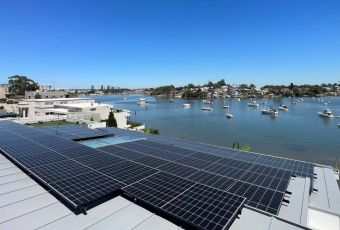
Solar Installations
Professional solar panel installation in Sydney for homes, businesses and strata properties.
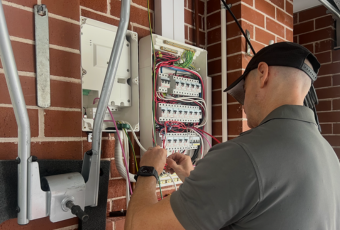
Solar Repairs
Reliable solar repairs in Sydney to fix faults, improve performance and keep your solar system working safely.

Solar Cleaning
Professional solar panel cleaning in Sydney to help improve efficiency, output and long-term system performance.
Commercial Battery Payback FAQs
These FAQs answer common questions about commercial battery ROI, business battery payback periods, solar self-consumption, peak demand savings and NSW battery incentives.
What is the average commercial battery payback period?
There is no reliable single average. Commercial battery payback varies according to installed cost, electricity tariffs, demand charges, solar exports, battery utilisation and incentives. The most useful calculation is based on the individual site’s interval electricity data.
Is commercial battery storage worth it?
It can be, particularly where a business has excess solar, significant afternoon or evening consumption, peak demand charges or another valuable opportunity to shift electricity between different times.
How do you calculate commercial battery ROI?
Commercial battery ROI considers the battery’s net project cost against the financial benefits it generates over time. Savings may include reduced grid electricity purchases, increased solar self-consumption and demand-charge reductions.
Can a battery reduce business electricity bills without solar?
Potentially. Batteries can also be used for tariff optimisation and peak-demand management. However, the economics depend on the site’s tariff and how the battery is charged and discharged.
Does commercial solar improve battery payback?
It can. Excess solar can provide energy to charge the battery for later use. Businesses installing new or additional solar with a battery should also review NSW Commercial Battery Incentives 2026 to understand current eligibility and incentive opportunities.
Can commercial batteries reduce peak demand charges?
Potentially. A battery can discharge during high-load periods to reduce the site’s maximum grid demand. Read How Batteries Can Save Your Business on Peak Demand Charges for a detailed explanation.
Does a larger battery have a faster payback?
Not necessarily. An oversized battery may have unused capacity and a higher upfront cost. The best battery size is generally the capacity the business can use economically and consistently.
What data is needed to calculate commercial battery payback?
Ideally, the analysis should include interval electricity data, electricity tariffs, peak demand, existing solar generation, solar exports, operating hours and the proposed battery’s capacity and discharge rate.
Are there commercial battery incentives in NSW in 2026?
Yes. From 1 September 2026, eligible NSW businesses can access new commercial battery incentives. For more information, read NSW Commercial Battery Incentives 2026: What Sydney Businesses Need to Know.
Should I install commercial solar or a battery first?
It depends on the site’s electricity profile. Businesses with strong daytime consumption may find commercial solar delivers the strongest first step, while businesses with existing excess solar, demand charges or significant later-day electricity consumption may have a stronger case for battery storage.
For the broader comparison, see Commercial Solar + Battery: Is It Worth It for Sydney Businesses?.
Blog
Related articles
Catch up on the latest MPV Solar news and insights.



MPV Solar is committed to providing industry-leading solar energy solutions across Sydney, backed by a proven track record of successfully completing over 5,000 projects. As a family-owned business, we prioritise personalised service and truly value our clients, ensuring that each system is tailored to meet your unique energy needs.
Copyright 2026. All Rights Reserved.
Created by Codex Digital and Yakka Consulting
Get in Touch
MPV Solar
Unit 3, 43-51 College St,
Gladesville NSW 2111
info@mpvgroup.com.au
(02) 9817 0333
Monday – Friday
8:30 – 5:00pm