


 Call Us
The right solar system for an electric vehicle fleet depends on how far the vehicles drive, when they return to base, how quickly they must recharge, and what electricity the rest of the business uses. A warehouse or depot may be able to use rooftop solar for daytime charging; businesses with overnight-only charging may need a different combination of solar, load management, battery storage and grid supply. There is no reliable rule that one EV requires a fixed number of solar panels.
Why Fleet Electrification Changes Commercial Solar Design
An office or warehouse can have predictable lighting, air conditioning and equipment loads. Adding several electric cars, vans or trucks introduces an additional electricity requirement—and potentially substantial spikes in electrical power demand if they plug in simultaneously.
This creates two distinct design questions: Energy (kWh): How much electricity must be delivered over a day or week?
Power (kW): How quickly must the vehicles recharge, and can the site supply that rate?
Solar sizing addresses the energy opportunity. Chargers, electrical infrastructure and load management determine charging capacity.
How Do You Estimate EV Fleet Charging Demand?
Start with actual driving rather than a headline EV battery capacity.
Daily driving energy (kWh) = number of vehicles × kilometres per vehicle per day × vehicle energy use (kWh/100km) ÷ 100.
Imagine a business with 12 electric vans. Each travels 80 km per operating day, and the planning assumption is 20 kWh/100 km.
12 × 80 × 20 ÷ 100 = 192 kWh per operating day of vehicle driving energy.
The actual electricity drawn at the charger will be higher once charging losses and site conditions are considered. These are illustrative assumptions, not MPV Solar performance guarantees or a recommended system size.
Then map this energy against the daily charging window. Replacing 192 kWh over a long overnight shift presents a very different power requirement from recovering that energy in two hours between delivery runs.
How Much Commercial Solar Is Needed to Charge a Fleet?
For an initial estimate, compare the site’s annual and seasonal charging energy with modelled solar generation, then test how much solar the fleet can actually use at the time it is generated.
On many Sydney sites, charging opportunities fall into three patterns:
Vehicles parked during the day: Workplace vehicles, service vans and shift vehicles may make good use of daytime solar if charging can occur during generation hours.
Vehicles away all day, back at night: Rooftop solar may mainly offset the site’s other daytime loads unless a battery or alternative charging schedule is economical.
Mixed or rotating fleet: Smart charging can allocate solar energy to vehicles that are on site, prioritising departure deadlines and battery state of charge.
Roof orientation, shaded areas, weekend operations and solar export limits all affect the outcome. MPV Solar’s Commercial Solar for Industrial Buildings explains why system size should be based on business energy data rather than roof area alone.
Why Charger Power Matters as Much as Solar Panel Capacity
Imagine ten chargers capable of drawing 7 kW each. If all run at their rated power simultaneously, the potential combined charger load is 70 kW before other building demand. The site may not have enough spare capacity to support that unmanaged load.
Smart charging or load management can stagger sessions, cap total charger demand and prioritise vehicles that depart first. The actual arrangement depends on charger compatibility, vehicle limits, switchboards, protection and available supply.
Larger trucks and short-turnaround operations may need higher-power charging and more significant electrical infrastructure. A depot should be designed around vehicle schedules and load profiles, not just charger count.
Should You Add Battery Storage to a Commercial EV Charging Site?
Possibly. A commercial battery may store excess solar during daylight hours and discharge when vehicles return later. It may also help manage some peak demand, subject to power rating and operating strategy.
But a battery does not create energy. If your solar generation is regularly consumed by the existing facility, storage may not have much excess solar available to charge. If vehicles can charge directly at midday, solar-only plus smart chargers might be the more economical initial design.
It helps to compare at least three scenarios: solar with managed charging; solar plus commercial battery; and grid-based managed charging with provision for future solar or storage.
For financial modelling, see Commercial Battery Payback & ROI. The ROI guide owns the savings calculation; this article focuses on fleet load planning.
Can Solar and Batteries Reduce Fleet Charging Demand Charges?
Potentially, but only if the system reduces the relevant metered demand during the tariff’s measurement period. A short burst of multiple chargers can still set a demand peak if it exceeds the battery’s discharge capability or occurs when storage is depleted.
Fleet charging should therefore be coordinated with the site’s main electrical demand. For a deeper explanation of this tariff mechanism, read How Batteries Cut Peak Demand Charges for Sydney Businesses.
What Site and Network Checks Are Needed?
MPV Solar would assess the existing switchboard, three-phase supply, spare capacity, metering, transformer and network connection, proposed AC or DC charging equipment, parking layout, cable routes and future fleet growth.
For a site within Ausgrid or Endeavour Energy territory, the proposed solar, battery and chargers may need different approvals or technical assessments. Installation timing depends on those assessments, equipment selection and any network augmentation. Never purchase a full bank of chargers before the electrical capacity and charging model have been tested.
Can Existing Warehouse Solar Be Expanded for EV Charging?
Often it is worth investigating. A warehouse with an existing system might already export energy on weekends or outside operating hours, while the future fleet may need electricity after sunset. Adding panels, storage, smarter charging controls or a supply upgrade should be compared as separate options.
MPV Solar can review Warehouse Solar Installation Sydney and Commercial Battery Storage Sydney options as part of a staged plan.
What About the New 100kW–1MW Commercial Solar Incentive?
For eligible mid-scale solar systems installed from 1 October 2026, Australia’s Small-scale Renewable Energy Scheme has expanded to 1 MW, with a fixed five-year deeming period and applications expected to open mid-to-late November. Eligibility and the choice of certificate pathway need project-specific review. The incentive changes project economics but does not determine the correct solar size.
Read MPV Solar’s Commercial Solar Rebate Australia 2026 after that existing guide is updated to reflect commencement.
What Information Should a Business Send MPV Solar?
For a useful initial assessment, gather the current electricity bill and interval data, the site address and network details, existing solar specifications, number and type of vehicles, average daily kilometres, arrival/departure times, parking plan and likely fleet growth.
MPV Solar can use these inputs to develop a whole-site energy concept rather than recommending panels and chargers independently.
Explore Commercial Solar and Commercial Battery Storage Sydney.
Planning to electrify company vehicles? Send MPV Solar your fleet schedule and recent electricity usage so we can assess solar, battery storage and the site’s electrical readiness together.
Complete Solar Solutions
Solar Installations, Repairs & Cleaning Across Sydney
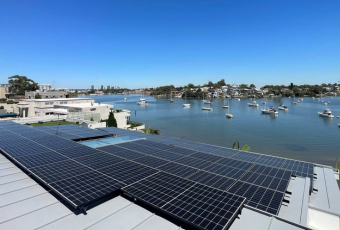
Solar Installations
Professional solar panel installation in Sydney for homes, businesses and strata properties.
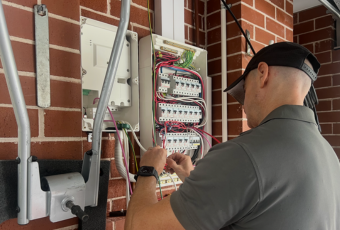
Solar Repairs
Reliable solar repairs in Sydney to fix faults, improve performance and keep your solar system working safely.

Solar Cleaning
Professional solar panel cleaning in Sydney to help improve efficiency, output and long-term system performance.
Solar for EV Fleets FAQs
Planning to power your commercial EV fleet with solar? We answer common questions businesses ask about solar system sizing, fleet charging infrastructure, three-phase power, battery storage, smart charging and reducing electricity costs.
Can commercial solar charge a fleet of electric vehicles?
Yes. Rooftop solar can supply electricity used by compatible workplace or depot chargers while generation is available. The amount of direct solar charging depends on vehicle parking schedules, solar output and other building loads.
How much solar do I need for ten electric company vehicles?
It depends on each vehicle’s kilometres, efficiency, charging losses and timing. Calculate fleet kWh requirements first, then model solar generation and the site’s ability to use it.
Can a warehouse charge company EVs from rooftop solar?
Potentially. Warehouses may have substantial roof area and electrical infrastructure, but the design must consider their existing daytime loads, charging schedule and connection limits.
Do fleet chargers need three-phase power?
Many multi-charger commercial sites use three-phase electrical infrastructure, but the exact supply depends on charger power, number of chargers, existing electrical capacity and network requirements.
Does a commercial EV fleet need a solar battery?
Not always. Direct daytime charging with load management can work without battery storage. Storage becomes relevant when surplus solar must be shifted or peak demand managed.
Can smart charging avoid a major supply upgrade?
Sometimes. Managed charging can cap simultaneous demand, but the site’s electrical capacity and vehicle turnaround requirements must be assessed before deciding whether an upgrade is avoidable.
Is DC fast charging better than AC charging for a fleet?
It depends on vehicle dwell time and operational needs. Vehicles parked overnight may manage with lower-power charging, while short turnaround or heavy vehicles may need faster charging.
Will fleet charging increase commercial electricity demand charges?
It can if several chargers raise the site’s measured maximum demand during chargeable periods. Scheduling, charging controls and sometimes batteries may help manage the effect.
Can an existing commercial solar system be expanded for EV charging?
Potentially, subject to roof capacity, existing inverters, electrical infrastructure, network approval and projected fleet demand.
What does MPV Solar need to quote a solar-powered fleet site?
Electricity bills and interval data, site and switchboard details, current solar specifications, vehicle numbers, kilometres and parking/charging schedules are useful starting inputs.



MPV Solar is committed to providing industry-leading solar energy solutions across Sydney, backed by a proven track record of successfully completing over 5,000 projects. As a family-owned business, we prioritise personalised service and truly value our clients, ensuring that each system is tailored to meet your unique energy needs.
Copyright 2026. All Rights Reserved.
Created by Codex Digital and Yakka Consulting
Get in Touch
MPV Solar
Unit 3, 43-51 College St,
Gladesville NSW 2111
info@mpvgroup.com.au
(02) 9817 0333
Monday – Friday
8:30 – 5:00pm

