


 Call Us
Yes, some electric vehicles can supply electricity back to a home using Vehicle-to-Home (V2H) technology. But you need a compatible EV, manufacturer-supported bidirectional capability, suitable charging equipment and a correctly designed electrical system. In Australia in 2026, V2H and V2G are becoming more accessible, but compatibility still varies significantly between vehicles and chargers.
Can an Electric Vehicle Really Power Your House?
For years, the energy flow around an EV has been simple: Home or grid → EV charger → electric vehicle Bidirectional charging changes that.
With the right vehicle and equipment, energy can potentially flow the other way: Electric vehicle → home or even: Electric vehicle → electricity grid
That turns the EV from something that only consumes electricity into a large mobile energy-storage system.
For Sydney homeowners already thinking about rooftop solar, batteries and EV charging, this has obvious appeal.
Your EV could potentially charge while solar production is high, then provide stored energy back to the home later when electricity demand rises.
But there is an important catch. Not every EV that has a large battery can power a house. Not every EV with Vehicle-to-Load can provide Vehicle-to-Home. And not every bidirectional charger will work with every vehicle.
In Australia, the vehicle, manufacturer support, charging equipment, electrical design and network approval all need to line up.
What Is Vehicle-to-Home or V2H?
Vehicle-to-Home, or V2H, allows a compatible electric vehicle battery to supply electricity into a home’s electrical system.
Instead of electricity only flowing into the car when you charge it, the system can also allow stored electricity to flow back out. That stored energy may then be used to power household loads.
For example: Solar panels → EV battery during the day then later: EV battery → home during the evening
The Australian Government defines V2H as a system where an EV battery can send electricity back into a household electrical system using compatible bidirectional equipment. It also makes an important distinction: an EV should only be treated as verified for V2H where the manufacturer supports that use through its warranty and servicing arrangements.
That manufacturer support matters. Technical capability alone is not enough.
What Is Vehicle-to-Grid or V2G?
Vehicle-to-Grid, or V2G, takes bidirectional charging one step further.
Instead of only supplying electricity behind the meter to your home, a compatible EV can potentially export electricity back into the wider electricity network.
That could allow an EV to store energy when electricity is abundant or inexpensive and make some of that energy available when the network needs it more.
Depending on the retailer, energy service or V2G program, there may eventually be financial value associated with those exports.
Ausgrid already permits approved V2G chargers on its network under connection rules similar to solar and battery installations, while Endeavour Energy’s connections process now supports approved bidirectional EV chargers for V2G applications.
So V2G in Sydney is no longer purely theoretical.
But that does not mean every EV owner can install any bidirectional charger and start exporting tomorrow. Vehicle compatibility and equipment approval still matter.
What Is V2L and Why Is It Different?
This is one of the biggest areas of confusion. Vehicle-to-Load, or V2L, is not the same as V2H. V2L allows an EV to power individual appliances or equipment.
For example, an EV with V2L might power a fridge, laptop, power tools or camping equipment through an outlet or adaptor. That can be extremely useful.
But the vehicle is not necessarily connected into the home’s electrical system.
V2H is different because the EV supplies electricity through installed electrical equipment into the house itself.
The Australian Government specifically distinguishes V2L, V2H and V2G as separate forms of Vehicle-to-Everything technology.
So if a vehicle advertisement says “V2L capable”, do not assume that means it can automatically power your home through the switchboard.
What Does Bidirectional Charging Mean?
A normal EV charger is predominantly designed for energy to travel in one direction: electricity supply → vehicle
A bidirectional charging system allows electricity to travel both ways. That means the charging equipment needs to manage electricity moving: into the EV when charging and out of the EV when the stored energy is being used by the home or grid.
This requires different equipment from a conventional home wall charger. A standard 7kW or 22kW EV charger should not automatically be assumed to support V2H or V2G.
If you’re still at the normal EV-charging stage, MPV Solar’s EV Charging service covers conventional home charger design and installation.
Is V2H Available in Australia in 2026?
Yes, but it is still an emerging market rather than a universal feature. Australia has made substantial progress towards bidirectional charging.
Standards have been updated to better accommodate V2H and V2G equipment, networks are establishing connection pathways and approved bidirectional equipment is beginning to appear.
However, Australian Government work published in 2026 still identified barriers including product availability, standards, connection policies, building type, insurance and regulatory requirements.
The Government also advises that currently only a limited number of Australian EVs have V2X capability confirmed by the manufacturer.
That means V2H should currently be approached as a compatibility exercise, not simply a charger purchase.
Can Any EV Power a House?
No. This is one of the most important points in the article. A large EV battery does not automatically make the vehicle V2H compatible. The exact model needs to support bidirectional energy flow, and the manufacturer needs to support that use in Australia.
The Australian Government says verified V2H/V2G capability includes manufacturer warranty and servicing support, not merely hardware that happens to discharge electricity during a test.
This is important because you may see online demonstrations showing electricity flowing out of vehicles that do not yet have a complete manufacturer-supported Australian V2H pathway. We will cover specific models separately in our Which EVs Support V2H & V2G in Australia? compatibility guide because this area is changing quickly.
What Equipment Do You Need for V2H?
The car is only one part of the system. A working V2H installation also needs compatible bidirectional equipment and a home electrical system designed to support it.
The property may require assessment of the switchboard, protection equipment, electrical supply, metering, charger location and network requirements.
If blackout operation is part of the goal, the backup and isolation design becomes even more important.
This is why V2H should not be approached as simply replacing an existing EV wall charger with a different box. The vehicle + charger + switchboard + solar + battery + network connection all need to be considered together.
What Does V2H Mean for Sydney Homes?
Sydney is particularly interesting because both major electricity distribution networks serving the metropolitan region are already developing practical pathways for bidirectional EV charging.
Ausgrid currently allows V2G EV chargers under rules similar to solar and battery systems. Compatible equipment needs to meet the relevant Australian standard and be appropriately approved, and a connection application is required for each proposed installation.
Endeavour Energy also supports approved bidirectional chargers through its Connections Portal and states that capable bidirectional chargers need network approval and registration.
For a Sydney homeowner, this means the network area in which the property sits becomes another part of the assessment.
An MPV Solar installation therefore needs to consider not only whether the EV supports bidirectional charging, but whether the proposed equipment and connection configuration are appropriate for the property and network.
Can You Charge an EV With Solar and Then Power the Home?
Potentially, yes. This is one of the most compelling future uses of V2H. A home with rooftop solar may be able to use daytime generation to charge the EV while the vehicle is parked at home.
Later, compatible V2H equipment could allow some of that stored electricity to be used by the house.
The energy journey becomes: Solar → household → EV charging then later: EV battery → household
This creates the possibility of using the EV in a similar way to stationary battery storage.
MPV Solar already designs homes around coordinated solar and EV charging. Our guide to charging an EV with solar and battery in Sydney explains the conventional one-way setup. V2H adds the return journey.
Do You Need Solar Panels for V2H?
No. V2H does not inherently require rooftop solar. The EV could be charged from the grid and later provide electricity back to the home.
For example, a future energy strategy might involve charging the vehicle during a lower-cost electricity period and using some of that energy later when grid electricity is more expensive.
Rooftop solar simply gives the household another potential source of lower-cost energy for charging the vehicle.
For many MPV customers, the stronger question will therefore be: How should solar, EV charging and V2H be designed together? rather than whether solar is technically compulsory.
Can V2H Reduce Electricity Bills?
Potentially. V2H may create savings when stored EV energy replaces electricity that would otherwise have been purchased from the grid at a higher cost. For example, a home could potentially charge the EV during strong solar-production hours, then use some of that energy through the evening.
Another strategy could involve charging during cheaper grid periods and discharging during more expensive tariff periods.
But this should not be treated as automatic savings. The outcome depends on the electricity plan, EV usage, battery efficiency, charging behaviour and how often the vehicle is actually connected to the home. Your car is not a stationary battery. Sometimes it is parked in the driveway. Sometimes it is 40 kilometres away. That difference matters.
Can an EV Power Your Home During a Blackout?
Potentially, but V2H does not automatically mean blackout backup.
The electrical system must be designed to safely separate from the grid and supply the required household circuits during an outage. The amount of the home that can be powered will also depend on the bidirectional equipment, vehicle output and electrical design.
For some homeowners, the priority may be essential loads such as refrigeration, lighting, internet and selected power points.
Others may want broader home backup. Those are different system-design requirements.
MPV Solar’s Best Battery for Blackout Protection in Sydney explains why backup capability depends on system architecture rather than simply battery capacity. The same principle applies to an EV.
Could an EV Battery Replace a Home Battery?
Potentially for some households, but not necessarily. An EV battery can provide significant stored energy.
But a dedicated home battery has one major advantage: it stays at home.
If your EV is at work during the afternoon, its stored electricity is unavailable to the house. If another family member drives the car away, the same problem applies.
A stationary home battery remains connected and available. This means future households may choose very different configurations.
Some may rely primarily on V2H. Some may retain a smaller stationary battery alongside the EV.
Others may continue to prefer a conventional home battery for consistent backup and daily cycling.
MPV Solar’s Solar Battery Installation Sydney service can help compare the role of stationary storage with future EV-based storage.
Does V2H Work With an Existing Home Battery?
Potentially, but system coordination becomes more complex. A home might eventually have: rooftop solar + home battery + EV battery + bidirectional charger
At that point the home has multiple sources of generation and storage. The control strategy needs to determine which energy source should be used, charged or reserved at different times.
For example, the homeowner may want the stationary battery to retain a blackout reserve while using the EV more aggressively for tariff optimisation.
Or the EV may be prioritised for driving range while the stationary battery handles household evening demand. There is no one ideal configuration. This is exactly why future home-energy design is becoming more integrated.
How Does V2G Differ From a Virtual Power Plant?
There is some conceptual overlap. A Virtual Power Plant coordinates distributed batteries so stored electricity can be used to help support the grid.
V2G introduces the EV battery as another potential distributed energy resource. A future V2G program may therefore allow an EV to provide energy or grid services while it is plugged in.
But the contract, retailer, charger, vehicle and network connection all matter. If you already have or are considering a stationary home battery, read MPV Solar’s Virtual Power Plant NSW guide.
Will V2H Damage My EV Battery?
Bidirectional use creates additional battery cycling, so battery management and manufacturer support matter. That is one reason the Australian Government’s definition of verified V2H/V2G capability specifically includes automaker warranty and servicing support.
Consumers should not assume that because third-party equipment can technically draw energy from a vehicle, the manufacturer necessarily approves that use.
Before relying on V2H or V2G, check the vehicle manufacturer’s Australian documentation and warranty conditions. That is much more important than a demonstration video or overseas feature list.
What About Driving Range?
V2H does not need to mean emptying your EV battery into the home. A properly configured system can maintain a minimum battery reserve so enough charge remains for driving.
For example, a homeowner might allow household use only above a chosen state-of-charge level. The appropriate reserve depends on driving habits.
Someone with a short daily commute can use the vehicle differently from someone who regularly drives long distances.
The energy strategy needs to remember the EV’s first job: it still needs to be a car.
Does Single-Phase or Three-Phase Power Matter?
It can. The property supply influences how EV charging equipment, solar, batteries and large electrical loads are designed.
Three-phase homes may have higher electrical loads or more complex backup requirements. But having three-phase power does not automatically mean V2H will or will not work.
The actual outcome depends on the vehicle, bidirectional charger, supported output, switchboard and network-approved configuration. This is another area where an onsite electrical assessment matters more than a generic online compatibility answer.
Why MPV Solar Is Well Placed to Assess V2H
V2H sits at the intersection of several systems: solar generation, battery storage, EV charging and household electrical infrastructure.
MPV Solar is part of the MPV Group and works with an in-house electrical division to design EV charging and solar solutions around the property rather than treating the charger as a standalone appliance. MPV’s current EV charging process includes onsite assessment, electrical-capacity checks and tailored system design.
That becomes even more important with bidirectional charging. A V2H assessment needs to consider the vehicle as well as the home.
The right question isn’t simply: “Which bidirectional charger should I buy?” It is:“Will this vehicle, charger and home actually work together?”
Should You Install a Bidirectional Charger Now?
Only where there is a confirmed, supported pathway for your vehicle and property.
If your current EV does not yet have manufacturer-supported V2H/V2G capability in Australia, it may be better to design the home’s electrical infrastructure for future compatibility rather than buying equipment based on promised features.
That might mean considering charger location, switchboard capacity, solar size, battery integration and future electrical demand when installing today’s EV charger.
MPV Solar’s existing Solar + Battery + EV guide explains why these systems should already be designed together. Bidirectional charging makes that planning even more important.
Is V2H the Future of the Electrified Home?
It is likely to become an increasingly important part of home-energy design. Australia already has widespread rooftop solar, growing battery adoption and increasing numbers of electric vehicles.
V2H connects those technologies.
Instead of seeing the EV purely as another large appliance that needs electricity, the vehicle can become part of the home’s energy-storage system.
But in 2026, the technology is still moving from early adoption towards broader commercial availability.
For homeowners, that means being interested without getting ahead of the actual compatibility.
The opportunity is real. The details matter.
Thinking About Solar, Battery or EV Charging for a V2H-Ready Home?
If you’re buying an EV now or planning one in the next few years, it makes sense to consider bidirectional charging as part of the home’s longer-term energy plan.
MPV Solar can assess your rooftop solar, battery storage, EV charger, electrical supply and switchboard to help design a system around both today’s requirements and future electrification.
Explore MPV Solar’s EV Charging service, Solar Battery Installation Sydney and Residential Solar Packages.
Planning an EV, solar or battery upgrade? Talk to MPV Solar about designing the home as one integrated energy system.
Complete Solar Solutions
Solar Installations, Repairs & Cleaning Across Sydney
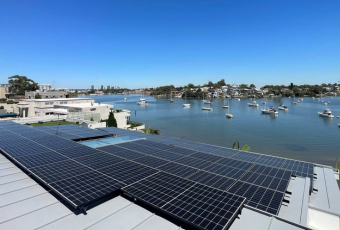
Solar Installations
Professional solar panel installation in Sydney for homes, businesses and strata properties.
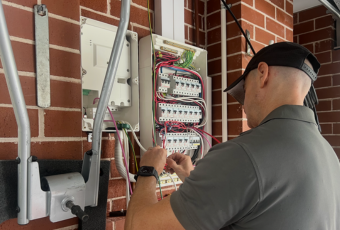
Solar Repairs
Reliable solar repairs in Sydney to fix faults, improve performance and keep your solar system working safely.
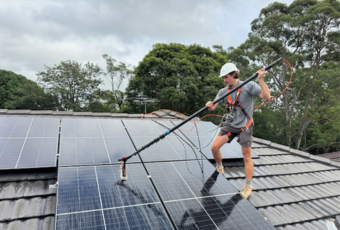
Solar Cleaning
Professional solar panel cleaning in Sydney to help improve efficiency, output and long-term system performance.
V2H & V2G in Australia FAQs
Find answers to the most common questions about Vehicle-to-Home, Vehicle-to-Grid, bidirectional EV charging and using an electric vehicle battery to power a Sydney home.
Can my EV power my house?
Some EVs can, but only where the vehicle has supported V2H capability and is paired with compatible bidirectional equipment and a correctly designed home electrical system. A large EV battery or V2L feature alone does not prove V2H compatibility.
What is V2H?
Vehicle-to-Home allows electricity stored in a compatible EV battery to be supplied back into the home’s electrical system through suitable bidirectional equipment.
What is V2G?
Vehicle-to-Grid allows a compatible EV to export stored electricity beyond the home and into the electricity grid. It requires an appropriate vehicle, approved bidirectional equipment and the relevant network connection pathway.
Is V2L the same as V2H?
No. V2L powers individual appliances or equipment from an EV outlet or adaptor. V2H integrates the vehicle with the home’s electrical system.
Do I need a special charger for V2H?
Yes. V2H requires compatible bidirectional charging equipment. A conventional one-way home EV charger cannot simply be assumed to send electricity from the vehicle back into the house
Which EVs support V2H in Australia
Only a limited number currently have manufacturer-confirmed Australian V2H or V2G pathways, and the position is changing quickly. Check the exact model, software, charger compatibility and manufacturer’s Australian warranty support before assuming the feature is available.
Can my EV power my home during a blackout?
Potentially, if the vehicle, bidirectional equipment and household electrical system are specifically designed for backup operation. V2H capability alone does not guarantee whole-home blackout backup.
Do I need solar panels for V2H?
No. A V2H-capable EV can potentially be charged from the grid and later provide electricity back to the home. Rooftop solar can make the system more attractive by allowing the EV to store locally generated electricity.
Do I still need a home battery if I have V2H?
Not necessarily, but a home battery remains available when the EV is away. Some homes may eventually use V2H instead of stationary storage, while others may use both.
Is V2H available in Sydney now?
There are now practical network pathways for approved bidirectional charging in Sydney, including through Ausgrid and Endeavour Energy. However, installation still depends on compatible vehicles, approved equipment and the specific property connection requirements.



MPV Solar is committed to providing industry-leading solar energy solutions across Sydney, backed by a proven track record of successfully completing over 5,000 projects. As a family-owned business, we prioritise personalised service and truly value our clients, ensuring that each system is tailored to meet your unique energy needs.
Copyright 2026. All Rights Reserved.
Created by Codex Digital and Yakka Consulting
Get in Touch
MPV Solar
Unit 3, 43-51 College St,
Gladesville NSW 2111
info@mpvgroup.com.au
(02) 9817 0333
Monday – Friday
8:30 – 5:00pm

