Call Us
Is a 100 kWh Battery the Right Size for Your Business?
A 100 kWh commercial battery can provide meaningful energy storage for a Sydney business, but the capacity alone does not tell you whether it is the right system.
For one business, 100 kWh could provide enough storage to capture excess midday solar and shift it into the afternoon. For another, 100 kWh may be too large. For a high-energy warehouse, factory or industrial facility, it could be far too small.
The right commercial battery should be determined by:
- electricity consumption
- interval meter data
- existing or proposed commercial solar
- excess solar exports
- afternoon and evening demand
- peak demand
- battery charge and discharge rates
- electricity tariffs
- operating hours
- available battery incentives
- expected financial return.
So rather than asking: “Is 100 kWh a good commercial battery size?” the better question is: “Can my business regularly and economically use 100 kWh of battery storage?”
If you’re still determining overall capacity, start with What Size Commercial Battery Does My Business Need?.
What Is a 100 kWh Commercial Battery?
A 100 kWh battery is an energy-storage system with approximately 100 kilowatt-hours of nominal or usable storage capacity, depending on how the product is specified.
The distinction matters.
Nominal Battery Capacity: Nominal capacity refers to the total amount of energy the battery is designed to store.
Usable Battery Capacity: Usable capacity is the amount of stored energy that can actually be discharged under normal operating conditions. Battery specifications, operating limits, degradation and system settings can mean the usable capacity is different from the headline nominal capacity.
When comparing 100 kWh commercial battery systems, businesses should therefore check whether the quoted 100 kWh refers to: nominal capacity or usable capacity.
How Long Can a 100 kWh Battery Power a Business?
It depends entirely on the electrical load. As a simple theoretical example: If a business is drawing 20 kW, 100 kWh of usable stored energy could supply that load for approximately five hours.
At 50 kW, the same 100 kWh would theoretically last approximately two hours.
At 100 kW, it would theoretically last around one hour.
Actual performance will vary due to usable battery capacity, system efficiency, operating settings, reserve capacity and changing electrical loads.
This is why asking “How long does a 100 kWh battery last?” is only useful when you also know how much power the business is consuming.
Commercial battery sizing requires both: kWh = how much energy is stored and kW = how quickly that energy needs to be delivered.
For businesses with short, high-load events, battery power output may be just as important as total storage capacity.
What Businesses Might Use a 100 kWh Battery?
A 100 kWh battery for business may be worth assessing for a range of commercial sites, including:
- warehouses
- manufacturing facilities
- workshops
- commercial offices
- retail premises
- refrigerated facilities
- automotive businesses
- industrial units
- hospitality venues
- agricultural businesses.
But business type alone does not determine battery size. Two warehouses of identical floor area can have completely different energy profiles. One may operate mainly during daylight hours and consume almost all of its solar generation directly.
Another may export significant solar during the middle of the day while continuing to operate machinery, refrigeration or HVAC into the late afternoon and evening.
The second site may present a stronger battery-storage opportunity. For warehouse-specific considerations, read Warehouse Solar Installation Sydney.
How Much Electricity Can a 100 kWh Commercial Battery Store?
A 100 kWh battery can store around 100 kilowatt-hours of energy at its stated capacity, subject to whether that capacity is nominal or usable.
To put 100 kWh into context, the important comparison is not with a generic household or business consumption figure.
It is with your site’s actual interval electricity usage.
MPV Solar can review electricity consumption in 15-minute or 30-minute intervals to identify:
- when electricity demand rises
- how long high-demand periods last
- when solar generation exceeds consumption
- how much electricity is exported
- when stored electricity could be used.
That tells us considerably more than a monthly electricity bill alone.
Can a 100 kWh Battery Store Excess Commercial Solar?
Yes. This is one of the most common applications for a 100 kWh solar battery in a commercial setting.
If a business produces more solar electricity than it is using during part of the day, that surplus energy may otherwise be exported to the grid.
A battery can potentially store some of that electricity and make it available later.
An indicative energy flow might look like:
Morning: commercial solar begins supplying site demand.
Midday: solar generation exceeds electricity consumption.
Battery charging: surplus solar charges the 100 kWh battery.
Afternoon: solar production begins falling while business demand remains high.
Battery discharge: stored energy reduces the amount of electricity purchased from the grid.
Whether 100 kWh is appropriate depends on how much surplus solar is actually available and how much electricity the business needs later.
For the broader strategy, read Commercial Solar + Battery: Is It Worth It for Sydney Businesses?.
How Much Solar Do You Need for a 100 kWh Battery?
There is no universal solar-system size that should be paired with a 100 kWh commercial battery. A 100 kWh battery does not automatically require a 100 kW, 200 kW or 250 kW solar system. The relationship depends on:
- daily solar generation
- onsite solar consumption
- available surplus solar
- battery charging window
- seasonal generation
- operating hours
- desired battery cycling.
For example, a 250 kW commercial solar system may generate far more than enough energy to charge 100 kWh of storage on some days, but a business with very high daytime consumption might use nearly all that generation directly.
Conversely, a smaller solar system on a lower-load property could potentially produce meaningful excess electricity for storage.
The answer comes from comparing solar generation against the business load profile, not applying a fixed solar-to-battery ratio.
Businesses considering larger systems can explore 250 kW Solar System Sydney and 500 kW Commercial Solar System.
Is 100 kWh Enough for a 250 kW Solar System?
Possibly. But the solar-system size alone cannot answer the question.
Consider two businesses with identical 250 kW solar systems.
Business A
Consumes most solar electricity directly throughout the day and exports only a relatively small amount.
A 100 kWh battery may be larger than the energy-shifting opportunity requires.
Business B
Has lower midday consumption but substantial afternoon demand and regularly exports significant solar.
A 100 kWh battery may be useful, or the data may show that even more storage could be justified.
The right battery capacity depends on:
how much electricity is available to charge the battery + how much stored electricity can be valuable later.
Read What Size Commercial Battery Does My Business Need? for the full commercial battery sizing framework.
Is 100 kWh Enough for a 500 kW Commercial Solar System?
Again, possibly, but there is no fixed ratio. A 500 kW commercial solar installation can produce substantial amounts of electricity, but a business may also have very high daytime consumption.
A 100 kWh battery could be used for a targeted purpose such as:
- shifting a specific amount of afternoon energy
- reducing a particular demand peak
- storing a portion of excess solar
- testing or staging a wider energy-storage strategy.
For another 500 kW site, modelling may demonstrate that several hundred kWh of storage would be more appropriate.
If you’re considering a larger rooftop system, see 500 kW Commercial Solar System for the solar-side considerations.
Can a 100 kWh Battery Reduce Peak Demand Charges?
Potentially.
A 100 kWh commercial battery may be used to discharge during high-demand periods and reduce the amount of electricity drawn from the grid.
But whether it is effective depends on two separate factors:
Battery Power
Can the battery discharge enough kW to meaningfully reduce the peak?
Battery Energy
Does it contain enough kWh to maintain that discharge for the required duration?
Imagine a business experiences a 40 kW demand spike above its normal load.
If the spike lasts for only a short period, a 100 kWh battery may have far more total energy than is required, but it still needs sufficient power output to address the peak.
If elevated demand continues for several hours, total battery capacity becomes increasingly important.
MPV Solar explains this strategy in How Batteries Can Save Your Business on Peak Demand Charges.
What Is the Payback on a 100 kWh Commercial Battery?
There is no standard payback period for a 100 kWh battery in Australia. Commercial battery payback depends on:
- equipment and installation cost
- available incentives
- electricity tariffs
- battery utilisation
- amount of solar stored
- grid electricity avoided
- peak demand savings
- battery cycling
- operating strategy
- system lifespan.
A 100 kWh battery that regularly charges with surplus solar and discharges during valuable periods may have a very different return from an identical battery that is only partly used.
Battery capacity does not create ROI on its own.
Useful battery cycling creates value. For a detailed financial explanation, read Commercial Battery Payback: When Does Battery Storage Make Financial Sense?.
How Much Does a 100 kWh Commercial Battery Cost in Australia?
There is no single standard 100 kWh commercial battery cost. Pricing can vary according to:
- battery manufacturer
- battery chemistry
- usable capacity
- inverter and power-conversion equipment
- discharge capacity
- energy-management system
- switchboard requirements
- installation location
- fire and safety requirements
- cabling
- network requirements
- site access
- monitoring
- backup functionality
- project complexity.
Available incentives can also substantially change the net project cost. For this reason, businesses should compare: installed cost after applicable incentives rather than battery hardware prices alone.
Is a 100 kWh Commercial Battery Eligible for the NSW Battery Incentive?
A 100 kWh battery sits within the eligible capacity range for the new NSW business battery incentive, which becomes available from 1 September 2026, subject to all scheme requirements.
The NSW program applies to eligible business battery installations between 20 kWh and 30 MWh.
For batteries between 20 kWh and 200 kWh, additional product and installer requirements apply.
Businesses installing qualifying new or additional solar around the same time as the battery may also be eligible for a larger incentive than a battery-only installation.
For the complete eligibility requirements, read NSW Commercial Battery Incentives 2026: What Sydney Businesses Need to Know.
Can a 100 kWh Business Battery Receive Federal Battery Support?
Potentially, depending on the system and business eligibility.
Under the Australian Government’s battery program, eligible households and small businesses can receive support for qualifying solar batteries with a total nominal capacity of up to 100 kWh.
However, federal Small-scale Technology Certificates are calculated only on eligible usable capacity within the program limits.
This makes a system around the 100 kWh threshold particularly important to assess carefully rather than assuming the entire capacity attracts the same level of support.
MPV Solar can assess applicable incentives when modelling a commercial battery project.
Should I Install 50 kWh, 100 kWh or 200 kWh?
The best size depends on how much stored electricity the business can economically use.
A 50 kWh Battery
May suit a smaller energy-shifting opportunity, targeted demand management or a business with relatively modest excess solar.
A 100 kWh Battery
May provide a useful middle ground for commercial properties with meaningful solar exports, afternoon demand or peak-demand requirements.
A 200 kWh Battery
May be more appropriate for larger commercial or industrial sites with greater excess solar, sustained later-day consumption or longer periods of high demand.
These capacities are illustrative only.
The correct battery may be 80 kWh, 150 kWh, 300 kWh or substantially larger depending on site data.
For the complete comparison, see What Size Commercial Battery Does My Business Need?.
Should I Install Two 50 kWh Batteries or One 100 kWh System?
This depends on the battery technology and overall system architecture.
Commercial battery systems can often be modular, allowing capacity to be built from multiple battery units.
The important considerations include:
- total usable capacity
- total charge and discharge power
- system redundancy
- available space
- inverter architecture
- expansion capability
- manufacturer requirements
- energy-management controls
- installation cost.
The number of physical battery units matters less than whether the complete storage system is correctly designed for the site’s load profile.
Can I Add More Battery Capacity Later?
Potentially. Some commercial battery systems are designed to allow additional modules or cabinets to be added later. However, future expansion should ideally be considered during the initial design. MPV Solar can assess:
- product expandability
- inverter capacity
- switchboard infrastructure
- available installation space
- cabling
- energy-management system
- network requirements
- future energy demand.
Planning for expansion can be particularly useful for businesses expecting electricity consumption to increase.
Is a 100 kWh Battery Too Big for My Business?
It could be. Warning signs that a battery may be oversized include:
- insufficient excess solar to charge it
- very little electricity use later in the day
- the battery rarely reaching a meaningful state of charge
- large amounts of capacity regularly remaining unused
- limited demand-charge opportunity
- savings failing to increase proportionally with battery size.
Installing additional capacity simply because it is available does not necessarily create additional savings.
This is why commercial battery payback and battery sizing should be modelled together.
Could a 100 kWh Battery Be Too Small?
Yes. A 100 kWh battery could be undersized where a business:
- regularly exports hundreds of kWh of useful solar electricity
- has substantial afternoon or evening loads
- requires longer periods of demand management
- operates 24 hours
- has high electricity consumption
- needs more discharge power or duration than the system can provide.
For larger warehouses, factories and industrial properties, commercial batteries can extend well beyond 100 kWh.
The new NSW business battery incentive itself applies to qualifying battery systems up to 30 MWh, demonstrating how broad commercial storage requirements can be.
Should I Install More Solar or a Bigger Battery?
That depends on where the energy opportunity exists. If the business has high daytime electricity demand and insufficient solar generation, additional solar may provide greater value.
If the site already exports substantial solar but buys electricity later in the day, additional battery storage may be more useful. In some cases, the strongest solution will be to expand both solar and battery capacity.
Businesses considering both should read Commercial Solar + Battery: Is It Worth It for Sydney Businesses?.
The current incentive environment also makes this comparison particularly relevant. Read Commercial Solar Rebate Australia 2026 and NSW Commercial Battery Incentives 2026 before finalising project timing.
How Does MPV Solar Determine Whether 100 kWh Is the Right Size?
Before recommending a 100 kWh commercial battery, MPV Solar can assess:
Electricity Consumption
- annual electricity use
- daily consumption
- interval meter data
- operating hours
- seasonal demand.
Solar Generation
- existing solar capacity
- proposed solar system size
- solar production
- onsite self-consumption
- grid exports.
Peak Demand
- maximum demand
- timing of peaks
- duration of high-load periods
- applicable demand tariffs.
Battery Requirements
- usable capacity
- charge rate
- discharge power
- cycling requirements
- operating strategy.
Financial Factors
- installation cost
- electricity tariffs
- avoided electricity purchases
- demand savings
- available incentives
- projected payback.
MPV Solar can then compare a 100 kWh battery with smaller and larger alternatives to determine whether it represents the strongest fit.
100 kWh Commercial Battery Sydney: Start With the Data
A 100 kWh commercial battery can be a useful energy-storage solution, but the number should be the result of the analysis, not the starting point.
The strongest commercial battery system is one that can be:
charged consistently + discharged when electricity has greater value + used enough to justify the investment.
MPV Solar can review your electricity bills, interval data, existing solar generation, exports, peak demand and operating hours to compare different commercial battery sizes.
Start with What Size Commercial Battery Does My Business Need? if you’re still determining capacity.
Read Commercial Battery Payback if financial return is your main consideration.
Or see NSW Commercial Battery Incentives 2026 if available incentives are influencing project timing.
Considering a 100 kWh Commercial Battery?
Talk to MPV Solar about a tailored commercial solar and battery assessment.
We can compare 50 kWh, 100 kWh, 200 kWh and other storage options against your actual electricity data to determine what size makes sense for your business.
Explore Commercial Solar Sydney or contact MPV Solar for a tailored assessment.
Complete Solar Solutions
Solar Installations, Repairs & Cleaning Across Sydney
Solar Installations
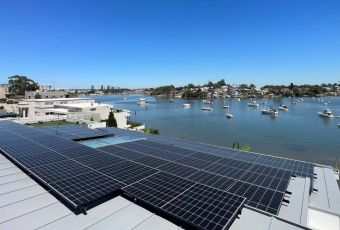
Professional solar panel installation in Sydney for homes, businesses and strata properties.
Solar Repairs
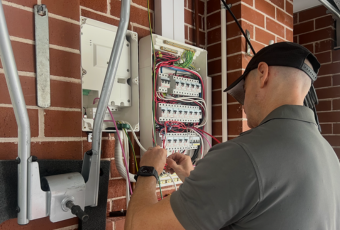
Reliable solar repairs in Sydney to fix faults, improve performance and keep your solar system working safely.

Solar Cleaning
Professional solar panel cleaning in Sydney to help improve efficiency, output and long-term system performance.
100 kWh Commercial Battery FAQs
These FAQs answer common questions about 100 kWh commercial battery systems, solar requirements, operating time, payback, incentives and business battery sizing.
Is 100 kWh a large commercial battery?
A 100 kWh battery is a meaningful commercial storage system, but commercial batteries vary from tens of kWh to multiple MWh. Whether 100 kWh is large or small depends on the site’s electricity consumption and intended battery use.
How long will a 100 kWh battery last?
It depends on the electrical load. At a constant theoretical 20 kW load, 100 kWh of usable storage represents around five hours of energy. At 50 kW, it represents around two hours. Actual operating time will vary with usable capacity, efficiency, reserve settings and changing loads.
How much solar do I need to charge a 100 kWh battery?
There is no fixed solar-system size. The important factors are how much surplus solar is available after the business’s daytime consumption and how long the battery has available to charge.
Is a 100 kWh battery suitable for a warehouse?
Potentially. Warehouses with excess daytime solar and significant later-day electricity demand can be worth assessing for 100 kWh or larger commercial battery systems. See Warehouse Solar Installation Sydney for more information.
Can a 100 kWh battery reduce peak demand charges?
Potentially. The battery must have enough discharge power and stored energy to address the site’s relevant demand peak. Read How Batteries Can Save Your Business on Peak Demand Charges for more information.
What is the payback on a 100 kWh commercial battery?
There is no standard payback period. It depends on battery cost, electricity tariffs, solar exports, peak-demand savings, battery utilisation and applicable incentives. Read Commercial Battery Payback: When Does Battery Storage Make Financial Sense?.
Is a 100 kWh battery eligible for the NSW business battery incentive?
A 100 kWh system sits within the NSW scheme’s eligible 20 kWh to 30 MWh battery-capacity range, subject to all other eligibility and technical requirements. Read NSW Commercial Battery Incentives 2026 for details.
Can a 100 kWh commercial battery qualify for federal battery support?
Eligible small businesses may qualify for Australian Government battery support for qualifying systems with up to 100 kWh nominal capacity. The amount of eligible capacity used to calculate STCs is subject to program limits and tapering.
Should I install a 100 kWh or 200 kWh commercial battery?
The answer depends on available charging energy, later electricity demand, peak loads, tariffs and expected battery utilisation. A larger battery does not automatically provide a better return. Read What Size Commercial Battery Does My Business Need? for the full sizing guide.
Does a 100 kWh battery need a 100 kW solar system?
No. There is no fixed 1:1 relationship between solar-system kW and battery kWh. Solar generation, self-consumption, exports and battery charging requirements should be modelled for the individual business.
Blog
Related articles
Catch up on the latest MPV Solar news and insights.



MPV Solar is committed to providing industry-leading solar energy solutions across Sydney, backed by a proven track record of successfully completing over 5,000 projects. As a family-owned business, we prioritise personalised service and truly value our clients, ensuring that each system is tailored to meet your unique energy needs.
Copyright 2026. All Rights Reserved.
Created by Codex Digital and Yakka Consulting
Get in Touch
MPV Solar
Unit 3, 43-51 College St,
Gladesville NSW 2111
info@mpvgroup.com.au
(02) 9817 0333
Monday – Friday
8:30 – 5:00pm