


 Call Us
Only a small number of vehicles currently have manufacturer-supported V2H or V2G capability in Australia. The Nissan LEAF and Mitsubishi Outlander and Eclipse Cross Plug-in Hybrids have established bidirectional capability, while brands including Hyundai, Kia and BYD are involved in Australian V2G testing and trials. Having V2L does not automatically mean an EV can power your home.
Which Electric Cars Can Actually Power a Home in Australia?
This is one of the most confusing parts of bidirectional EV charging.
A growing number of electric cars advertise features such as: V2L, V2H, V2G and bidirectional charging.But these terms are not interchangeable.
An EV may be able to run a camping fridge from a power outlet but not connect to your home’s switchboard.
Another vehicle may have been successfully discharged through a third-party charger in a trial but still lack manufacturer approval for normal customer V2H use.
And another may genuinely have manufacturer-supported bidirectional charging. For a Sydney homeowner considering Vehicle-to-Home, the question should therefore not simply be: “Can someone make electricity come out of this car?” It should be: “Does the manufacturer support bidirectional use of this exact Australian vehicle, with compatible equipment and warranty coverage?”
If you’re new to the technology, start with MPV Solar’s guide to Can Your EV Power Your Home? V2H & V2G Australia 2026.
What Counts as a V2H or V2G-Compatible EV?
MPV Solar would use a fairly strict definition. A vehicle should not be described as genuinely V2H or V2G compatible simply because a charger manufacturer has managed to discharge its battery.
The Australian Government defines verified V2H and V2G capability around automaker support, including warranty and servicing support for that type of operation.
That gives homeowners a much safer distinction between: Manufacturer supported and technically demonstrated. The two are not always the same.
This distinction matters even more in 2026 because bidirectional charger manufacturers are testing a growing range of vehicles before every car manufacturer has officially enabled or approved V2H/V2G use in Australia.
Does the Nissan LEAF Support V2H and V2G?
Yes. The Nissan LEAF remains one of Australia’s clearest examples of manufacturer-backed bidirectional EV technology. Australian-delivered LEAF models using CHAdeMO have long supported bidirectional charging.
Nissan has demonstrated LEAF vehicles supplying electricity to homes and the grid in Australian V2G projects, including the Realising Electric Vehicle Services project in the ACT.
Nissan has also demonstrated Australian customers using rooftop solar to charge a LEAF before using the vehicle battery to supply a property overnight.
The important limitation is its charging standard. Existing Australian LEAF bidirectional installations use CHAdeMO, while most newer Australian EVs are moving towards CCS2.
That makes the LEAF extremely important historically for Australian V2G, but it does not necessarily represent how the next generation of V2H systems will be configured.
The all-new LEAF also has different V2H/V2G specifications depending on market, so buyers should check the Australian specification rather than assuming overseas functionality applies locally.
Does the Mitsubishi Outlander PHEV Support V2H?
Yes. Mitsubishi Australia specifically states that the Outlander Plug-in Hybrid EV is bidirectional capable through its CHAdeMO DC charging system. With an approved bidirectional charger, the vehicle can support applications including V2H and V2G.
This makes the Outlander particularly interesting because it combines an electric drive battery with a petrol engine.Its battery is much smaller than many full battery-electric vehicles, but it still provides a manufacturer-supported pathway into bidirectional energy use.
For some households, that may be useful for evening energy shifting or backup. For others, a larger dedicated home battery or full battery-electric vehicle may provide greater usable energy.
Does the Mitsubishi Eclipse Cross PHEV Support V2H?
Yes. Mitsubishi also identifies the Eclipse Cross Plug-in Hybrid EV as bidirectional capable using CHAdeMO. As with the Outlander, an approved compatible bidirectional charger is required.
Mitsubishi notes that hardware availability and infrastructure can vary, which is an important reminder that owning a compatible vehicle is only one part of the V2H system. The charger, electrical design and network connection still need to be suitable.
Do Hyundai EVs Support V2H or V2G in Australia?
This is where careful wording really matters. Hyundai is actively involved in Australian V2G development and testing.
However, Hyundai Australia currently states that none of its vehicles support customer V2G charging in Australia.
Hyundai specifically warns against using unapproved bidirectional charging equipment because of potential safety, vehicle and warranty implications.
That means models such as the IONIQ 5, IONIQ 6 and IONIQ 9 should not currently be marketed to Australian homeowners as customer-ready V2H/V2G vehicles, even though Hyundai is actively developing and testing the technology.
This is exactly the distinction MPV Solar wants homeowners to understand. Being technically promising is not the same as being currently manufacturer-approved for your home.
What About Kia EV3, EV6 and EV9?
Kia’s EV platform has strong bidirectional potential and several Kia models have been involved in Australian V2G development and trials. Models attracting the most attention include the:
- Kia EV3
- Kia EV6
- Kia EV9
These vehicles also commonly offer V2L functionality, but that should not be confused with customer-ready V2H.
For example, Kia Australia currently promotes the EV9’s V2L capability for powering appliances and other compatible equipment. That is different from connecting the vehicle through a bidirectional charger into the home’s electrical system.
For homeowners considering one of these vehicles specifically for future V2H, MPV Solar recommends checking Kia Australia’s current written support for the exact model and software version before purchasing a bidirectional charger.
Does BYD Support V2H or V2G in Australia?
BYD is another brand worth watching closely. Several BYD models offer Vehicle-to-Load, which lets owners run appliances and equipment from the vehicle.
The BYD Atto 3 has also been used in Australian V2G programs and trials. But participation in a V2G trial is not the same thing as a feature that every Atto 3 owner can activate at home today. That means buyers should distinguish between:
BYD V2L capability and manufacturer-supported Australian V2H/V2G for normal customer use.
As bidirectional charging expands, BYD could become particularly relevant because of the number of its vehicles already operating in Australia. But the exact customer pathway should be verified at the time of installation.
Can a Tesla Model 3 or Model Y Power Your Home?
Not through a manufacturer-supported Australian V2H/V2G pathway at present. This is another area where online information can be misleading.
Third-party charger manufacturers have reported successfully discharging some Tesla vehicles during independent bidirectional tests.
That does not mean Tesla has approved V2H or V2G operation for Australian Model 3 or Model Y owners.
The Australian Government recommends checking manufacturer support and warranty documentation rather than relying on a charger manufacturer’s compatibility test alone.
For a Tesla owner wanting home energy storage today, Tesla’s established stationary solution remains the Powerwall rather than assuming the vehicle itself can act as the home’s battery.
What About Polestar, Volvo, Ford and Other EVs?
This is where the market becomes increasingly grey.
Third-party charger companies have demonstrated bidirectional discharge from an expanding range of EVs, including models from brands such as: Polestar, Volvo, Ford, Geely, BYD, Tesla and others.
But independent testing does not necessarily mean the vehicle manufacturer has enabled, certified or warrantied that use.
A current Australian compatibility tracker, for example, distinguishes between manufacturer-supported vehicles, vehicles undergoing manufacturer trials and vehicles that have only been successfully discharged in independent tests.
For MPV Solar, that distinction is crucial. We would not recommend describing an EV as fully V2H compatible simply because it appears on a third-party charger test list.
What About Cars With V2L?
Many modern EVs now offer Vehicle-to-Load. This can be extremely useful. V2L may allow your EV to power a fridge, tools, camping equipment, laptops or other appliances through a standard power outlet or adaptor.
But: V2L ≠ V2H
A vehicle with V2L does not automatically have the ability to feed electricity into your home’s switchboard. The Australian Government treats V2L, V2H and V2G as distinct types of Vehicle-to-Everything technology.
- V2L typically powers individual appliances.
- V2H powers the home electrical system.
- V2G can send energy back into the electricity network.
This distinction should be checked before buying an EV specifically for future home-energy use.
Why Do Some Overseas EVs Support V2H but Australian Versions Don’t?
Vehicle features are not always identical from one market to another. Differences can include:
- charging standards
- software
- vehicle certification
- local regulations
- manufacturer support
- approved chargers and electricity-network requirements.
This means a YouTube video showing a vehicle powering a home in Japan, Europe or the United States does not automatically prove that the Australian version can do the same thing.
Always check the Australian vehicle specification. This is particularly important for bidirectional charging because it interfaces directly with household electrical infrastructure and the electricity network.
Why Does Manufacturer Approval Matter?
Because your EV battery is one of the most expensive components in the vehicle.
Bidirectional operation involves additional charging and discharging.
If the manufacturer has not approved this use, there may be implications for: vehicle warranty, battery warranty, servicing support and system safety.
Hyundai Australia, for example, explicitly warns customers not to use unapproved V2G chargers with Hyundai EVs in Australia because of potential safety, vehicle and warranty risks.
This is why MPV Solar would always check both the charger and the vehicle manufacturer’s Australian documentation.
Does the Charger Also Need to Be Compatible?
Absolutely. A V2H-compatible vehicle does not work on its own. You also need compatible bidirectional charging equipment. And not every bidirectional charger supports every vehicle.
The charger needs to be suitable for: the vehicle’s charging protocol, the home’s electrical system, the proposed V2H or V2G function and the local network connection requirements.
A normal one-way 7kW or 22kW wall charger cannot simply be assumed to provide bidirectional operation.
What About Ausgrid and Endeavour Energy?
For Sydney homeowners, vehicle compatibility is only one part of the project. The property will normally sit within either the Ausgrid or Endeavour Energy network. Both networks have been developing connection pathways for bidirectional EV equipment.
A V2G installation is treated more like a distributed energy resource than a conventional one-way EV charger because electricity can flow back towards the grid. That means network approval and equipment requirements can apply.This is another reason the decision should not begin by purchasing a bidirectional charger online.
The vehicle, charger, switchboard, network and household energy system need to be assessed together.
Which EV Should You Buy If V2H Is Important to You?
If V2H is genuinely one of your purchase priorities, don’t rely on future promises. Ask the manufacturer or dealer:
- Does this exact Australian model currently support V2H or V2G?
- Which specific bidirectional charger is approved?
- Is bidirectional use covered by the vehicle and battery warranty?
- Is any software update required?
- Is the feature available now, or is it only planned or being trialled?
That final question is particularly important.“V2H ready”, “future capable” and “being tested” do not necessarily mean you can install the system at your Sydney home today.
Should You Buy an EV Now Based on Future V2H Capability?
Be cautious. V2H is developing quickly in Australia, and vehicles being tested today may become fully supported in future.
But buying an EV purely because a manufacturer or third-party charger supplier suggests bidirectional functionality may arrive later introduces risk.
If the feature is important to your purchase decision, prioritise confirmed Australian functionality rather than anticipated functionality.
Otherwise, choose the EV primarily because it suits your transport needs and design the home’s electrical infrastructure so it can accommodate future bidirectional technology when it becomes supported.
Can You Prepare Your Home for V2H Before Your EV Supports It?
Yes. This is often the smarter approach. Even if your current EV cannot provide V2H, a home can be planned around future electrical requirements.
That may involve considering: charger location, switchboard capacity, solar-system size, battery storage, electrical supply and future EV charging demand.
MPV Solar already integrates solar, battery storage and EV charging through its Solar + Battery + EV approach.
V2H adds another layer to that future planning.
Do You Still Need a Home Battery?
Possibly. Even if your future EV supports V2H, a dedicated stationary battery remains available when the vehicle leaves the property.
That can make it particularly useful for everyday solar storage and blackout backup.
A V2H-capable EV, meanwhile, may provide much greater additional storage when it is connected.
For the detailed comparison, read V2H vs Home Battery: Do You Still Need a Solar Battery If Your EV Can Power Your Home?.
This List Will Keep Changing
Bidirectional EV technology is moving quickly. The Australian Government is actively supporting additional V2G programs, and Australian standards and technical frameworks around consumer energy resources are also continuing to develop.
That means vehicles currently limited to trials may gain full manufacturer support. New vehicles will enter the market. Software may unlock new functionality. And additional chargers will become available.
For that reason, MPV Solar recommends checking compatibility at the time you are planning the installation, rather than relying on an old online vehicle list.
Thinking About an EV With Future V2H?
If you’re choosing an EV partly because you want it to become part of your home’s energy system, think beyond the vehicle.
MPV Solar can assess how future V2H could interact with your rooftop solar, home battery, EV charging, switchboard and electrical supply.
Explore EV Charging, Solar Battery Installation Sydney or start with Can Your EV Power Your Home? V2H & V2G Australia 2026.
Already have an EV in mind? Send MPV Solar the exact make, model and year along with your solar and electrical details so we can assess the home-energy side of the setup.
Complete Solar Solutions
Solar Installations, Repairs & Cleaning Across Sydney
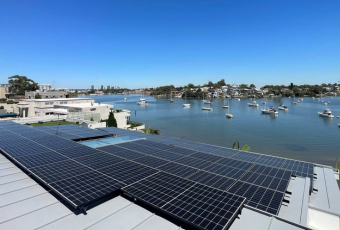
Solar Installations
Professional solar panel installation in Sydney for homes, businesses and strata properties.
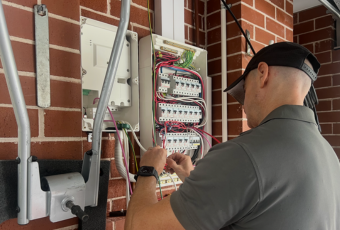
Solar Repairs
Reliable solar repairs in Sydney to fix faults, improve performance and keep your solar system working safely.
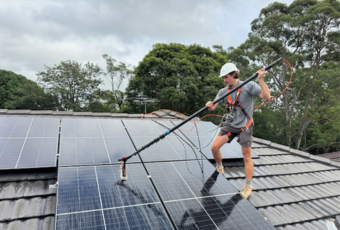
Solar Cleaning
Professional solar panel cleaning in Sydney to help improve efficiency, output and long-term system performance.
V2H & V2G Compatible EVs FAQs
Find answers to common questions about which electric cars support V2H and V2G in Australia, bidirectional EV compatibility and the difference between V2L and powering your home.
Which EVs currently support V2H in Australia?
The Nissan LEAF and Mitsubishi Outlander and Eclipse Cross Plug-in Hybrids have established manufacturer-backed bidirectional capability in Australia. Availability still depends on compatible bidirectional equipment and the proposed installation.
Which EVs support V2G in Australia?
The Nissan LEAF has an established Australian V2G history using CHAdeMO, while Mitsubishi supports bidirectional capability on its Outlander and Eclipse Cross PHEVs. Other manufacturers are actively testing and developing V2G pathways.
Does the Hyundai IONIQ 5 support V2H in Australia?
Not for normal customer use at present. Hyundai Australia currently states that its Australian vehicles do not support V2G and warns against the use of unapproved bidirectional charging equipment.
Does the Kia EV9 support V2H?
The EV9 offers V2L in Australia and Kia is involved in bidirectional-technology development. However, V2L should not be treated as customer-ready V2H. Check Kia’s current Australian documentation before planning a V2H installation.
Does the BYD Atto 3 support V2H?
The Atto 3 has been involved in Australian V2G trials and offers V2L, but trial participation is not the same as manufacturer-enabled V2H for every Australian customer. Confirm current BYD support before purchasing bidirectional equipment.
Can a Tesla Model 3 or Model Y power a house in Australia?
There is currently no manufacturer-supported Australian V2H or V2G pathway for Model 3 or Model Y owners, even though third-party companies have demonstrated bidirectional discharge from some vehicles.
Does V2L mean my EV supports V2H?
No. V2L generally allows the vehicle to power individual appliances. V2H connects the vehicle into the home’s electrical system through compatible bidirectional equipment.
Can a car become V2H compatible through a software update?
Potentially. Some bidirectional functionality can depend on vehicle software as well as hardware. However, do not assume a promised future update will be released in Australia until the manufacturer confirms it for the exact model.
Can any EV use a bidirectional charger?
No. The charger and vehicle need to support compatible bidirectional protocols, and manufacturer approval, electrical design and network requirements also need to be considered.
How can I check whether my EV will work with V2H?
Start with the Australian vehicle manufacturer’s documentation for your exact model, year and software version. Confirm that V2H/V2G use is supported under warranty, identify approved compatible charging equipment, then have the property’s electrical system and network requirements assessed.



MPV Solar is committed to providing industry-leading solar energy solutions across Sydney, backed by a proven track record of successfully completing over 5,000 projects. As a family-owned business, we prioritise personalised service and truly value our clients, ensuring that each system is tailored to meet your unique energy needs.
Copyright 2026. All Rights Reserved.
Created by Codex Digital and Yakka Consulting
Get in Touch
MPV Solar
Unit 3, 43-51 College St,
Gladesville NSW 2111
info@mpvgroup.com.au
(02) 9817 0333
Monday – Friday
8:30 – 5:00pm

