


 Call Us
Commercial solar can help reduce grid electricity purchased by cold storage facilities during daylight hours. Battery storage may also be useful for some sites, particularly where refrigeration demand continues overnight or peak demand charges are significant. But the right design depends on the facility’s actual 24-hour electricity profile, not rooftop size alone.
Why is refrigeration different from other warehouse loads?
A warehouse with standard office, lighting and equipment loads may use much of its electricity during business hours. Cold storage facilities often have substantial refrigeration demand after the sun goes down, on weekends and during shutdown periods.
The load can also change as doors open, products are loaded, weather becomes hotter or defrost cycles run. That makes system modelling more involved than simply choosing a number of panels from the roof area.
Can solar panels run commercial refrigeration?
Yes. When solar electricity is available, it can contribute towards the site’s refrigeration and other electrical loads. The facility will still need a reliable supply during periods when solar generation is low or unavailable.
For example, a site with a consistent 30kW average electrical load uses approximately 720kWh across 24 hours. That is an illustrative calculation, not a solar-system recommendation; actual compressor demand and solar generation vary across the day.
The useful question is how much of the site’s daytime demand an appropriately sized solar system can replace.
A more useful comparison than annual bills alone: Overlay at least a representative set of 15- or 30-minute meter readings with estimated solar generation, particularly across summer peaks, weekends and overnight operations. This shows whether the site is likely to consume most solar as it is generated or export significant amounts.
Is battery storage worth it for a cold store?
Sometimes. A battery could store surplus daytime solar to offset later grid purchases or help manage certain demand peaks.
But a cold store that consumes nearly every kilowatt-hour of its daytime solar immediately may have little surplus left to charge a battery. In that situation, an additional battery needs a separate financial or operational justification.
For sites with demand-based electricity charges, the timing of the highest measured grid demand also matters. Solar may reduce daytime imports, but a peak occurring after sunset will not be solved by panels alone. A battery can help only if it has the required discharge power, available charge and appropriate controls at the time of that peak.
MPV Solar’s Commercial Battery Size guide explains why energy capacity in kWh must be assessed alongside discharge power in kW.
What about backup power for refrigerated goods?
Backup is a different design objective from bill savings. A battery intended to protect refrigeration during a grid failure needs suitable switching, inverter capability, protected circuits and enough usable energy to support the required loads.
Large compressor starting currents and the need to maintain product temperatures can be critical. A battery described as 100kWh does not automatically have the power output or backup arrangement needed for an entire refrigerated warehouse.
Illustrative backup sizing: Critical refrigeration drawing an average of 25kW for three hours would require 75kWh of delivered energy before allowing for losses, usable-capacity limits or safety margins. That still says nothing about compressor start-up power or transfer arrangements. MPV would assess these separately with the facility’s electrical and refrigeration specialists.
See MPV Solar’s commercial battery blackout-backup guide and discuss critical loads with the site engineer before selecting equipment.
Can refrigeration demand be shifted into solar hours?
Some facilities may be able to optimise operating schedules, thermal storage or pre-cooling, but changes must never compromise required product temperatures, food safety or equipment specifications.
For cold storage, solar design should work alongside the refrigeration contractor’s operating requirements. The answer may involve better controls or more efficient equipment as well as additional energy generation.
What data does MPV Solar need?
Useful starting information includes:
- electricity bills and available 15- or 30-minute interval data
- compressor and refrigeration equipment details
- operating hours, loading cycles and temperature requirements
- roof plans, existing solar and electrical supply information
- peak-demand charges and any future expansion plans.
MPV Solar can then compare likely onsite solar use, export levels and battery options. For the broader property approach, see Warehouse Solar & Battery Storage Sydney and Commercial Solar.
Assess the full facility, not just the roof
For Sydney cold stores, food-processing sites and refrigerated distribution facilities, the objective is lower long-term electricity costs without compromising essential operations. MPV Solar can review the electrical and solar requirements alongside your refrigeration contractor and facilities team.
Complete Solar Solutions
Solar Installations, Repairs & Cleaning Across Sydney
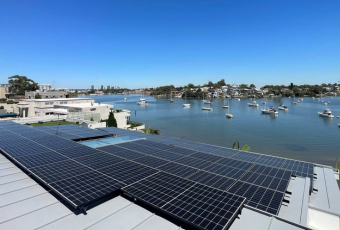
Solar Installations
Professional solar panel installation in Sydney for homes, businesses and strata properties.
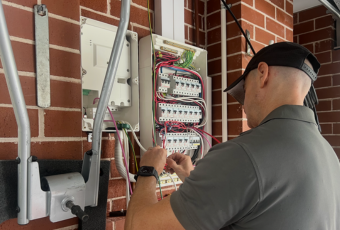
Solar Repairs
Reliable solar repairs in Sydney to fix faults, improve performance and keep your solar system working safely.
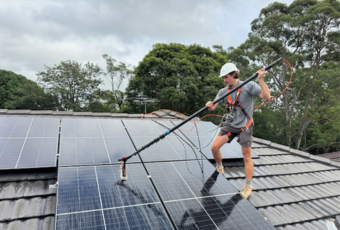
Solar Cleaning
Professional solar panel cleaning in Sydney to help improve efficiency, output and long-term system performance.
Cold Storage Solar and Batteries FAQs
These answers focus on refrigeration facilities considering commercial solar, battery storage and critical-load support.
Can solar panels power a refrigerated warehouse?
They can supply part of the warehouse’s electricity demand during generation hours. Grid or other approved power sources remain important outside those hours.
Are cold storage facilities good candidates for solar?
Often, but suitability depends on daytime loads, usable roof space, energy tariffs and system design.
Does a cold storage business need a battery?
Not automatically. A battery should be justified by actual surplus solar, evening use, tariff structures or backup needs.
Can a battery keep refrigeration running in a blackout?
It may support specified critical loads if designed with the correct electrical, inverter, protection and transfer arrangements.
Is 100kWh enough for a commercial cold room?
Capacity alone is insufficient. The required kW output, running duration, compressor starts and usable battery energy all matter.
Does refrigeration use power overnight?
Many refrigerated facilities do, which is why 24-hour load data is important for system sizing.
Should a facility upgrade refrigeration before installing solar?
It is worth assessing efficiency upgrades and solar together, because a lower future load may change the recommended solar and battery size.
Can solar reduce a cold store’s peak demand charges?
It depends on the time of the metered peak and the tariff. Solar alone may not reduce night-time peaks; correctly designed storage or demand management might.



MPV Solar is committed to providing industry-leading solar energy solutions across Sydney, backed by a proven track record of successfully completing over 5,000 projects. As a family-owned business, we prioritise personalised service and truly value our clients, ensuring that each system is tailored to meet your unique energy needs.
Copyright 2026. All Rights Reserved.
Created by Codex Digital and Yakka Consulting
Get in Touch
MPV Solar
Unit 3, 43-51 College St,
Gladesville NSW 2111
info@mpvgroup.com.au
(02) 9817 0333
Monday – Friday
8:30 – 5:00pm

