Call Us
Does Every Warehouse With Solar Need Battery Storage?
Warehouses can be excellent candidates for commercial solar.
Large roof areas, relatively low shading and substantial electricity consumption can allow a warehouse solar system to generate significant amounts of electricity onsite.
But installing solar does not automatically mean your warehouse also needs a battery.
For some facilities, most solar electricity can be consumed directly while it is being generated.
For others, significant excess solar may be exported during the middle of the day while the warehouse continues buying electricity from the grid later in the afternoon or evening.
That is where warehouse battery storage may become valuable.
The key question is not: “Can we install a battery?”
It is: “Can storing electricity improve the financial performance of our warehouse energy system?”
If you’re still assessing the rooftop solar opportunity, start with Warehouse Solar Installation Sydney.
When Does Warehouse Battery Storage Make Sense?
A commercial battery for a warehouse may be worth investigating where the site has one or more of the following:
- significant excess solar exports
- electricity consumption extending into the afternoon or evening
- peak demand charges
- refrigeration or cooling loads
- machinery operating beyond peak solar hours
- long operating hours
- variable electricity tariffs
- short periods of high electricity demand
- plans to increase future site electricity consumption.
A battery allows electricity generated or purchased at one time to potentially be used at another.
That ability to shift energy is where much of the value of commercial battery storage comes from.
For the broader business case, read Commercial Solar + Battery: Is It Worth It for Sydney Businesses?.
What Happens to Excess Warehouse Solar?
During strong solar-generation periods, a warehouse solar system may produce more electricity than the site is consuming.
Without battery storage, excess electricity may be exported to the grid, subject to the site’s network and export arrangements.
A battery creates another option.
Surplus electricity can potentially be:
generated by the warehouse solar system
→ stored in the commercial battery
→ used later by the warehouse
This can increase solar self-consumption, meaning the business uses more of the electricity produced on its own roof.
Whether this makes financial sense depends on how much excess solar is available and whether the warehouse has sufficient electricity demand later in the day.
Can a Warehouse Battery Charge From Solar?
Yes. A warehouse solar battery system can be designed to charge from surplus rooftop solar generation.
An indicative energy profile might look like this:
Morning
Warehouse electricity demand rises and solar generation begins supplying part of the load.
Midday
Solar output increases and may exceed the warehouse’s immediate electricity consumption.
Battery Charging
Available surplus solar charges the commercial battery instead of all excess generation being exported.
Afternoon
Solar generation begins falling while warehouse demand remains high.
Battery Discharge
Stored energy can be used to reduce electricity drawn from the grid.
The exact strategy depends on the warehouse’s interval meter data, solar generation and electricity tariff.
Does a Warehouse Need a Battery if It Uses Most Solar During the Day?
Possibly not. A warehouse with strong daytime consumption may already achieve high solar self-consumption without storage.
For example, sites operating:
- refrigeration
- automated equipment
- conveyor systems
- lighting
- air conditioning
- manufacturing equipment
- processing machinery
throughout solar-generation hours may consume a large proportion of their solar electricity directly.
In this situation, commercial solar alone may provide the stronger initial investment.
Battery storage becomes more interesting when there is valuable electricity demand that solar alone cannot directly supply.
That is why MPV Solar recommends comparing solar-only versus solar + battery rather than assuming every large warehouse needs storage.
Can Warehouse Battery Storage Reduce Peak Demand Charges?
Potentially. For some warehouses, peak demand charges can represent an important part of the electricity bill.
A short period where refrigeration, machinery, HVAC or other large electrical loads operate at the same time can significantly increase grid demand.
A suitably designed commercial battery may discharge during these high-demand periods to reduce the amount of power drawn from the grid.
This is known as peak shaving.
However, battery sizing for peak demand requires more than simply choosing a large kWh capacity.
MPV Solar needs to assess:
- size of the demand peak
- duration of the peak
- battery discharge power
- usable battery capacity
- frequency of the event
- applicable electricity tariff.
For a detailed explanation, read How Batteries Can Save Your Business on Peak Demand Charges.
Which Warehouses Are Strong Candidates for Solar + Battery?
Battery suitability depends more on the site’s energy profile than the warehouse type, but some facilities may have particularly useful load characteristics.
Cold Storage Warehouses
Refrigeration loads can continue around the clock.
A site generating surplus solar during the day may potentially store some electricity for refrigeration loads later in the afternoon or evening.
Distribution Centres
Long operating hours, automated equipment, lighting and HVAC can create electricity demand outside the strongest solar-generation window.
Manufacturing Warehouses
Machinery and production equipment can create both sustained electricity consumption and periods of high demand.
Food and Beverage Warehouses
Refrigeration, processing equipment and temperature control can result in extended electricity demand.
Large Industrial Warehouses
Large roofs can accommodate substantial solar capacity, potentially creating significant surplus generation where onsite consumption does not match solar output.
The key is still the same:
solar generation needs to be matched against actual electricity consumption.
How Big Should a Warehouse Solar System Be?
There is no standard warehouse solar-system size. Depending on electricity consumption, roof space and site requirements, a warehouse might justify:
- less than 100 kW
- 250 kW
- 500 kW
- 750 kW
- 1 MW
- or potentially more.
The largest system that physically fits on the roof is not automatically the most financially attractive system.
For a detailed warehouse-specific assessment, read Warehouse Solar Installation Sydney.
Businesses assessing larger systems can also explore:
250 kW Solar System Sydney and 500 kW Commercial Solar System.
What Size Battery Does a Warehouse Need?
There is no standard warehouse battery size either.
A smaller warehouse might make effective use of around 50 kWh or 100 kWh of storage.
A larger logistics, cold-storage or industrial facility could require:
- 200 kWh
- 500 kWh
- 1 MWh
- or substantially more.
Battery size should reflect:
available charging energy + later electricity demand + peak demand requirements + tariff opportunity.
Installing the biggest available battery does not guarantee the best return.
For the complete sizing framework, read What Size Commercial Battery Does My Business Need?.
Is a 100 kWh Battery Enough for a Warehouse?
Potentially. A 100 kWh commercial battery may suit some medium-sized warehouse applications, but warehouse floor area or solar-system size alone cannot determine whether 100 kWh is appropriate.
Consider two warehouses with the same 250 kW solar system.
One exports approximately 40 kWh of useful surplus solar on a typical day.
The other regularly has considerably more surplus generation and sustained afternoon electricity demand.
Their optimal battery capacities could be very different.
The correct question is:
How many kWh can the warehouse regularly charge and economically use later?
For a deeper capacity-specific guide, read 100 kWh Commercial Battery: Is It Right for Your Business?.
How Do You Size Warehouse Solar and Battery Together?
The strongest system design considers solar and storage as part of the same energy model.
Step 1: Analyse Warehouse Electricity Consumption
Review:
- annual consumption
- daily consumption
- interval meter data
- operating hours
- seasonal variations.
Step 2: Identify Peak Demand
Determine:
- maximum grid demand
- when demand peaks occur
- how long they last
- which equipment contributes.
Step 3: Model Solar Generation
Assess:
- available roof area
- proposed solar capacity
- expected generation
- direct solar consumption
- likely exports.
Step 4: Identify the Battery Opportunity
Determine:
- how much excess solar is available
- when stored energy could be used
- whether demand peaks can be reduced
- how frequently the battery could cycle.
Step 5: Compare Battery Sizes
Rather than modelling only one option, compare different capacities such as:
50 kWh vs 100 kWh vs 200 kWh
or larger commercial battery configurations where appropriate.
Step 6: Model Financial Return
Compare:
- solar-only investment
- solar + battery investment
- available incentives
- electricity savings
- demand savings
- projected payback.
This approach helps prevent both solar and battery systems from being oversized.
What Is the Payback on Warehouse Battery Storage?
There is no universal warehouse battery payback period.
Financial performance depends on:
- installed battery cost
- available incentives
- electricity tariffs
- amount of excess solar
- grid electricity avoided
- peak-demand savings
- operating hours
- battery utilisation
- battery cycling
- system lifespan.
A warehouse that regularly charges a battery from surplus solar and discharges it during high-value periods may achieve very different financial results from a warehouse where the battery spends much of the day unused.
For the full ROI framework, read Commercial Battery Payback: When Does Battery Storage Make Financial Sense?.
Does a Bigger Warehouse Battery Deliver Better Payback?
Not automatically. Suppose modelling shows that a warehouse can regularly and economically shift approximately 90 kWh of energy each day.
A 100 kWh battery may capture most of that opportunity.
Increasing capacity to 200 kWh would double the headline storage capacity but may not double the savings if the additional 100 kWh cannot be regularly charged and discharged.
This is why battery utilisation matters as much as battery capacity.
The objective should be to find the amount of storage the warehouse can use productively, not the largest battery the site can accommodate.
Should a Warehouse Add More Solar Before Installing a Battery?
Sometimes. If the existing warehouse solar system produces little or no excess electricity, there may not be enough surplus solar to regularly charge a battery.
In that situation, expanding the solar system could potentially produce a stronger energy model.
Conversely, a warehouse already exporting substantial amounts of solar may have a clear battery opportunity without requiring major additional solar capacity.
The decision should compare: more solar versus battery storage versus more solar + battery storage.
For businesses considering a broader commercial energy strategy, read Commercial Solar + Battery: Is It Worth It for Sydney Businesses?.
What if My Warehouse Already Has a 100 kW Solar System?
An existing warehouse solar system should be assessed against the site’s current electricity consumption, not just the load profile from when the system was installed.
Since installation, the business may have:
- expanded operations
- added machinery
- increased refrigeration
- extended operating hours
- increased electricity consumption
- added new warehouse space.
There may also be additional usable roof area available for solar expansion.
MPV Solar can assess whether the stronger opportunity is: existing solar + battery expanded solar or expanded solar + battery.
If your business is considering a larger system, read Commercial Solar Rebate Australia 2026 before determining project timing.
Are There NSW Incentives for Warehouse Battery Storage in 2026?
Eligible NSW businesses can access new commercial battery incentives from 1 September 2026, subject to the scheme’s requirements.
Warehouse battery installations may potentially qualify where the business, battery system and installation satisfy the eligibility criteria.
Eligible businesses installing qualifying new or additional solar alongside the battery may also receive a higher incentive than eligible battery-only projects.
This makes 2026 particularly relevant for warehouses considering solar expansion and battery storage at the same time.
Read NSW Commercial Battery Incentives 2026: What Sydney Businesses Need to Know before finalising your project.
What About Commercial Solar Rebates for Warehouses?
Commercial solar incentives are also changing, creating another reason for larger warehouse operators to revisit projects that previously did not stack up.
This is particularly relevant for warehouses considering systems above the traditional small-scale commercial solar range.
Read Commercial Solar Rebate Australia 2026 for the latest information on larger commercial solar systems and incentive changes.
Importantly, incentives should improve a well-designed project’s economics.
They should not determine system size.
Solar and battery capacity should still be designed around how the warehouse actually consumes electricity.
Should I Install Warehouse Solar and Battery at the Same Time?
It can make sense to assess them together, even if the ultimate project is staged. Designing the energy system as a whole allows MPV Solar to consider:
- current electricity consumption
- future demand
- rooftop solar capacity
- likely solar exports
- battery requirements
- switchboard capacity
- electrical infrastructure
- installation areas
- future expansion.
A warehouse may ultimately decide to: install solar now and prepare for battery later or install solar + battery together.
Either way, considering future storage during the initial commercial solar design can help avoid unnecessary limitations later.
Warehouse Solar Only vs Solar + Battery
Solar Only May Be Better When:
- the warehouse has high daytime electricity consumption
- most solar can be consumed directly
- exports are relatively low
- later-day consumption is limited
- peak demand savings from storage are minimal.
Solar + Battery May Be Worth Considering When:
- significant solar is exported
- warehouse operations continue after solar generation drops
- refrigeration or machinery runs into the evening
- peak demand charges are material
- energy can be economically shifted into higher-value periods
- current incentives improve the project economics.
The strongest approach is to model both options side by side.
Warehouse Solar + Battery Storage Starts With Interval Data
Large warehouse roofs can make solar look straightforward. Battery storage is different.
The question is not how much battery equipment will fit beside the warehouse. The question is: How much stored electricity can the warehouse actually use to create financial value?
MPV Solar can review: interval meter data + existing solar + proposed solar + exports + peak demand + operating hours + tariffs + incentives
to determine whether warehouse battery storage makes sense and what size system should be considered.
If you’re beginning with solar, read Warehouse Solar Installation Sydney.
If you’re comparing solar with storage, read Commercial Solar + Battery: Is It Worth It for Sydney Businesses?.
If battery capacity is the next question, see What Size Commercial Battery Does My Business Need?.
And if ROI is driving the decision, read Commercial Battery Payback.
Does Your Sydney Warehouse Need Battery Storage?
Talk to MPV Solar about a tailored warehouse solar and battery assessment.
We can analyse your electricity consumption, solar generation, roof capacity, exports and peak demand to compare: warehouse solar only versus warehouse solar + battery storage
and determine which approach makes the strongest financial sense for your facility.
Explore Commercial Solar Sydney or contact MPV Solar for a tailored assessment.
Complete Solar Solutions
Solar Installations, Repairs & Cleaning Across Sydney
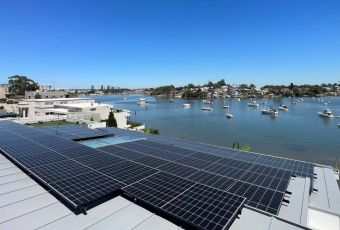
Solar Installations
Professional solar panel installation in Sydney for homes, businesses and strata properties.
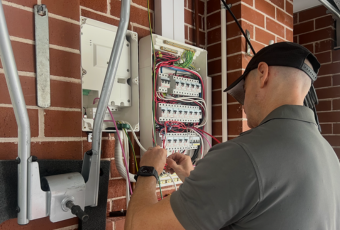
Solar Repairs
Reliable solar repairs in Sydney to fix faults, improve performance and keep your solar system working safely.
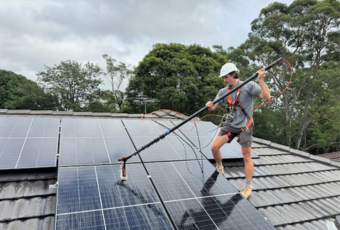
Solar Cleaning
Professional solar panel cleaning in Sydney to help improve efficiency, output and long-term system performance.
Warehouse Solar + Battery FAQs
These FAQs answer common questions about warehouse battery storage, commercial solar, battery sizing, peak demand, payback and NSW incentives.
Does a warehouse need a battery with solar?
Not always. A warehouse consuming most of its solar electricity directly during the day may not require storage. Battery storage becomes more attractive where there is excess solar, later-day electricity consumption, demand charges or another valuable energy-shifting opportunity.
Can a warehouse battery store excess solar?
Yes. A commercial battery can potentially store surplus rooftop solar electricity and make that energy available later when the warehouse would otherwise purchase electricity from the grid.
What size battery does a warehouse need?
There is no standard size. Warehouse batteries may range from tens of kWh to hundreds of kWh or multiple MWh depending on electricity consumption, solar exports, demand peaks and operating hours. Read What Size Commercial Battery Does My Business Need? for more information.
Is a 100 kWh battery enough for a warehouse?
Potentially. A 100 kWh battery may suit some warehouses, while other sites may require significantly more or less storage. See 100 kWh Commercial Battery: Is It Right for Your Business? for a detailed guide.
Can warehouse battery storage reduce peak demand charges?
Potentially. A suitably designed battery can discharge during high-demand periods and reduce the site’s grid demand. Read How Batteries Can Save Your Business on Peak Demand Charges for more information.
What is the payback period for warehouse battery storage?
There is no standard payback period. ROI depends on battery cost, solar exports, electricity tariffs, demand charges, battery utilisation and available incentives. See Commercial Battery Payback: When Does Battery Storage Make Financial Sense?.
Can I add a battery to an existing warehouse solar system?
Potentially. The existing solar system, inverter architecture, switchboard, electrical infrastructure, solar exports and site load profile should first be assessed.
Should I add more solar or a battery to my warehouse?
It depends on the energy profile. If the warehouse has high daytime demand but insufficient solar generation, additional solar may provide more value. If significant solar is already exported and the warehouse uses electricity later, battery storage may be worth investigating.
Are there battery incentives for NSW warehouses in 2026?
Eligible businesses may be able to access the new NSW commercial battery incentive from 1 September 2026, subject to scheme requirements. Read NSW Commercial Battery Incentives 2026 for more information.
Should a warehouse install solar and battery storage together?
It can be worth modelling them together. This allows solar generation, self-consumption, exports, storage capacity, electrical infrastructure and available incentives to be considered as one commercial energy system.
Blog
Related articles
Catch up on the latest MPV Solar news and insights.



MPV Solar is committed to providing industry-leading solar energy solutions across Sydney, backed by a proven track record of successfully completing over 5,000 projects. As a family-owned business, we prioritise personalised service and truly value our clients, ensuring that each system is tailored to meet your unique energy needs.
Copyright 2026. All Rights Reserved.
Created by Codex Digital and Yakka Consulting
Get in Touch
MPV Solar
Unit 3, 43-51 College St,
Gladesville NSW 2111
info@mpvgroup.com.au
(02) 9817 0333
Monday – Friday
8:30 – 5:00pm