Call Us
Previously too big for the small-scale solar rebate? Run the numbers again.
A major change is coming to Australia’s commercial solar market. The Australian Government has announced plans to expand access to the Small-scale Renewable Energy Scheme for solar installations up to 1 megawatt (MW), substantially increasing the existing 100 kW limit.
For Sydney businesses with warehouses, factories, industrial facilities and other large commercial buildings, that could fundamentally change the financial case for installing a larger commercial solar system.
Under the current rules, solar PV systems must generally be no larger than 100 kW to qualify for Small-scale Technology Certificates (STCs). Systems above that threshold have traditionally moved into the Large-scale Renewable Energy Target framework.
Under the announced changes, eligible commercial and industrial solar systems up to 1 MW are expected to gain access to an upfront incentive, with reporting indicating the new arrangements are intended to commence from 1 October 2026.
For some Sydney businesses, it may be time to revisit a solar project that previously did not stack up.
What is changing with the commercial solar rebate in 2026?
At present, the Small-scale Renewable Energy Scheme provides an upfront financial incentive through STCs for eligible solar PV systems up to 100 kW. The government has announced that the scheme will be expanded to cover significantly larger commercial solar installations, up to 1 MW, or 1,000 kW.
That is ten times the existing solar system capacity limit. The announced changes are specifically aimed at what has become known as the “missing middle” of Australia’s solar market: factories, warehouses, industrial properties, farms, schools and other commercial facilities that have large roofs and substantial daytime electricity consumption but have lagged behind residential solar adoption.
This could make systems such as:
- 150 kW commercial solar systems
- 250 kW solar systems
- 300 kW warehouse solar systems
- 500 kW commercial solar systems
- 750 kW industrial solar systems
- 1 MW commercial solar installations
more financially attractive.
Is the new 1 MW commercial solar rebate available now?
Not yet. As of 6 August 2026, the Clean Energy Regulator still lists the current SRES solar PV eligibility limit as 100 kW. The government has announced that the expanded arrangements are intended to begin from 1 October 2026. That makes the period before commencement a good time for businesses to begin investigating:
- electricity consumption
- interval meter data
- available roof area
- switchboard and electrical infrastructure
- network connection requirements
- proposed commercial solar system size
- solar self-consumption
- potential battery storage
- estimated commercial solar payback period.
A commercial solar project of this size requires more planning than simply putting panels on an available roof.
Why did the old 100 kW threshold matter?
The 100 kW threshold has historically been an important dividing line in Australian solar. Eligible systems of 100 kW or less could access STCs, which are generally converted into an upfront discount on the solar installation.
Solar systems above 100 kW instead fell into the large-scale renewable energy framework and could potentially generate Large-scale Generation Certificates. While larger solar projects could still be financially attractive, the different incentive structure, approvals and project complexity could affect the business case.
By extending the small-scale style incentive to systems as large as 1 MW, the government is attempting to make medium-scale commercial solar simpler and more financially attractive.
What could the commercial solar rebate mean for Sydney businesses?
For many businesses, the biggest opportunity is not simply receiving a rebate. It is being able to design a commercial solar system around the building’s actual energy consumption, rather than designing around the old 100 kW incentive threshold.
Consider a large Sydney warehouse that uses significant electricity between 7 am and 5 pm. The property may technically have enough roof space and electricity demand to justify a 250 kW, 500 kW or even larger commercial solar installation.
Under the old system, stopping at around 100 kW could sometimes make the incentive process simpler. The new arrangements could encourage businesses to ask a much better question: How much commercial solar does our business actually need?
Is a 250 kW solar system suitable for a Sydney business?
A 250 kW solar system may suit medium to large businesses with substantial daytime electricity consumption. Potential applications include:
- warehouses
- manufacturing facilities
- distribution centres
- commercial offices
- automotive facilities
- cold storage facilities
- shopping and retail facilities
- schools
- clubs
- industrial units.
The right system size should not be selected purely according to available roof space. MPV Solar can assess electricity consumption data to understand when energy is being used and how much of the electricity generated by solar is likely to be consumed directly by the business. The Australian Government’s business solar guidance similarly recommends considering self-consumption when determining commercial solar system size.
How much power does a 250 kW commercial solar system generate?
Generation varies according to factors such as: location, roof orientation, panel angle, shading, system design, equipment efficiency, weather conditions.
Rather than relying on a generic generation figure, businesses should model expected solar production against their actual interval electricity data.
That provides a much more useful indication of potential electricity savings and commercial solar payback.
What about a 500 kW commercial solar system?
For larger industrial facilities, a 500 kW commercial solar system can potentially offset a substantial amount of grid electricity during daylight hours.
These installations can be particularly well suited to businesses operating machinery, refrigeration, processing equipment, air conditioning, pumps or other large electrical loads throughout the day.
A 500 kW commercial solar project requires detailed engineering and assessment of:
- electrical demand
- maximum demand
- network connection capacity
- switchboards
- protection systems
- roof condition and structural suitability
- export limitations
- inverter capacity
- monitoring
- future electricity requirements.
It should therefore be designed as an energy project rather than treated as an oversized residential solar installation.
Are warehouses good for commercial solar?
Often, yes. Warehouse solar installation in Sydney is one of the strongest opportunities created by the new incentive threshold. Warehouses often combine two valuable characteristics: Large roof space + significant daytime electricity consumption.
Businesses operating warehousing, logistics, distribution, refrigeration or manufacturing may therefore have an opportunity to generate a substantial proportion of their electricity on site. Australia currently has considerably less solar installed across commercial rooftops than residential rooftops. Recent research cited approximately 5.6 GW of business rooftop solar compared with around 22 GW installed on homes, despite businesses having substantial electricity demand. That gap is exactly what the new commercial solar incentive is intended to address.
Are factories suitable for commercial solar panels?
Factories can be particularly strong candidates for solar because manufacturing operations frequently consume large amounts of electricity during daylight hours, when the solar system is generating.
A factory solar panel installation can potentially supply electricity directly to equipment such as: manufacturing machinery, compressors, pumps, ventilation, air conditioning, refrigeration, process equipment, office areas, EV chargers and fleet charging.
High daytime consumption can increase solar self-consumption, reducing the amount of electricity that needs to be purchased from the grid.
Can industrial buildings install commercial solar?
Yes. Commercial solar can be installed across many types of industrial buildings, including factories, warehouses, workshops, logistics facilities and distribution centres. However, commercial solar for industrial buildings requires careful engineering. A proper assessment should consider the building itself as well as the electrical system. That may include:
- roof condition
- roof type
- structural loading
- roof access
- shading
- electrical capacity
- existing switchboards
- network connection requirements
- energy demand
- future business expansion
- EV fleet charging
- commercial battery storage.
How much is the new commercial solar rebate?
Government reporting around the announced changes indicates incentives of approximately 20% of installation costs may be available in some circumstances, with potential savings for large qualifying projects reaching into the hundreds of thousands of dollars.
However, businesses should avoid treating a percentage figure as a guaranteed rebate. The actual financial benefit will depend on the final scheme settings, eligible equipment, system capacity, STC calculations and certificate value. A detailed commercial solar proposal should therefore show the estimated incentive separately from the underlying project cost.
What is the commercial solar payback period?
There is no single commercial solar payback period that applies to every business. Payback depends heavily on how the business consumes electricity. Factors can include:
- commercial solar installation cost
- available rebate or incentive
- system size
- electricity tariffs
- daytime energy consumption
- solar self-consumption
- demand charges
- export rates
- operating hours
- system performance
- maintenance
- future electricity prices.
Government-backed business solar guidance notes that payback needs to be calculated according to the individual business and recommends analysing electricity consumption and expected solar generation rather than relying solely on generic figures.
For MPV Solar, this is an important sales message: Don’t size a commercial solar system around a headline rebate. Size it around the business.
Should businesses with an existing 100 kW solar system expand it?
Potentially and this could become one of the biggest opportunities created by the new rules. Many businesses installed approximately 100 kW because this previously represented the upper limit for access to STCs. But the building itself may have:
- considerably more usable roof space
- higher electricity consumption
- new machinery
- increased operating hours
- EV chargers
- an electrified vehicle fleet
- future battery storage requirements.
If the business has grown since the original solar installation, its existing 100 kW system may no longer be optimally sized. The question becomes: If we were designing our commercial solar system today, would we still stop at 100 kW? For many businesses, the answer may be no.
Should I install commercial solar now or wait for the new rebate?
Businesses considering systems above 100 kW should investigate the timing carefully. Because the announced expansion is intended to commence on 1 October 2026, the eligibility date and final rules could materially affect the financial outcome of a project. Rather than simply delaying everything, businesses can use the lead-up period to complete much of the feasibility work. That might include:
- analysing electricity bills and interval data
- conducting a commercial solar site assessment
- reviewing roof space and condition
- estimating the appropriate solar system size
- assessing electrical infrastructure
- investigating network connection requirements
- modelling solar generation and self-consumption
- comparing system sizes
- calculating projected savings and payback
- confirming incentive eligibility before installation.
Previously too big for the small-scale solar rebate? Run the numbers again.
This is the campaign message I would push hardest. Businesses that previously investigated a 150 kW, 250 kW, 500 kW or larger commercial solar system may have decided not to proceed because the economics, certificate structure or project complexity did not stack up.
Those calculations may now be outdated. If your Sydney warehouse, factory or commercial building uses significant electricity during the day, the expanded commercial solar incentive creates a good reason to revisit the project.
MPV Solar can assess your electricity usage, existing electrical infrastructure, roof space and future energy requirements to determine what size commercial solar system actually makes sense for your business.
Thinking about commercial solar in Sydney?
Talk to MPV Solar about a commercial solar assessment and find out whether the new 2026 commercial solar rebate changes the numbers for your business.
Complete Solar Solutions
Solar Installations, Repairs & Cleaning Across Sydney
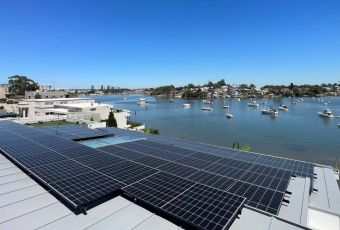
Solar Installations
Professional solar panel installation in Sydney for homes, businesses and strata properties.
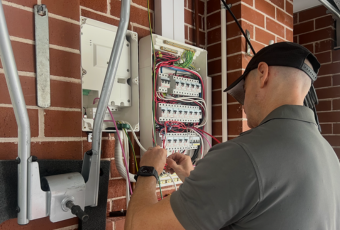
Solar Repairs
Reliable solar repairs in Sydney to fix faults, improve performance and keep your solar system working safely.
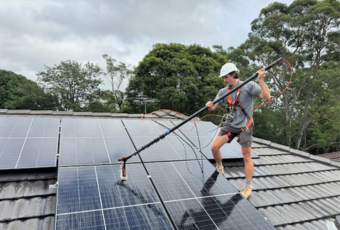
Solar Cleaning
Professional solar panel cleaning in Sydney to help improve efficiency, output and long-term system performance.
Commercial Solar Rebate FAQs
Commercial solar incentives are changing quickly. These answers cover the questions Sydney businesses are likely to be asking as the new 1 MW commercial solar arrangements approach.
Is there a commercial solar rebate in Australia in 2026?
Yes. Eligible solar systems can currently access the Australian Government’s Small-scale Renewable Energy Scheme through STCs. The existing solar PV limit is generally 100 kW, but the government has announced plans to expand the incentive to eligible commercial solar installations up to 1 MW.
Is there a commercial solar rebate in NSW?
NSW businesses can access applicable federal solar incentives, subject to system and installation eligibility requirements. Businesses should also check for relevant NSW energy efficiency or decarbonisation programs, as these can change over time.
When does the 1 MW commercial solar rebate start?
The announced changes are expected to commence from 1 October 2026. Businesses planning installations around this period should confirm the final eligibility requirements before installation.
What is the maximum solar system size for the commercial solar rebate?
Currently, the SRES limit for solar PV is 100 kW. Under the announced 2026 changes, eligible commercial solar systems of up to 1 MW or 1,000 kW are intended to access the expanded incentive.
Can a 250 kW solar system receive a rebate?
Under the announced expansion, a qualifying 250 kW commercial solar installation could fall within the new 1 MW threshold once the changes commence. Final eligibility should be confirmed before proceeding with installation.
Can a 500 kW commercial solar system receive the rebate?
A 500 kW solar system would fall below the proposed 1 MW maximum. Eligibility will still depend on the final scheme rules, equipment, installer requirements and commissioning date.
Can warehouses get a commercial solar rebate?
Eligible warehouse solar installations may qualify. Warehouses are one of the building types specifically suited to medium-scale commercial solar because they often have substantial roof space and daytime electricity demand.
Can factories claim commercial solar incentives?
Potentially. Manufacturing facilities and factories with significant daytime electricity demand may be particularly strong candidates for larger commercial solar systems.
Can I expand my existing 100 kW commercial solar system?
Potentially. Businesses that previously stopped at approximately 100 kW should consider reassessing their energy usage and available roof space under the new arrangements. Electrical capacity, network requirements and the treatment of the existing installation must also be considered.
Is commercial solar worth it for a warehouse?
It can be. Warehouses with substantial daytime electricity consumption can often consume solar electricity directly as it is generated. The business case should be assessed using electricity interval data, solar production modelling, project cost and projected self-consumption.
What is the payback period for commercial solar?
Commercial solar payback varies considerably. System size, energy consumption, electricity tariffs, rebates, self-consumption, demand charges and operating hours all affect the calculation. A site-specific commercial solar feasibility assessment provides a more meaningful figure than a generic payback estimate.
How big should a commercial solar system be?
The right commercial solar system should be based on electricity usage, interval meter data, available roof space, network constraints, future energy requirements and financial objectives, not simply the maximum rebate threshold.
Should I install 250 kW or 500 kW of commercial solar?
The better system depends primarily on your building’s electricity demand. A business consuming substantial electricity throughout the day may benefit from a larger solar system, while a lower-consumption site could export too much generation if the system is oversized.
Can commercial solar help charge an electric vehicle fleet?
Yes. Businesses transitioning to electric vehicles can incorporate expected EV charging demand into the design of their commercial solar system. Solar, EV charging, batteries and electrical infrastructure should ideally be planned together.
Do I need a commercial battery with commercial solar?
Not necessarily. Businesses that use significant electricity while the solar system is generating may already have high solar self-consumption. Battery storage becomes more attractive where energy needs to be shifted into evenings, demand managed or additional resilience provided.
Who installs commercial solar systems in Sydney?
Commercial solar systems should be designed and installed by appropriately accredited and licensed professionals familiar with commercial electrical infrastructure, network connection requirements and larger-scale solar design. MPV Solar provides commercial solar design and installation across Sydney.
Blog
Related articles
Catch up on the latest MPV Solar news and insights.



MPV Solar is committed to providing industry-leading solar energy solutions across Sydney, backed by a proven track record of successfully completing over 5,000 projects. As a family-owned business, we prioritise personalised service and truly value our clients, ensuring that each system is tailored to meet your unique energy needs.
Copyright 2026. All Rights Reserved.
Created by Codex Digital and Yakka Consulting
Get in Touch
MPV Solar
Unit 3, 43-51 College St,
Gladesville NSW 2111
info@mpvgroup.com.au
(02) 9817 0333
Monday – Friday
8:30 – 5:00pm