Call Us
Home EV Charger Installation Costs in Sydney
For many Sydney homeowners, a dedicated home EV charger will cost approximately $1,500 to $3,500 supplied and installed.
A straightforward installation involving a standard 7 kW charger, a suitable switchboard and a short cable run may fall towards the lower end of that range. More complex installations involving switchboard upgrades, trenching, three-phase power, load management or solar and battery integration can cost more than $5,000.
These figures should be treated as a general budgeting guide rather than a fixed quote. The NSW Government publishes a broad indicative range of $200 to more than $5,000 per charging unit installed, reflecting the significant differences between charger types, properties and electrical requirements.
The final cost depends on more than the charger attached to the wall. Your electrician must also consider:
- The condition and capacity of your switchboard
- The distance between the switchboard and charger
- Whether your home has single-phase or three-phase power
- Your preferred charging speed
- Cable routing and access
- Load-management requirements
- Solar and battery compatibility
- Whether electrical supply upgrades are required
That is why an EV charger quote should start with an assessment of your home, switchboard, vehicle and charging habits, not simply the price of the charger.
Home EV charger installation cost in Sydney at a glance
Australian EV charger suppliers currently place common home charger hardware at approximately $700 to $1,500, although premium solar-compatible and energy-management models can cost more. Installation alone commonly costs around $1,000 to $1,500, depending on the switchboard, cable distance and electrical work required.
Tesla currently advises Australian customers that a straightforward Wall Connector installation can cost approximately $750 to $1,500, with additional costs where extra electrical work is required.
The only way to establish an accurate price is to have a licensed electrician assess the property and provide a detailed scope of work.
What does a standard EV charger installation include?
A standard home EV charger installation will generally include more than mounting the charging unit.
Depending on the property and charger, the work may include:
- Inspecting the existing electrical supply
- Assessing switchboard capacity
- Installing a dedicated electrical circuit
- Running appropriately sized cabling
- Installing circuit protection and safety equipment
- Mounting the charging unit
- Connecting and configuring the charger
- Testing the installation
- Connecting the charger to Wi-Fi or its monitoring app
- Setting charging schedules or output limits
- Providing the required electrical compliance documentation
Electrical wiring work in NSW must be completed by, or under the supervision of, a licensed electrician. Electricians must also submit a Certificate of Compliance for Electrical Work confirming that the installation has been tested and completed in accordance with relevant safety requirements.
When comparing quotes, check whether the charger, cabling, electrical protection, commissioning, compliance certificate and installation warranty are all included.
What affects the cost of installing an EV charger?
1. The type of EV charger you choose
The charger itself can represent a significant part of the total project price.
Basic chargers may provide straightforward plug-in charging, while more advanced units can offer:
- Charging schedules
- Solar-surplus charging
- Energy-use monitoring
- Dynamic load management
- Remote app control
- RFID access
- Multiple user profiles
- Automatic software updates
- Integration with solar inverters and batteries
- Power sharing between multiple chargers
A simple charger may be suitable when you only need reliable overnight charging. A solar-aware smart charger may provide better long-term value when you already have solar panels, a home battery or variable electricity tariffs.
The cheapest charger is not always the most economical charger to own. A unit that can automatically charge from excess solar or lower-cost electricity may help reduce ongoing charging costs.
2. The distance from the switchboard
Cable distance is one of the biggest variables in an EV charger installation quote.
A charger installed on the other side of the wall from the main switchboard will generally cost less than one installed in:
- A detached garage
- A carport at the rear of the property
- A basement parking area
- A garage on another level
- A driveway requiring underground cabling
- A location requiring difficult roof or wall access
Longer cable runs require more cable, more labour and potentially more complex installation methods.
The cheapest charger location may therefore be different from the most convenient location. A good installer should help you balance accessibility, appearance, cable reach and installation cost.
3. Your switchboard condition
A dedicated EV charger creates a substantial new electrical load.
Before installation, the electrician should assess whether your existing switchboard has:
- Enough physical space
- Suitable circuit protection
- Adequate electrical capacity
- Modern safety switches
- Compliant wiring and earthing
- Capacity to support other major appliances
A crowded, outdated or non-compliant switchboard may require upgrading before the charger can be installed safely.
This is particularly important when the home already has several large electrical loads, such as:
- Ducted air conditioning
- Electric hot water
- Induction cooking
- Pool equipment
- A solar battery
- A second EV charger
- Electric heating
The Australian Government notes that a dedicated home EV charger may require an upgrade to the switchboard or electricity supply connection.
4. Single-phase or three-phase power
Many Sydney homes have single-phase electricity. This is generally sufficient for a 7 kW home EV charger.
A 22 kW charger will normally require three-phase power. However, installing a 22 kW charger does not automatically mean your vehicle will charge at 22 kW.
The actual charging speed is limited by several factors:
- The power available at the property
- The charger output
- The vehicle’s onboard AC charger
- The battery’s state of charge
- Load-management settings
- Other electricity use within the home
Dedicated residential chargers generally operate between 7 kW and 22 kW. Australian Government guidance says they can charge an EV approximately three to ten times faster than a standard power point and may add around 30 to 80 kilometres of driving range per charging hour.
For many Sydney households, a correctly designed 7 kW charger provides enough overnight charging without the additional cost of upgrading to three-phase power.
Learn more about three phase power
5. Electrical supply upgrades
Your switchboard may be suitable, but the overall electrical supply to the property may still have limitations.
If the additional EV charging load requires changes to the property’s network connection, an application to the electricity distributor may be necessary.
Ausgrid advises that a licensed electrical contractor should assess the property and determine whether a connection application is required. Ausgrid approval may be needed where the supply connection must be modified or upgraded.
Supply upgrades can add cost and time to the project, which is another reason to assess the home before purchasing a high-powered charger.
Learn more about switchboard upgrades
6. Dynamic load management
Dynamic load management allows a charger to adjust how much power it uses according to the total electricity demand within the home.
For example, the charger may temporarily reduce its output when the air conditioning, oven and hot-water system are all operating. It can then increase the charging rate when household demand falls.
Load management can:
- Reduce the risk of exceeding the home’s available electrical capacity
- Help avoid unnecessary supply upgrades
- Coordinate charging with other appliances
- Support two EV chargers at one property
- Improve control over household energy use
The equipment and monitoring required for dynamic load management can increase the initial installation cost, but it may be more economical than upgrading the entire electricity supply.
7. Solar and battery integration
Charging an EV from rooftop solar can significantly change the way the charger should be selected and configured.
A solar-compatible charger may monitor how much excess solar electricity the home is producing and direct that available energy into the vehicle.
Depending on the charger and home-energy system, it may be possible to:
- Prioritise excess solar for EV charging
- Avoid charging from the grid during peak periods
- Set minimum solar-generation thresholds
- Prioritise the home battery before the vehicle
- Schedule charging for daytime solar production
- Monitor solar, household and vehicle energy use in one app
The Australian Government recommends charging while rooftop solar is generating where possible and notes that smart charging systems can automatically charge an EV when electricity is cheapest or when excess solar is available.
MPV Solar has completed integrated Sydney installations combining rooftop solar, SolarEdge energy systems and smart EV charging, including residential projects in Gladesville and Henley.
While solar integration may increase the initial project cost, it can help homeowners use more of their own solar electricity rather than purchasing energy from the grid.
8. Indoor or outdoor installation
Many EV chargers are suitable for outdoor use, but the exact installation location still matters.
An outdoor charger may require:
- A weather-rated charging unit
- Additional mechanical protection
- A mounting post or pedestal
- Underground cabling
- Bollards or impact protection
- Additional sealing and weatherproofing
- A longer charging cable
The installer should also consider where the vehicle is normally parked, the location of its charging port and whether a future vehicle may have the port on a different side.
9. Trenching and building work
Installation costs can rise where cables need to pass under:
- Concrete driveways
- Paved areas
- Gardens
- Retaining walls
- Multiple floors
- Finished internal walls
- Fire-rated building elements
Ask whether any excavation, concrete cutting, wall repairs or reinstatement work is included in the quote.
Is a 7 kW home charger enough?
For many Sydney homeowners, yes. A 7 kW charger is often the practical choice because it can provide substantial overnight charging using a single-phase electrical supply.
The right charger size depends on:
- How far you drive each day
- Your EV battery capacity
- How long the car is parked at home
- Whether you charge every day
- Whether you own one or two EVs
- Whether you have solar panels
- Your home’s available electrical capacity
- The maximum AC charging rate of the vehicle
Installing a 22 kW charger will not deliver faster charging if the vehicle can only accept 7 kW or 11 kW through its onboard AC charger.
Before spending more on a high-capacity charger or three-phase upgrade, check what your vehicle can accept and how quickly it genuinely needs to recharge.
Can I charge my EV from a normal power point instead?
Many EVs can be charged from a standard household power point using an appropriate portable charging cable.
This may be sufficient when:
- You drive relatively short distances
- The vehicle remains parked overnight
- You only need to replace a small amount of charge each day
- The outlet and circuit have been assessed as suitable
- You do not need solar-aware or scheduled charging
However, a standard power point is considerably slower than a dedicated Level 2 charger.
A dedicated charger may be a better option when you:
- Drive longer distances
- Need faster or more predictable charging
- Have more than one EV
- Want to charge from excess solar
- Want scheduled or off-peak charging
- Need load management
- Want permanent charging equipment in the garage
Around 80% of reported EV charging in Australia takes place at home, making the home charging setup an important part of the overall ownership experience.
Have a licensed electrician assess the outlet and circuit before relying on a standard power point for regular EV charging.
How much does a Tesla Wall Connector cost to install in Sydney?
The total price consists of two main components:
- The Tesla Wall Connector
- The electrical installation
Tesla currently estimates that a straightforward Australian installation can cost approximately $750 to $1,500, excluding additional work that may be identified at the property.
The final Sydney installation price will depend on:
- Distance from the switchboard
- Single-phase or three-phase configuration
- Switchboard capacity
- Cable routing
- Wall or pedestal mounting
- Load-management requirements
- Whether multiple Wall Connectors will share power
The Tesla Wall Connector can also be used with compatible non-Tesla vehicles, making future vehicle compatibility another consideration when designing the installation.
Can solar panels reduce the cost of charging an EV?
Solar panels will not necessarily reduce the cost of installing the charger, but they may substantially reduce the ongoing cost of charging the vehicle.
The best results usually occur when:
- The EV is parked at home during solar-production hours
- The charger can respond to excess solar generation
- Charging is scheduled around household demand
- The solar system has enough spare generation
- The charger, inverter and monitoring equipment are configured correctly
Sydney households eligible for the Solar Sharer Offer may also be able to charge during the free midday electricity period between 11 am and 2 pm, subject to the plan’s conditions and daily usage cap. The Australian Government specifically identifies EV charging as a suitable use for the free-power window.
A proper assessment should consider the home’s solar generation, household consumption and vehicle charging needs together.
Are home EV charger rebates available in NSW?
Government assistance changes over time, so homeowners should check current eligibility before relying on a grant or rebate in their budget.
The NSW Government’s home EV charger information currently points eligible homeowners and landlords towards zero-interest loans of up to $15,000 for qualifying energy-saving technology, including EV chargers.
Eligibility requirements include Australian citizenship or permanent residency and a combined annual taxable household income of up to $210,000. Other conditions also apply.
Business, fleet, apartment and public charging programs have separate eligibility requirements and should not be confused with household support.
What should be included in an EV charger quote?
A detailed quote should clearly state:
- Charger brand and model
- Maximum charging capacity
- Single-phase or three-phase configuration
- Tethered or untethered design
- Length of charging cable
- Cable route from the switchboard
- Included cable distance
- Circuit-protection equipment
- Load-management equipment
- Switchboard work
- Solar or battery integration
- Wi-Fi and app configuration
- Testing and commissioning
- Electrical compliance documentation
- Product and installation warranties
- Exclusions and possible additional charges
Be cautious of quotes that provide one flat figure without asking about the property, switchboard, charger location or electrical supply.
Should I buy the charger before contacting an electrician?
It is usually better to have the property assessed before purchasing a charger.
A charger may look suitable online but may not be the best match for:
- Your electrical supply
- Your vehicle
- Your solar inverter
- Your home battery
- Your preferred charging schedule
- Your future vehicle plans
- Your Wi-Fi coverage
- Your available switchboard capacity
Buying the wrong charger can lead to unnecessary electrical work, reduced functionality or poor integration with the rest of the home-energy system.
An experienced installer can help you choose a charger that suits the vehicle you own now while allowing for future solar, battery or second-EV requirements.
Why choose MPV Solar for home EV charger installation?
An EV charger should not be treated as an isolated appliance.
It becomes one of the largest electrical loads in the home and needs to work safely alongside the switchboard, solar system, battery and other high-demand appliances.
MPV Solar provides Sydney homeowners with an integrated approach to EV charging that can include:
- Home electrical-capacity assessment
- Switchboard inspection
- EV charger selection
- Dedicated circuit installation
- Solar-compatible charging
- Battery and inverter integration
- Dynamic load management
- Smart charging configuration
- Future energy planning
- Ongoing local support
MPV Solar is a family-owned Sydney business with experience delivering residential solar, battery and integrated EV charging systems across the city. Its current project portfolio includes complete solar-plus-EV installations designed to power both the home and vehicle.
Get an EV charger installation quote in Sydney
The cost of installing an EV charger at home in Sydney depends on the charger, switchboard, cable route, electrical supply and the way you want to use energy.
A cheaper installation is not good value if the charger is incorrectly sized, cannot use your excess solar or requires expensive changes later.
MPV Solar can assess your:
- Current and future vehicles
- Daily driving requirements
- Existing electrical supply
- Switchboard capacity
- Solar and battery system
- Charger location
- Smart-charging requirements
You will then receive a tailored recommendation based on how your home actually uses electricity.
Planning to install a home EV charger? Contact MPV Solar for a tailored Sydney EV charger assessment and installation quote.
Complete Solar Solutions
Solar Installations, Repairs & Cleaning Across Sydney
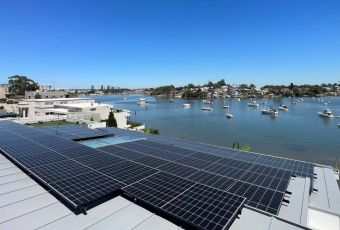
Solar Installations
Professional solar panel installation in Sydney for homes, businesses and strata properties.
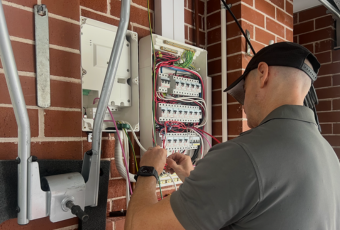
Solar Repairs
Reliable solar repairs in Sydney to fix faults, improve performance and keep your solar system working safely.
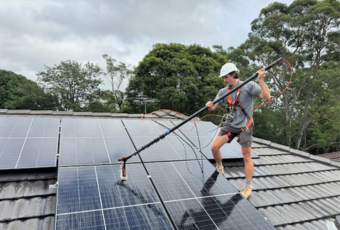
Solar Cleaning
Professional solar panel cleaning in Sydney to help improve efficiency, output and long-term system performance.
FAQs About EV Charger Installation Costs
insert text here
How much does it cost to install an EV charger at home in Sydney?
Many standard home EV charger installations cost approximately $1,500 to $3,500 supplied and installed. Simple installations may cost less, while switchboard upgrades, long cable runs, trenching, three-phase work or solar integration can push the price above $5,000.
What is the cheapest way to install a home EV charger?
The lowest-cost installations generally involve a standard 7 kW charger positioned close to a modern switchboard with sufficient spare capacity. Costs increase when longer cable runs, trenching, load management or electrical upgrades are required.
Do I need a switchboard upgrade for an EV charger?
Not every home needs a switchboard upgrade. An electrician must assess whether the board has sufficient physical space, electrical capacity, circuit protection and safety equipment to support the charger.
Is a 7 kW EV charger fast enough for home use?
A 7 kW charger is sufficient for many Sydney households and can usually provide substantial charging overnight. The right capacity depends on daily driving, vehicle battery size, parking time and the vehicle’s maximum AC charging rate.
Does a 22 kW charger require three-phase power?
A 22 kW home charger will generally require three-phase power. Your vehicle must also be capable of accepting 22 kW AC charging to benefit from the full output.
Can an EV charger be installed far from the switchboard?
Yes, but a longer cable run will generally increase installation costs. Detached garages, basement carparks, driveways and underground routes may also require trenching or additional building work.
Can I charge my EV directly from solar panels?
Yes. A compatible smart charger can use available solar generation to charge the vehicle. The exact setup will depend on the charger, inverter, solar system, home battery and monitoring equipment.
How much does a Tesla charger cost to install?
Tesla currently estimates approximately $750 to $1,500 for a straightforward Australian Wall Connector installation. This does not include additional switchboard, cabling, supply or building work that may be required.
Do I need a licensed electrician to install an EV charger in NSW?
Yes. Fixed electrical wiring work in NSW must be completed by, or under the supervision of, a licensed electrician. The work must be tested and supported by a Certificate of Compliance for Electrical Work.
How long does it take to install a home EV charger?
A straightforward charger installation may be completed within one day. More complex projects involving switchboard upgrades, underground cabling, supply changes or distributor approval may take longer.
Are there rebates for installing an EV charger in NSW?
Eligibility and programs change. The NSW Government currently identifies zero-interest loans of up to $15,000 for eligible homeowners and landlords installing qualifying energy-saving technology, including EV chargers. Income and other eligibility requirements apply.
Is it cheaper to charge an EV from solar or the grid?
Charging from available rooftop solar can reduce the amount of grid electricity you need to buy. The outcome depends on when the vehicle is at home, solar-system output, household demand and whether the charger can follow excess solar production.
Blog
Related articles
Catch up on the latest MPV Solar news and insights.



MPV Solar is committed to providing industry-leading solar energy solutions across Sydney, backed by a proven track record of successfully completing over 5,000 projects. As a family-owned business, we prioritise personalised service and truly value our clients, ensuring that each system is tailored to meet your unique energy needs.
Copyright 2026. All Rights Reserved.
Created by Codex Digital and Yakka Consulting
Get in Touch
MPV Solar
Unit 3, 43-51 College St,
Gladesville NSW 2111
info@mpvgroup.com.au
(02) 9817 0333
Monday – Friday
8:30 – 5:00pm