Call Us
Buying an EV can change how much electricity your home uses. But it doesn’t necessarily mean you need a huge home battery.
Buying an EV can change how much electricity your home uses. But it doesn’t necessarily mean you need a huge home battery. Will your existing solar be enough? Do you need a bigger battery? Should your EV charge from the solar panels, the home battery or the grid? And how much battery storage do you actually need?
The answer depends less on the size of the EV battery itself and more on how far you drive, when your car is at home, how much solar you produce and when your household uses electricity. For many Sydney homeowners, the best solution is not simply installing the largest home battery available. It is designing the solar panels, home battery and EV charger to work together.
Do I Need a Home Battery to Charge an EV With Solar?
No. If your EV is parked at home while your rooftop solar system is generating electricity, you may be able to charge your car directly from your solar panels through a compatible EV charger. That can often be one of the simplest ways to make use of excess daytime solar. A home battery becomes particularly useful when the timing does not line up.For example, you may benefit from battery storage if:
- your EV is away from home during peak solar-production hours
- you return home and charge in the evening
- your household has high evening electricity use
- you regularly export substantial excess solar during the day
- you want greater control over peak electricity costs
- you also want battery backup for the home
How Much Electricity Does My EV Actually Need?
Start with your driving rather than your car’s maximum battery capacity. Your EV might have a very large battery, but that does not mean you need to recharge the entire battery every day. A homeowner travelling a relatively short distance each day may only need to replace a small amount of energy overnight. Someone travelling long distances every day will have very different requirements. When MPV Solar assesses a solar, battery and EV charging system, useful questions include:
- How many kilometres do you drive each week?
- How often do you charge your EV?
- What time is the vehicle normally home?
- Can it charge during daylight hours?
- How much rooftop solar do you currently generate?
- How much solar are you exporting?
- How much electricity does the rest of the home use overnight?
- Do you have one EV or expect to have two?
- Do you want the home battery reserved for household use?
These questions provide a much more useful starting point than simply asking, “What size is your EV battery?”
Should My Home Battery Charge My EV?
It can, but it does not always make sense to make the solar battery your primary EV energy source. Your home solar battery storage has other work to do. It may need to power:
- lighting
- refrigeration
- air conditioning
- appliances
- electric cooking
- home offices
- pool equipment
- heat pumps
- overnight household loads
An EV can represent a significant additional load. If the EV is allowed to draw freely from your home battery, it can potentially consume energy that you wanted to keep for the house overnight. That is why battery and EV charging priorities matter. A properly configured home-energy system may be able to:
- Power the home from solar first.
- Charge the battery from excess solar.
- Direct additional solar into the EV.
- Prevent the EV from draining the home battery.
- Schedule EV charging for lower-cost periods when solar is unavailable.
The right priority depends on your household.
Is a Bigger Battery Better if I Own an EV?
Not necessarily. A larger home battery can make sense where there is enough solar generation or low-cost electricity available to regularly charge it and enough evening demand to use the stored energy. But simply installing more storage does not create more electricity. If you have a relatively small solar system and little excess solar generation, a large battery may regularly sit partly empty. In that case, increasing your solar-panel capacity may be a better first step.
How Much Solar Do I Need for an EV and Home Battery?
This is where solar, battery and EV planning need to come together. Your solar system needs to generate enough electricity to cover some combination of:
Household daytime use + battery charging + EV charging + other electrification loads.
If you are planning an EV alongside other upgrades such as induction cooking, electric hot water or additional air conditioning, your future electricity requirements may be very different from when your original solar system was installed.
That is why an existing 5 kW or 6.6 kW solar system should not automatically be considered adequate simply because it performs well today. Your future load matters.
What If I Already Have a Home Battery?
If your battery was sized before you bought your EV, your energy needs may have changed considerably.
You may be able to:
- add additional battery modules
- increase battery storage capacity
- add another compatible battery
- increase solar generation
- adjust battery and EV charging priorities
- upgrade the inverter or energy-management system
Whether an existing battery can be expanded depends on the battery model, inverter, age, system configuration and manufacturer requirements.
Should you add more battery storage to your existing solar system
Should I Increase Solar or Battery Storage When I Buy an EV?
This is often the better question.
Consider more solar if:
- your existing system has little excess daytime generation
- your EV can regularly charge during the day
- your household electricity use is increasing
- you have suitable unused roof space
- your existing system is relatively small
Consider more battery capacity if:
- you regularly export significant excess solar
- the EV is usually away during daylight hours
- your current battery runs low early in the evening
- you have substantial overnight household consumption
- you want greater backup capability
Consider both if: your household is moving towards broader electrification and the existing solar and battery system was designed for much lower electricity consumption.
Design the Whole Home, Not Just the EV Charger
An EV charger is becoming part of a much larger home-energy system. The strongest result comes from looking at: Solar + battery + inverter + switchboard + EV charger + household consumption together.
At MPV Solar, we can assess your existing solar generation, electricity consumption, battery capacity, inverter, switchboard and EV charging requirements before recommending an upgrade. That means you get a system designed around how your household actually uses electricity today and where your energy needs are heading next.
Book a solar and EV charging compatibility assessment with MPV Solar and experience the MPV difference.
Complete Solar Solutions
Solar Installations, Repairs & Cleaning Across Sydney
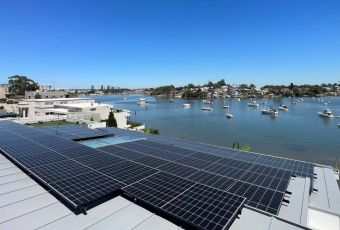
Solar Installations
Professional solar panel installation in Sydney for homes, businesses and strata properties.
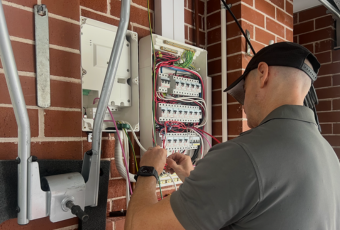
Solar Repairs
Reliable solar repairs in Sydney to fix faults, improve performance and keep your solar system working safely.
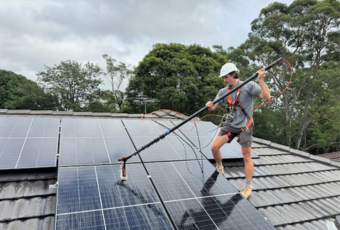
Solar Cleaning
Professional solar panel cleaning in Sydney to help improve efficiency, output and long-term system performance.
FAQs: Home Battery Storage for EV Charging
Find answers to common questions about using home battery storage to charge your EV, including system size, compatibility, charging times and solar integration.
How much battery storage do I need for an EV?
There is no universal battery size for an EV. The right home battery capacity depends on daily driving, when the car is charged, household electricity consumption, solar generation and whether you want the battery to supply the car, the home or both.
Do I need a battery if I have solar and an EV?
No. You can charge an EV using rooftop solar while the vehicle is home during the day. Battery storage becomes more useful when you want to store solar for use later.
Can I charge my EV from my home battery at night?
Potentially, yes. Whether this is desirable depends on your system configuration and whether you want to preserve battery energy for household use overnight.
Will an EV drain my solar battery?
It can if the system allows the EV charger to draw from the battery. Some compatible energy-management systems can prioritise household storage or prevent the EV from using the home battery.
Is 10 kWh of battery storage enough for an EV?
It may be for some households and insufficient for others. Battery sizing should be based on the home’s overnight load, EV charging needs, solar generation and charging schedule rather than one standard capacity.
Should I buy a bigger battery before getting an EV?
Not automatically. First assess whether your existing solar system produces enough excess electricity and whether the EV can charge directly from solar during the day.
Can I add more battery storage after buying an EV?
Potentially. Some batteries are modular or expandable, while others have capacity and compatibility restrictions.
Should I install more solar panels when I buy an EV?
It can make sense if your existing system does not generate enough surplus electricity to cover the additional EV load. An energy assessment can determine whether more solar, more battery capacity or both would provide the better result.
Blog
Related articles
Catch up on the latest MPV Solar news and insights.



MPV Solar is committed to providing industry-leading solar energy solutions across Sydney, backed by a proven track record of successfully completing over 5,000 projects. As a family-owned business, we prioritise personalised service and truly value our clients, ensuring that each system is tailored to meet your unique energy needs.
Copyright 2026. All Rights Reserved.
Created by Codex Digital and Yakka Consulting
Get in Touch
MPV Solar
Unit 3, 43-51 College St,
Gladesville NSW 2111
info@mpvgroup.com.au
(02) 9817 0333
Monday – Friday
8:30 – 5:00pm