Call Us
How Long Does a Solar Battery Take to Pay for Itself?
It’s one of the first questions Sydney homeowners ask when considering battery storage: “How many years until the battery pays for itself?”
It’s also one of the easiest questions to oversimplify. Two households can install the same battery at a similar price and get completely different financial results.
Why? Because a battery doesn’t save money simply by sitting on the wall.
It saves money when it allows you to replace electricity you would otherwise have purchased from the grid, or when it creates additional value through tariff optimisation, VPP participation or other energy strategies.
That’s why MPV Solar doesn’t recommend choosing a battery based on a generic payback figure.
The better question is: How much useful energy can this battery cycle through my particular home each year, and what is that energy worth?
How Is Solar Battery Payback Calculated?
At its simplest: Battery payback period = net installed battery cost ÷ annual financial benefit
For example, if a battery costs $9,000 after applicable discounts and delivers $1,200 in annual electricity savings and other benefits, the simple payback would be approximately:
$9,000 ÷ $1,200 = 7.5 years
But this is only an illustration. Change the annual benefit to $800 and the simple payback becomes more than 11 years.
Increase it to $1,500 and the payback falls to around 6 years. Same battery. Very different result.
That is why a credible battery ROI calculation needs to look at the way your home actually produces and uses electricity.
What Determines Battery Payback in Sydney?
Several factors have a major influence.
The most important are:
- how much solar you currently export
- how much electricity you use in the evening and overnight
- battery usable capacity
- your electricity tariff
- your solar feed-in tariff
- battery purchase and installation cost
- applicable battery incentives
- VPP participation
- access to cheap or free daytime electricity
- EV charging and future household consumption
- whether your existing solar system is large enough
1. How Much Solar Are You Currently Exporting?
For an existing solar owner, this is one of the first numbers MPV Solar wants to see. If you’re exporting large amounts of unused solar electricity during the day, you potentially have energy available to charge a battery.
Without a battery: Solar → home → excess exported to grid
With a battery: Solar → home → battery → remaining excess exported
If you currently export significant amounts of solar for a relatively low feed-in tariff and then purchase electricity back from the grid later at a higher rate, a battery may help capture some of that difference.
But if your home already consumes nearly all the solar it generates during the day, there may be much less surplus electricity available to store.Before choosing battery capacity, read Is Your Existing Solar System Big Enough for a Battery?.
2. How Much Electricity Do You Use After Sunset?
This is just as important as solar exports. A battery provides financial value when there is somewhere useful for its stored electricity to go.
Homes with meaningful evening and overnight consumption may have more opportunity to use stored solar to replace grid electricity. That might include households running:
- air conditioning
- cooking appliances
- entertainment systems
- lighting
- pool equipment
- home offices
- electric hot water
- household appliances
- overnight EV charging
If your evening consumption is very low, installing a large battery may leave storage capacity unused. A battery that cycles regularly can have a very different financial outcome from an oversized battery that spends much of its life partially charged or partially discharged.
3. Battery Size Can Make or Break the Payback
Bigger is not automatically better. A 20 kWh battery may store twice as much energy as a 10 kWh battery, but that doesn’t mean it will produce twice the financial return.
If you only have enough excess solar to charge 7 or 8 kWh most days, or only use 6 kWh overnight, much of the larger battery capacity may provide little daily financial value.
The best battery ROI often comes from usable capacity that regularly gets used. Battery sizing should consider:
- average surplus solar
- evening and overnight consumption
- seasonal differences
- backup reserve requirements
- solar system size
- future EV charging
- future household electrification
- battery degradation over time
MPV Solar’s NSW Solar Battery Rebate Calculator 2026 also explains how common battery sizes compare under the current incentive structure.
4. Your Electricity Tariff Matters
The value of stored electricity depends partly on what you would otherwise pay for grid power. Imagine your battery stores solar during the middle of the day and supplies your home during an expensive evening tariff period.
The battery is helping you avoid that higher electricity rate. If your electricity plan has only a small difference between cheap and expensive periods, the financial opportunity may be smaller.
If the gap is larger, tariff shifting can become more valuable. This is why two neighbours with identical solar and battery systems may achieve different savings simply because they’re on different electricity plans. Your battery quote and your electricity plan should not be considered separately.
5. Your Feed-In Tariff Also Changes the Calculation
Solar stored in a battery is solar that might otherwise have been exported.That means the feed-in tariff you’re giving up also needs to be considered.
Suppose excess solar could earn a small export credit during the day but instead gets stored and used later to avoid purchasing more expensive grid electricity.
The battery’s value comes from the difference between those two outcomes, adjusted for battery losses and other factors.
So battery savings are not simply: grid electricity price × battery capacity
A proper assessment needs to account for what would have happened to that solar if the battery wasn’t there.For more on export economics, read Solar Export Charges in Sydney: Should You Store Your Solar Instead?.
6. Battery Installation Cost Matters Just as Much as Battery Savings
Payback starts with the actual amount you spend. That includes more than the advertised battery price. A battery installation can also be affected by:
- switchboard requirements
- inverter compatibility
- backup equipment
- electrical upgrades
- installation location
- cable routes
- system configuration
- additional solar work
- site complexity
Two homes installing the same battery model can therefore receive different final installation prices.
Current incentives can reduce the upfront cost and improve payback, but the battery should still make sense for the home after the discount is applied. For current MPV examples, see our Battery Rebate Changes From 1 May 2026 guide.
7. Can a VPP Improve Battery Payback?
Potentially. A Virtual Power Plant, or VPP, can provide additional financial value by allowing an approved provider to use agreed battery capacity at certain times to support the electricity grid.
Depending on the VPP arrangement, the household may receive:
- upfront incentives
- ongoing credits
- payments
- other energy-plan benefits
That extra value can improve battery ROI. But it shouldn’t simply be added into a payback calculation without reading the VPP terms. Different arrangements can affect:
- when your battery is discharged
- how much stored energy can be used
- your backup reserve
- electricity retailer requirements
- contract length
- exit conditions
- ongoing payments
If VPP participation is part of your financial model, read MPV Solar’s NSW VPP Battery Incentive 2026 guide.
You can also read Can You Claim the Federal Battery Rebate and NSW VPP Incentive Together? for the broader incentive pathway.
8. Free or Cheap Daytime Electricity Changes Battery Economics
This is becoming increasingly important. Traditionally, the most obvious battery strategy was:
Charge from excess solar during the day → discharge during the evening
But electricity plans are becoming more dynamic. Some households may have access to very cheap or free electricity during certain daytime periods.
With compatible equipment and an appropriate electricity plan, this can create another battery strategy:
Charge battery when grid electricity is cheap or free → use stored electricity when prices rise
This can be particularly useful where:
- roof space is limited
- solar generation is lower in winter
- the battery is not always fully charged from solar
- electricity prices vary significantly throughout the day
But the full electricity plan matters.
A few hours of attractive pricing shouldn’t be assessed without looking at the rates charged during the rest of the day.
MPV Solar covers this in How Big a Battery Do I Need to Take Advantage of Free Daytime Electricity?.
9. Your Solar System Size Matters
A battery does not generate electricity. If your solar system is too small to produce enough excess energy, installing a large battery may deliver disappointing utilisation.
For example, an older 5 kW or 6.6 kW system might still be perfect for some households.
For another home with high daytime consumption, a pool, electric hot water and an EV, that same system might produce very little surplus solar for battery charging. The solution may be:
battery only
more solar first
or
solar expansion + battery together
MPV Solar’s More Solar Panels or a Bigger Battery? guide explains how to identify where your home’s energy shortfall actually occurs.
If the existing system needs additional capacity, explore Solar System Upgrades & Expansion Sydney.
10. EV Charging Can Change the Payback Again
An EV can significantly alter your household electricity profile. If the vehicle is generally away during the day and charged after work, household evening electricity demand can increase substantially.
Battery storage may then help supply some of that energy, although the amount depends on:
- daily driving distance
- EV battery size
- charging speed
- charging schedule
- home battery capacity
- available solar generation
But there is another option.
If the EV is home during strong solar hours, directly charging the car from solar may be more efficient than moving that energy through the home battery first. Again, the strongest financial outcome comes from designing the solar, battery, electricity tariff and EV charging strategy together.
A Simple Solar Battery Payback Example
Let’s use a purely illustrative Sydney household.
Assume: Net battery installation cost: $9,000
Estimated annual battery-related savings/benefits: $1,200
Simple payback: $9,000 ÷ $1,200 = 7.5 years
Now consider another household with the same $9,000 installation.
But this household:
- exports less excess solar
- has low evening consumption
- uses less of the battery each day
- receives no additional VPP value
Estimated annual benefit might only be $800.
Simple payback: $9,000 ÷ $800 = 11.25 years
Then consider a higher-use household that regularly cycles the battery and receives greater annual value.
If annual benefit reaches $1,500: $9,000 ÷ $1,500 = 6 years
These numbers are examples only, not expected MPV Solar savings or payback guarantees.
Their purpose is to show why asking for one universal Sydney battery payback period isn’t particularly useful.
Simple Payback Is Not the Same as True Investment Return
There’s another important distinction.
Most online battery calculators use simple payback.
That calculation divides upfront cost by annual savings.
It is easy to understand, but it doesn’t automatically account for:
- the changing value of money
- finance or borrowing costs
- electricity price changes
- tariff changes
- battery degradation
- maintenance
- changing household consumption
- future equipment replacement
So if an online calculator tells you a battery has a seven-year payback, don’t treat that number as a guaranteed investment return. It’s an estimate based on assumptions. The quality of those assumptions matters.
What About Battery Degradation?
Home batteries do not retain their original usable capacity forever. Like other rechargeable batteries, their available capacity gradually declines through time and cycling.
That should be considered when modelling long-term ROI. It is another reason not to oversize a battery purely because a large system looks better on paper.
A battery that is appropriately sized and regularly used may provide a stronger economic outcome than additional capacity that rarely contributes to household savings. Warranty terms, throughput limits and retained-capacity guarantees should also be reviewed when comparing products.
What About Backup Power?
Backup capability has real value, but it is harder to express as a simple ROI number. If blackout protection is important to you, you may choose to keep part of the battery permanently reserved.
For example, instead of allowing the battery to discharge almost fully every night, you may retain a backup reserve.
That means less battery capacity is available for daily bill savings. The simple payback period may therefore become longer.
But that doesn’t necessarily make the battery worse value. You’re receiving something else:energy security during an outage.
Financial payback is only one part of the battery decision.
Is a Solar Battery Worth It in Sydney in 2026?
For the right household, it can be. Battery storage tends to become more financially interesting where a home has several of these characteristics:
- substantial excess daytime solar
- meaningful evening or overnight electricity consumption
- a suitably sized solar system
- higher grid electricity costs during the periods the battery can replace
- relatively low value from exporting solar
- strong battery utilisation
- access to applicable incentives
- a suitable VPP arrangement
- future EV or electrification plans
Battery economics may be weaker where the household:
- generates little surplus solar
- uses very little electricity after sunset
- installs far more storage than it can use
- has a solar system that is too small
- pays a high battery installation cost
- rarely cycles the battery
The answer is therefore not: “Batteries pay back in X years.” It is:“This battery, in this house, with this solar system, on this electricity tariff, has an estimated payback of X years.”
That’s the number worth calculating.
Should You Choose the Battery With the Shortest Payback?
Not necessarily.
Financial return matters, but homeowners may have other priorities.
You might place greater value on:
- blackout backup
- energy independence
- future EV charging
- reducing reliance on the grid
- using more of your own solar
- preparing for an all-electric home
- increasing storage for future energy demand
Someone installing a battery primarily for backup may make a different choice from someone whose only objective is maximum financial return.
MPV Solar’s job is to understand what you want the battery to achieve first, then size the system accordingly.
Don’t Calculate Battery ROI From Your Electricity Bill Alone
Your electricity bill is a useful starting point, but interval data is much better.
The total amount of electricity you use in a month doesn’t tell us when you used it.
Timing is crucial for batteries.
Ideally, a battery assessment looks at:
- daytime grid imports
- solar generation
- solar exports
- evening imports
- overnight consumption
- seasonal differences
- peak electricity use
A home using 25 kWh per day mostly during daylight hours has a very different battery opportunity from a home using the same 25 kWh primarily after sunset.
Same daily electricity consumption.Different battery ROI.
What Should I Send MPV Solar for a Battery Payback Assessment?
If you already have solar, start with:
- your latest electricity bill
- ideally 12 months of bills
- your solar system size
- inverter make and model
- solar monitoring screenshots or generation data
- export data if available
- details of any future EV
- expected changes to household electricity use
- whether blackout backup is important
MPV Solar can then assess whether your home has enough surplus solar, how much electricity you use outside solar hours and what battery capacity may actually be useful.
If you’re retrofitting storage to an existing system, read Can You Add a Battery to an Existing Solar System?.
Calculate Your Battery Around Your Home, Not an Online Headline
A solar battery can look fantastic or terrible depending on the assumptions put into a calculator.
That’s why MPV Solar doesn’t recommend installing a battery simply because somebody online says it has a five, seven or ten-year payback.
The correct calculation starts with your home.
MPV Solar can assess:
- your current solar generation
- excess solar exports
- evening electricity consumption
- battery size
- existing inverter
- electricity tariff
- battery installation requirements
- available incentives
- VPP options
- future EV and energy requirements
From there, we can recommend a battery based on both how it will perform and how the numbers stack up.
Explore Solar Battery Installation Sydney or send us your electricity bill and existing solar details for a tailored battery assessment.
Complete Solar Solutions
Solar Installations, Repairs & Cleaning Across Sydney
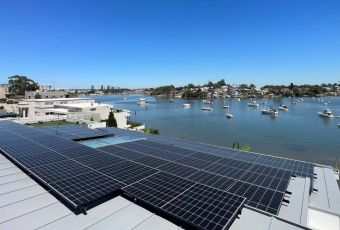
Solar Installations
Professional solar panel installation in Sydney for homes, businesses and strata properties.
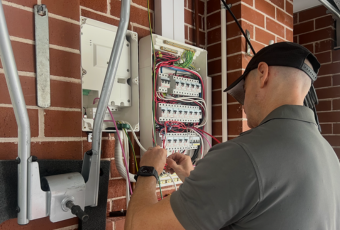
Solar Repairs
Reliable solar repairs in Sydney to fix faults, improve performance and keep your solar system working safely.

Solar Cleaning
Professional solar panel cleaning in Sydney to help improve efficiency, output and long-term system performance.
Solar Battery Payback in Sydney FAQs
Find answers to common questions about solar battery payback periods, battery ROI in Sydney, battery savings and how long home battery storage can take to recover its upfront cost.
How long does a solar battery take to pay for itsel
There is no fixed payback period. It depends on the installed battery cost and the annual financial benefit it creates through reduced grid electricity purchases, tariff optimisation, incentives and potentially VPP participation.
What is a good battery payback period?
A shorter payback generally creates a stronger financial case, but it should also be considered against the battery warranty, expected useful life, degradation and your personal objectives for backup and energy independence.
How do I calculate battery payback?
A simple calculation is:
Net installed battery cost ÷ estimated annual battery savings = simple payback period
For example, a $9,000 battery delivering $1,200 of estimated annual benefit has a simple payback of approximately 7.5 years.
Does a larger battery have a better ROI?
Not necessarily. A larger battery costs more and only creates additional financial value if your household can regularly charge and discharge the extra capacity.
Does having more solar improve battery payback?
It can. More solar generation can provide more surplus electricity for battery charging, particularly where the existing system is too small to regularly fill the battery.
Does my feed-in tariff affect battery payback?
Yes. When you store solar instead of exporting it, you give up the feed-in tariff you could have received. The value of using that energy later should therefore be compared with the value of exporting it.
Does my electricity tariff affect battery ROI?
Yes. Batteries can provide greater financial value when stored electricity replaces higher-priced grid electricity. Time-of-use rates and cheap or free charging periods can materially change the calculation.
Can joining a VPP shorten my battery payback period?
Potentially. A VPP may provide incentives, bill credits or payments that improve the battery’s financial return. The actual benefit depends on the provider and contract. Read NSW VPP Battery Incentive 2026 for more information.
Is a solar battery worth it if I already have solar?
It may be, particularly if you export significant surplus solar during the day and purchase electricity from the grid later. MPV Solar can assess whether your existing system is large enough to support the battery.
Is a solar battery worth it just for backup power?
That depends on how much you value blackout protection. Backup capability may not produce direct bill savings, but energy security can still be an important reason for installing a battery.
Can an EV improve solar battery ROI?
An EV increases household electricity demand, which may create more opportunities to use solar and stored energy. However, directly charging an EV from solar during the day can sometimes be more efficient than storing that electricity in a home battery first.
Can MPV Solar calculate the exact battery payback period?
Battery payback is always an estimate because future electricity prices, usage and system performance can change. MPV Solar can use your solar system, electricity consumption, exports, tariff and proposed battery configuration to provide a much more meaningful estimate than a generic household average.



MPV Solar is committed to providing industry-leading solar energy solutions across Sydney, backed by a proven track record of successfully completing over 5,000 projects. As a family-owned business, we prioritise personalised service and truly value our clients, ensuring that each system is tailored to meet your unique energy needs.
Copyright 2026. All Rights Reserved.
Created by Codex Digital and Yakka Consulting
Get in Touch
MPV Solar
Unit 3, 43-51 College St,
Gladesville NSW 2111
info@mpvgroup.com.au
(02) 9817 0333
Monday – Friday
8:30 – 5:00pm