Call Us
Solar Feed-In Tariffs Are Falling in NSW: Should You Install a Battery?
If your electricity retailer is paying little, or nothing, for the solar power you send to the grid, exporting more electricity may no longer be the smartest use of your system.
Across Sydney and NSW, many solar owners are reviewing their electricity plans after noticing lower solar export rates, time-based feed-in tariffs or, in some cases, no payment for exported electricity.
The solar feed-in tariff NSW 2026 benchmark has also fallen. For the period from 1 July 2026 to 30 June 2027, IPART’s all-day benchmark range is 3.4 to 6.5 cents per kilowatt-hour, down from 4.8 to 7.3 cents in 2025–26. Retailers are not required to offer a rate within this range, so actual payments can be higher, lower or structured differently.
For homeowners who produce more solar than they use during the day, the question is changing. It is no longer only about how much solar your panels generate. It is about how much of that electricity you can use yourself and whether storing it for later makes sense.
Should You Add a Battery If Solar Feed-In Tariffs Are Falling?
A battery may be worth considering if your home exports substantial solar electricity during the day and then buys electricity from the grid in the evening. However, a low feed-in tariff does not automatically make a battery the right choice for every home.
The decision depends on:
- How much solar electricity you export
- How much electricity you use after sunset
- Your electricity usage and supply rates
- The size and condition of your existing solar system
- Solar inverter compatibility
- Battery size and installed cost
- Switchboard and backup power requirements
- Federal and NSW incentives
- VPP contract terms
- Future plans such as an EV, electric hot water or additional air conditioning
Before you add a battery to a solar system, it is important to assess your actual usage data rather than making the decision based solely on a falling feed-in tariff or an advertised rebate.
Why Are Solar Feed-In Tariffs Changing in NSW?
Solar feed-in tariffs reflect the value of the electricity exported to the grid.
Large amounts of rooftop solar electricity are generated across NSW during the middle of the day. When solar production is high and electricity demand is comparatively low, the wholesale value of that electricity can fall. IPART says its lower 2026–27 benchmark reflects lower forecast wholesale electricity prices during the times solar systems are generally exporting.
Retailers can also change their electricity plans, usage rates, supply charges, export limits and feed-in tariff structures.
That is why homeowners should compare the complete electricity plan, not just the headline feed-in tariff. A plan offering a higher export rate may charge more for grid electricity, impose a limit on exports that receive the higher rate or include a higher daily supply charge.
Energy Made Easy is the Australian Government’s free and independent service for comparing electricity plans available in NSW. Using a recent bill or smart meter data can produce a more meaningful comparison than looking only at advertised rates.
What about the new Solar Sharer Offer?
From 1 July 2026, eligible NSW households with smart meters can opt into a Solar Sharer Offer providing up to three hours of free electricity between 11am and 2pm, subject to the offer’s conditions.
This may benefit households that can move appliances, EV charging or battery charging into the free period. However, homeowners should still compare the rates charged outside that window, the daily supply charge and any feed-in tariff attached to the plan.
What Does a Low or 0 Cent Feed-In Tariff Mean?
A low solar feed-in tariff means you receive a relatively small credit for each kilowatt-hour of unused solar electricity exported to the grid.
A 0 cent feed-in tariff means no export credit is paid under the applicable plan or export period.
At the time of writing, Energy Made Easy lists NSW electricity offers with 0 cent per kilowatt-hour solar export rates. Other offers use time-varying structures that pay nothing during some periods and a higher amount at selected times. Plans can change, and availability depends on your postcode, distributor, meter and eligibility.
This does not mean your solar system has stopped being valuable. Solar electricity used directly inside your home still reduces the amount of electricity you need to purchase from the grid.
However, it may change how you think about surplus generation. Exporting electricity for little or no credit and buying it back later at a higher usage rate can make solar self-consumption and battery storage more important.
How Do You Know How Much Solar Your Home Exports?
Before choosing a home battery, find out how much solar electricity is actually leaving your property.
You may be able to check your exports through:
- The solar export section of your electricity bill
- Your electricity retailer’s app or online portal
- Smart meter interval data
- Your solar inverter monitoring platform
- A solar consumption monitoring system
- Your solar installer’s monitoring portal
Look beyond the total shown on a quarterly bill. Daily or half-hourly data can reveal when your solar is being produced, how much is being exported and how much electricity you buy back during the evening.
A Sydney home exporting 15 kWh most sunny days but using significant electricity after sunset presents a different battery opportunity from a home that consumes most of its solar during the day and exports very little.
Is It Better to Export Solar or Store It?
Exporting excess solar sends unused electricity to the grid in exchange for the feed-in tariff available under your plan.
Storing excess solar sends that electricity into a battery so it can be used later, commonly during the evening, overnight or during selected peak tariff periods.
Whether storing is more valuable depends on the difference between:
- The credit you give up by not exporting the electricity
- The grid electricity cost you may avoid by using the stored electricity later
- Battery efficiency, capacity, operating settings and cost
Battery storage does not eliminate every grid charge. Your home may still import electricity when the battery is empty, household demand exceeds the battery’s output or solar production has been low.
When May Battery Storage Make Financial Sense?
A solar battery retrofit may be worth investigating when:
- Your home consistently exports substantial solar during the day
- Your evening electricity consumption is high
- Your feed-in tariff is low or zero
- Your grid usage rate is considerably higher than your export credit
- You want selected backup circuits during outages
- You are planning to join a virtual power plant
- You expect to purchase an electric vehicle
- Air conditioning, cooking or family activities create high evening loads
- Government incentives improve the installed cost
- You plan to remain in the property long enough to benefit from the system
Sydney family homes with pools, ducted air conditioning, evening cooking loads, home offices and EV charging can have very different energy profiles. The system should be designed around the household, rather than installing the largest battery that will fit.
When May a Battery Not Make Sense?
A battery may not be the best immediate investment when:
- Most electricity is already used while the solar system is producing
- The home exports very little excess solar
- Evening and overnight consumption is low
- The existing solar system is too small to charge the proposed battery reliably
- The proposed battery is oversized for the home
- Significant solar, inverter or switchboard work is required
- The household may move before receiving enough long-term value
- A different electricity plan or improved load scheduling may provide a better first step
In some homes, moving pool pumps, dishwashers, washing machines, electric hot water or EV charging into solar production hours can increase self-consumption without installing a battery.
Can You Add a Battery to an Older Solar System?
In many cases, yes. A battery can often be added to an existing solar system, but the system must be inspected before the battery is selected.
The assessment should consider:
- Solar system size and expected generation
- Age and condition of the panels
- Existing inverter type and model
- Current system compliance
- Available monitoring
- Switchboard condition
- Battery location and clearances
- Whether an AC-coupled or hybrid arrangement is suitable
- Whether backup power is required
Federal program rules allow eligible batteries to be installed alongside an existing solar PV system, provided the solar and battery arrangement meets the applicable electrical, equipment and program requirements. It may not be necessary to replace the complete solar system simply because a battery is being added.
Does Your Inverter Need to Be Compatible with a Battery?
The existing inverter must be checked, but it does not always need to be replaced.
A battery-ready hybrid inverter may be able to manage both the solar panels and battery. An AC-coupled battery may be installed with its own battery inverter, allowing it to work alongside a compatible existing solar inverter.
The right approach depends on:
- The existing inverter model
- The battery brand and configuration
- The age and condition of the solar system
- Whether backup power is required
- Available switchboard space
- Monitoring and communications requirements
- VPP capability
- Current network and equipment requirements
For a battery to qualify under the Cheaper Home Batteries Program, the battery and inverter must meet the relevant approved-product requirements. Installations must be completed or supervised by appropriately licensed and Solar Accreditation Australia-accredited installers using eligible products.
Do You Need a Switchboard Upgrade for a Solar Battery?
Not every home needs a switchboard upgrade, but every switchboard should be assessed before installation.
Older Sydney homes, particularly across the Inner West, Lower North Shore, Eastern Suburbs and established North Shore suburbs, may have limited switchboard capacity, outdated protection equipment or insufficient space for the additional battery equipment.
The assessment may cover:
- Main switch and circuit protection
- Safety switches
- Metering configuration
- Available switchboard space
- Earthing and electrical compliance
- Backup circuit configuration
- Battery isolation requirements
- Solar, battery and EV charger capacity
Backup power also needs to be designed carefully. Installing a battery does not automatically mean every circuit in the home will operate during a blackout. Selected essential circuits may need to be nominated, depending on the battery system, output capacity and household priorities.
Learn more about whether your switchboard require upgrading.
What Size Battery Do You Need for Evening Electricity Use?
Battery sizing should be based primarily on how much electricity the home uses after solar production falls, not simply the largest battery available or the greatest advertised rebate.
For example, consider:
- Typical consumption between sunset and morning
- Daytime solar exports
- Seasonal differences in solar generation
- Air conditioning and heating use
- Pool and spa equipment
- Electric cooking and hot water
- Working-from-home loads
- EV charging
- Required backup duration
- Future electrification plans
A battery that is too small may regularly run out before the evening is over. A battery that is too large may frequently remain underused or may not be fully charged by the existing solar system.
Bigger is not automatically better. The objective is to select a usable capacity that matches the home’s solar generation, evening consumption and long-term plans.
What Battery Incentives Are Available in NSW in 2026?
Australian Government Cheaper Home Batteries Program
The Cheaper Home Batteries Program provides an upfront discount through small-scale technology certificates, commonly called STCs.
Eligible battery systems must generally have a nominal capacity between 5 and 100 kWh. STCs are available for the first 50 kWh of usable capacity.
Following changes introduced on 1 May 2026, the STC calculation uses different factors for different portions of battery capacity:
- The first 14 kWh receives 100% of the applicable STC factor
- Capacity above 14 kWh and up to 28 kWh receives 60%
- Capacity above 28 kWh and up to 50 kWh receives 15%
The number and value of STCs depend on the battery’s usable capacity, installation date, program settings and certificate market. The program should not be treated as a fixed cash rebate with the same value for every battery.
NSW Virtual Power Plant Incentive
NSW homeowners may also receive an incentive for connecting an eligible battery to a virtual power plant.
From 1 July 2026, eligible batteries can have a storage capacity of more than 2 kWh and up to 50 kWh. The incentive calculation considers battery capacity made available to the grid up to 28 kWh. The actual amount varies according to the VPP provider and contract.
Can the NSW VPP Incentive Be Combined with the Federal Battery Discount?
Yes. An eligible battery installed under the Australian Government’s Cheaper Home Batteries Program may also qualify for the NSW VPP incentive.
The federal support applies to the eligible battery installation, while the NSW incentive relates to connecting the battery to an eligible virtual power plant arrangement.
Eligibility, equipment requirements and program rules can change, so current terms should be confirmed before signing a contract or proceeding with installation.
Should You Join a Virtual Power Plant?
A virtual power plant connects many household batteries so stored electricity can be coordinated and exported during periods of grid demand.
Joining may provide an upfront incentive and ongoing payments or bill credits. However, each provider sets its own terms.
Before joining, check:
- How much battery capacity the provider can access
- When and how frequently the battery may be discharged
- The minimum reserve left for your household
- Export and event payments
- Whether payments are cash or bill credits
- Contract length and exit conditions
- Internet and communications requirements
- Compatible battery brands
- Compatible electricity retailers
- Whether you need to change retailer
- How backup reserves are managed
- Who controls charging and discharging settings
The NSW Government recommends comparing multiple VPP providers because payment structures, battery access and contract conditions can differ. The VPP incentive can generally be claimed once per NMI.
Why You Should Not Choose a Battery Based Only on the Rebate
An incentive can improve the upfront numbers, but it cannot make an unsuitable battery suitable for your home.
The battery still needs to match:
- Your solar generation
- Your actual evening consumption
- Your existing inverter
- Your switchboard
- Available installation space
- Backup requirements
- VPP preferences
- Future EV charging
- Your budget and long-term plans
A heavily discounted oversized battery can still represent poor value if your solar system cannot charge it or your household rarely uses the stored capacity.
The better starting point is your electricity and solar data. The incentive should support an appropriate system, not determine the system.
Why Choose MPV Solar for a Solar Battery Retrofit in Sydney?
MPV Solar is part of MPV Group, a family-owned Sydney business operating since 1992.
Our solar and electrical capability allows us to assess more than the battery itself. We can review the existing solar system, inverter, switchboard, metering, backup requirements and future electrical loads as part of one practical home energy assessment.
Sydney homeowners choose MPV Solar for:
- Local solar, battery and electrical experience
- In-house solar and electrical teams
- Battery retrofits for existing solar systems
- Inverter compatibility assessments
- Switchboard upgrades
- Backup circuit planning
- EV charger integration
- Clean, compliant installation work
- Practical recommendations based on household usage
- Long-term aftercare and support
We service homes across the Inner West, Lower North Shore, North Shore, Northern Beaches, Eastern Suburbs, Hills District, Parramatta, Western Sydney and surrounding areas.
Falling Feed-In Tariffs Make Your Usage Data More Important
Falling feed-in tariffs do not mean every NSW solar owner should immediately install a battery.
They do make it more important to understand what happens to the electricity your solar system produces. If you are exporting substantial solar for a low return and buying electricity back from the grid each evening, storing more of that energy may be worth investigating.
The right decision should be based on real usage data, evening consumption, solar generation, battery sizing, solar inverter compatibility, switchboard readiness, current incentives and your long-term energy plans.
Send MPV Solar your recent electricity bill or solar monitoring data to find out whether adding a battery to your existing solar system makes sense for your Sydney home.
Feed-in tariffs, retailer plans, STC values, battery incentives, VPP offers and eligibility requirements may change. Homeowners should confirm current program and contract terms before making a decision.
Find Out Whether a Battery Makes Sense for Your Home
Not sure whether you should add a battery to your solar system?
Send MPV Solar a recent electricity bill, solar monitoring report or smart meter export data. Our team can review how much electricity your home exports, how much you use during the evening and whether your inverter and switchboard are ready for a battery.
We can then explain the available options, current incentives and any electrical work required before recommending a system.
Complete Solar Solutions
Solar Installations, Repairs & Cleaning Across Sydney
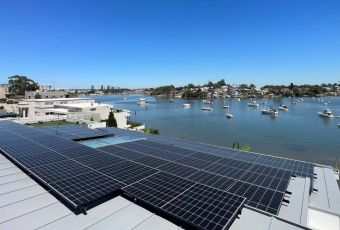
Solar Installations
Professional solar panel installation in Sydney for homes, businesses and strata properties.
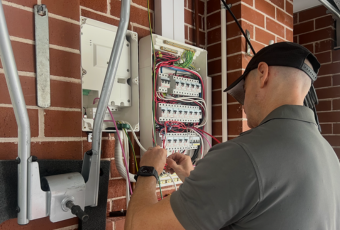
Solar Repairs
Reliable solar repairs in Sydney to fix faults, improve performance and keep your solar system working safely.
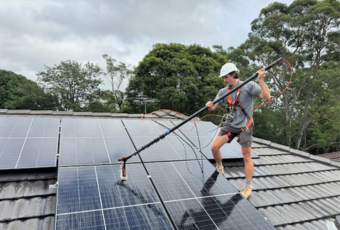
Solar Cleaning
Professional solar panel cleaning in Sydney to help improve efficiency, output and long-term system performance.
FAQs About Solar Feed-In Tariffs and Batteries in NSW
These frequently asked questions explain how falling solar feed-in tariffs, battery storage and current NSW incentives may affect existing solar owners.
Are solar feed-in tariffs falling in NSW?
Yes. IPART’s all-day benchmark for 2026–27 is 3.4 to 6.5 cents per kilowatt-hour, compared with 4.8 to 7.3 cents in 2025–26. Individual retailers set their own feed-in tariffs and are not required to follow the benchmark.
What is the solar feed-in tariff in NSW in 2026?
There is no single mandatory NSW feed-in tariff. IPART’s benchmark for flat-rate offers from 1 July 2026 to 30 June 2027 is 3.4 to 6.5 cents per kilowatt-hour, but actual retailer offers vary.
What does a 0 cent feed-in tariff mean?
It means the electricity plan pays no credit for solar exported under the applicable rate or time period. Your solar can still reduce bills when the electricity is used directly in your home.
Should I add a battery if my feed-in tariff is low?
It may be worth considering when you export significant solar during the day and purchase substantial grid electricity in the evening. Your usage data, system size, battery cost and electrical requirements should be assessed first.
Is a battery worth it if I already have solar panels?
A battery can be added to many existing solar systems. Its value depends on how much excess solar is available to charge it and how much stored electricity the household can use later.
Can I add a battery to an older solar system?
Often, yes. The panels, inverter, switchboard, monitoring and current electrical compliance should be inspected before selecting the battery configuration.
Does my existing inverter need to be replaced?
Not necessarily. Some batteries can be AC-coupled to an existing system, while others may require a compatible hybrid inverter. An inverter compatibility check is needed.
Do I need a switchboard upgrade for a solar battery?
Some homes do, particularly where the switchboard is older, lacks space or does not have suitable protection equipment. A licensed electrical assessment will determine what work is required.
What size battery do I need for evening electricity use?
The battery should generally be sized around your typical evening and overnight consumption, available solar exports and future loads. The largest available battery is not always the best option.
Can I combine the NSW VPP incentive with the federal battery discount?
Yes, subject to current eligibility. A battery supported by the Cheaper Home Batteries Program may also receive the NSW incentive for connecting to an eligible VPP.
Should I join a virtual power plant?
A VPP may provide additional value, but you should compare payment rates, control rights, reserve settings, contract length, compatible equipment and retailer requirements before joining.
Can MPV Solar check whether a battery is worth it for my home?
Yes. MPV Solar can review your recent bill, solar export data, evening consumption, inverter compatibility, switchboard condition and available incentive options before recommending whether a battery suits your Sydney home.
Blog
Related articles
Catch up on the latest MPV Solar news and insights.



MPV Solar is committed to providing industry-leading solar energy solutions across Sydney, backed by a proven track record of successfully completing over 5,000 projects. As a family-owned business, we prioritise personalised service and truly value our clients, ensuring that each system is tailored to meet your unique energy needs.
Copyright 2026. All Rights Reserved.
Created by Codex Digital and Yakka Consulting
Get in Touch
MPV Solar
Unit 3, 43-51 College St,
Gladesville NSW 2111
info@mpvgroup.com.au
(02) 9817 0333
Monday – Friday
8:30 – 5:00pm