


 Call Us
A New Battery Opportunity for NSW Apartment Buildings
Solar and battery storage is no longer just an option for detached homes and commercial buildings.
From 1 September 2026, eligible NSW apartment buildings can access a new upfront discount towards qualifying battery installations.
For strata committees and owners corporations in Sydney, this creates a new opportunity to combine shared solar, battery storage and common-area electricity use as part of a broader building energy strategy.
Eligible apartment buildings may receive an indicative discount of around:
- 30% to 40% of the battery installation cost when the battery is installed with new or additional solar
- 20% to 30% when installing a qualifying battery without adding new solar
The actual discount varies according to the project, equipment, installation and eligibility requirements.
MPV Solar can assess strata buildings through our Strata Solar & Battery Sydney service and determine whether solar, battery storage or a combined system may suit the property.
What Is the NSW Apartment Battery Incentive?
The new NSW apartment battery incentive provides an upfront discount towards eligible battery installations at residential apartment buildings.
Unlike the broader NSW business battery incentive, this pathway is specifically designed for apartment buildings and strata communities. To be eligible, the apartment building generally needs to:
- be located in NSW
- contain at least four units
- not have previously used this particular discount to install a battery
- obtain any required planning approvals
The battery must have at least 20 kWh of usable capacity and no more than 200 kWh, be on the Clean Energy Council approved battery list, be installed outdoors and be installed by a Solar Accreditation Australia-accredited installer.This makes it particularly relevant to medium-sized strata buildings that have meaningful common-area electricity consumption.
How Much Is the Apartment Battery Rebate in NSW?
There isn’t one fixed rebate amount. The NSW Government describes the incentive as an upfront discount included in the installation quote, rather than a fixed cash payment received later.
Indicative discounts can be around 30% to 40% when an eligible battery is installed together with new or additional solar, or around 20% to 30% for a battery-only installation.
The actual value can vary depending on factors including:
- battery size and model
- building design
- installation complexity
- additional electrical work
- installer costs
- compliance requirements
This is why owners corporations should compare the total installed project cost after applicable incentives, rather than choosing a battery purely because it attracts a larger discount.
Does Our Apartment Building Need Solar to Claim the Battery Incentive?
No. An eligible apartment building can potentially access the NSW discount for a battery-only installation.
However, the available discount is larger when qualifying new or additional solar capacity is installed with the battery.
If the building already has solar and wants the higher solar + battery discount, additional solar capacity needs to be installed within 90 days before or after the battery installation.
This creates three potential pathways for strata buildings:
No solar currently installed
→ assess new shared solar + battery
Existing solar with available surplus generation
→ assess battery storage
Existing solar but insufficient generation
→ assess additional solar + battery together
If your building is still at the solar-planning stage, read MPV Solar’s Solar for Apartments & Strata in Sydney guide for information about shared solar and current apartment solar funding.
What Can a Strata Battery Power?
This is one of the most important questions for an owners corporation. A strata battery does not automatically supply every individual apartment simply because it is installed on common property.
How the stored electricity can be used depends on the building’s electrical design, metering and solar configuration.
For many buildings, one of the clearest opportunities is to use solar and stored energy against common-area electricity consumption.
That may include loads such as: lifts, corridor and foyer lighting, basement and car park lighting, ventilation systems, pumps, security systems, access control, common-area air conditioning, swimming pools and other shared building services.
In buildings with shared solar, embedded networks or other energy-sharing infrastructure, different configurations may also be possible.
The system needs to be designed around the building’s actual electrical setup rather than assuming one standard strata solution will suit every property.
Can a Battery Reduce Common-Area Electricity Costs?
Potentially, yes. If the apartment building has solar, excess electricity generated during the day can potentially be stored rather than immediately exported.
That stored energy can then be used later when common-area demand continues but solar production falls.
For example: Daytime solar generation → common-area loads → battery charging → excess exported
Then later:Battery → evening common-area loads → reduced grid electricity use
The financial outcome depends on how much electricity the common property uses, when it uses it, the building’s tariffs and how much solar energy is available to charge the battery.
For strata, this is why interval electricity data can be far more useful than simply looking at the annual electricity bill.
How Big Should a Strata Battery Be?
Battery size should not be based on the number of apartments alone. A 20-unit apartment building with low common-area consumption may need a very different system from a similar-sized building with multiple lifts, basement ventilation, pools and other high-energy shared services.
MPV Solar would typically consider:
- common-area interval electricity data
- daytime and evening consumption
- existing solar generation
- solar exports
- available roof space
- peak electricity demand
- proposed battery operating strategy
- tariff structure
- available battery installation space
- future energy requirements
The NSW apartment incentive currently applies to eligible battery capacity between 20 kWh and 200 kWh, but eligibility does not mean the largest possible battery will provide the best outcome.
The system should first be sized around the building’s actual energy profile.
Is the Discount Bigger If We Add Solar at the Same Time?
Yes. This is one of the most significant features of the new incentive.
Eligible apartment buildings can receive a larger battery discount when installing new or additional solar capacity around the same time as the battery.
The NSW Government currently indicates a discount of around 30% to 40% for eligible solar + battery projects, compared with around 20% to 30% for eligible battery-only installations.
If your apartment building already has solar, additional solar capacity can still potentially qualify the project for the higher discount, provided the new solar is installed within the required 90-day period.
This makes it worth assessing the building as a solar + battery system, rather than treating the battery as a completely separate project.
Explore MPV Solar’s Strata Solar & Battery Sydney service for building-specific system design.
Can the NSW Apartment Battery Discount Be Combined With the Federal Battery Rebate?
Potentially, yes. The NSW Government confirms that an apartment building that meets the eligibility requirements of both programs may be able to combine the NSW apartment battery incentive with the Australian Government’s Cheaper Home Batteries Program.
However, each program has its own technical and eligibility requirements.
Owners corporations should therefore avoid assuming that every proposed battery will automatically qualify for both incentives.
MPV Solar can assess the proposed equipment and system configuration before the project proceeds.
For broader information about current battery incentives, see MPV Solar’s NSW Solar Battery Rebates 2026 guide.
What About the Solar for Apartment Residents Grant?
The Solar for Apartment Residents, or SoAR, program is separate from the new apartment battery incentive.
SoAR supports eligible apartment buildings with the cost of shared rooftop solar, while the new September 2026 incentive specifically supports eligible battery installations.
As of September 2026, the Solar for Apartment Residents program remains available, with applications currently scheduled to close on 4 December 2026 or earlier if available funding is fully allocated.
Importantly, the NSW Government says a building that previously installed solar using a SoAR grant may still potentially qualify for the new apartment battery discount.
If that building wants the higher solar + battery discount, it would need to install additional eligible solar capacity around the time of the battery installation. For the solar-specific pathway, read NSW Solar Rebate for Apartments.
Does the Owners Corporation Need to Approve the Battery?
Yes. Battery installation on strata common property is not simply a decision for one apartment owner.
The NSW Government says the owners corporation must vote on the preferred battery installation option as a sustainability infrastructure resolution.
The decision needs to be made by the owners corporation, rather than only by the strata committee.
For the resolution to proceed, the vote needs support of 50% or more of those present at the meeting.
Depending on timing, the proposal may be included at an annual general meeting or an extraordinary general meeting may be organised.
Before the vote, owners should ideally have enough information to understand:
- proposed solar and battery configuration
- installation cost
- available incentives
- expected savings
- battery location
- financing
- maintenance requirements
- warranties
- insurance considerations
- how the energy will be used
A clear technical proposal makes it much easier for the owners corporation to make an informed decision.
Where Can a Battery Be Installed in an Apartment Building?
Under the current NSW apartment battery incentive requirements, eligible batteries must be installed outdoors.
But that does not mean every outdoor wall or open area will automatically be suitable.
Battery location still needs to consider factors such as:
- applicable Australian Standards
- manufacturer installation requirements
- access and clearances
- fire and safety requirements
- electrical infrastructure
- protection from damage
- cable routes
- proximity to existing switchboards or solar equipment
- ongoing maintenance access
Strata buildings can be more complex than detached homes because common property, access and shared infrastructure all need to be considered.
MPV Solar should assess the proposed battery location as part of the overall system design, rather than selecting the equipment first and finding a location later.
Does a Strata Battery Provide Blackout Power?
It can, but backup power is not automatic.Whether a battery can power common-area services during an outage depends on the equipment selected and how the system is designed.
An owners corporation considering backup should first decide which services actually need to remain operational.
For example, the building may want to investigate backup for selected:
- lighting
- security equipment
- communications
- access systems
- other essential shared circuits
Trying to back up every electrical load can significantly change the battery size, electrical design and cost.
Backup requirements should therefore be identified before the battery system is specified.
Can Solar and Battery Electricity Be Shared Between Apartments?
Potentially, but this requires careful design.
There is no single standard configuration that automatically distributes shared solar and battery electricity equally across every apartment.
The NSW Government recommends discussing available technology solutions with the installer to determine how solar energy and battery capacity can be distributed across the building.
Depending on the building, this may involve:
- common-area consumption
- shared solar technology
- metering arrangements
- energy-management systems
- embedded network configurations
For some buildings, starting with common-area electricity may be relatively straightforward.
For others, providing energy benefits directly across residential lots may justify a more sophisticated shared-energy design.
What Should a Strata Committee Check Before Requesting Quotes?
Before approaching battery suppliers, it helps to gather the right information.
MPV Solar recommends starting with:
Common-area electricity bills
Preferably 12 months of bills.
Interval electricity data
This shows when the building actually consumes electricity.
Existing solar details
Including system size, inverter information and recent generation data.
Building plans
Useful for identifying roof space, switchboards and possible battery locations.
Future projects
Including planned solar expansion, electrical upgrades or increased common-area loads.
Owners corporation objectives
Is the priority lower electricity bills, increased solar self-consumption, backup capability or broader building sustainability?
This creates a much better basis for battery sizing and financial modelling.
Is a Strata Battery Worth It?
It depends on the building.
Battery storage may be worth investigating when an apartment building:
- already has significant shared solar generation
- exports excess solar during the day
- has substantial evening common-area electricity consumption
- is planning new solar
- wants to reduce grid electricity use
- has suitable outdoor battery space
- can access current incentives
- wants to improve the building’s energy infrastructure
But an incentive alone does not make every apartment building a good battery candidate.
The building’s electricity data should show a clear role for the battery.
That is why the first step should be an energy and site assessment, not choosing a battery model.
Strata Solar + Battery vs Battery Only
For many owners corporations, the bigger strategic question is whether to install a battery alone or use the incentive as an opportunity to upgrade the entire building energy system.
Battery Only: May suit a building that already has enough solar generation or has a specific energy-management strategy.
New Solar + Battery: May suit a building that has no existing rooftop solar and wants to reduce common-area grid consumption.
Additional Solar + Battery: May suit a building that already has solar but needs more generation to support the proposed battery.
The new incentive gives apartment buildings a reason to compare all three options rather than automatically choosing the lowest upfront-cost approach.
CStart With a Strata Solar & Battery Assessment
Every apartment building has a different roof, electrical system, common-area load profile and owners corporation. That means there is no standard “strata battery package” that suits every Sydney building.
MPV Solar can assess:
- existing solar
- common-area electricity consumption
- interval data
- proposed battery capacity
- available roof space
- solar expansion opportunities
- battery installation locations
- electrical and switchboard requirements
- current NSW incentives
- owners corporation requirements
From there, we can develop a solar and battery solution based on how the building actually uses electricity.
Explore Strata Solar & Battery Sydney or contact MPV Solar to arrange an assessment for your apartment building.
Complete Solar Solutions
Solar Installations, Repairs & Cleaning Across Sydney
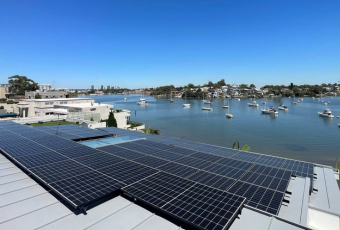
Solar Installations
Professional solar panel installation in Sydney for homes, businesses and strata properties.
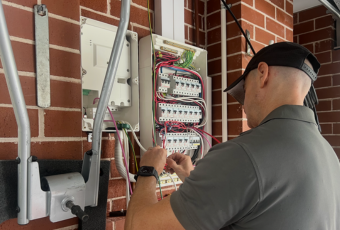
Solar Repairs
Reliable solar repairs in Sydney to fix faults, improve performance and keep your solar system working safely.
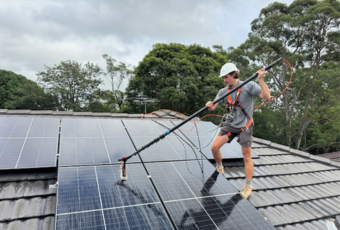
Solar Cleaning
Professional solar panel cleaning in Sydney to help improve efficiency, output and long-term system performance.
Strata Batteries in NSW FAQs
Find answers to common questions about strata batteries in NSW, apartment battery rebates, owners corporation approval, common-area energy use and solar battery installations for Sydney apartment buildings.
Is there a battery rebate for apartment buildings in NSW?
Yes. From 1 September 2026, eligible NSW apartment buildings can access an upfront discount towards qualifying battery installations.
How much is the NSW apartment battery discount?
The NSW Government indicates eligible projects may receive around 20% to 30% off a battery-only installation, or around 30% to 40% when qualifying new or additional solar is installed with the battery. Actual discounts vary by project.
What size battery qualifies for the NSW apartment incentive?
Eligible apartment batteries must have at least 20 kWh of usable capacity and no more than 200 kWh, subject to the other program requirements.
How many apartments does a building need to qualify?
An eligible apartment building must contain at least four units. The NSW Government currently states there is no upper limit on the number of units for this apartment battery incentive.
Does our apartment building need solar to receive the battery discount?
No. Eligible apartment buildings can potentially receive a discount for a battery-only installation. A higher discount may be available when new or additional solar is installed within the required timeframe.
Can an apartment building claim both the NSW and federal battery incentives?
Potentially, yes. If the project satisfies the eligibility requirements of both programs, the NSW Government confirms the incentives may be combined.
Can a strata battery power individual apartments?
Potentially, depending on the building’s electrical and metering configuration. A battery does not automatically distribute electricity to every apartment. The system needs to be designed around the building’s common-area loads, metering and energy-sharing arrangements.
Does the owners corporation need to approve the battery?
Yes. The proposed installation needs to be approved by the owners corporation through the appropriate sustainability infrastructure resolution process.
Where must the battery be installed?
To qualify for the current NSW apartment incentive, the battery must be installed outdoors and meet the applicable product, installation and safety requirements.
Can we receive the higher incentive if our building already has solar?
Potentially. To access the higher solar + battery incentive, an eligible apartment building with existing solar needs to install additional solar capacity within 90 days before or after the battery installation.
Can MPV Solar assess an existing strata solar system before adding a battery?
Yes. MPV Solar can review the existing solar system, common-area consumption, interval data, available space and electrical infrastructure before recommending whether the building should add battery storage, expand its solar system or design a combined solar + battery solution.



MPV Solar is committed to providing industry-leading solar energy solutions across Sydney, backed by a proven track record of successfully completing over 5,000 projects. As a family-owned business, we prioritise personalised service and truly value our clients, ensuring that each system is tailored to meet your unique energy needs.
Copyright 2026. All Rights Reserved.
Created by Codex Digital and Yakka Consulting
Get in Touch
MPV Solar
Unit 3, 43-51 College St,
Gladesville NSW 2111
info@mpvgroup.com.au
(02) 9817 0333
Monday – Friday
8:30 – 5:00pm

