


 Call Us
For many Sydney homes, 10kWh to 14kWh of usable battery storage can be a practical starting point, but there is no universal battery size. The right capacity depends on how much excess solar you generate, how much electricity you use after sunset, your backup requirements, electricity tariff and future plans such as EV charging.
How Do You Know What Size Solar Battery You Need?
Choosing the right battery is not about buying the biggest system available. A 20kWh battery can store twice as much energy as a 10kWh battery, but that does not mean it will deliver twice the value.
If your home only has enough surplus solar to regularly charge 8kWh, or only uses 7kWh of electricity overnight, much of that additional storage may sit unused.
The better question is: How much battery capacity can my home regularly charge and use?
That is the starting point for battery sizing.
This guide focuses specifically on choosing battery capacity. If you are first trying to work out whether your existing solar system generates enough electricity for battery storage, read Is Your Existing Solar System Big Enough for a Battery?.
What Does 10kWh, 14kWh or 20kWh Battery Capacity Mean?
Battery capacity is measured in kilowatt-hours, or kWh. It tells you how much electrical energy the battery can store.
A 10kWh battery can store approximately 10 kilowatt-hours of electricity where that figure refers to usable capacity. A 20kWh battery can store roughly twice as much.
However, always check whether the battery specification refers to nominal capacity or usable capacity.
Usable capacity is generally the more useful figure when comparing home batteries because it shows how much stored electricity is actually available for everyday use.
When comparing quotes, MPV Solar recommends looking beyond the headline battery size and checking the usable kWh available to the home.
Is a 10kWh Solar Battery Big Enough?
For many Sydney homes, it can be. A 10kWh battery may suit a household with moderate evening and overnight electricity use and enough excess solar during the day to charge it regularly.
For example, if your solar system often exports around 10 to 12kWh during the day and your home then uses around 8 to 10kWh after solar production falls, a battery around this size could be worth assessing.
The exact recommendation still depends on season, tariff, backup reserve and how consistently the battery can be cycled.
But this is the key principle: The battery needs enough energy available to charge it, and enough electricity demand later to use it.
When Does a 14kWh Battery Make Sense?
A battery around 14kWh can suit homes with higher evening consumption, larger solar systems or more electrified appliances. It is also an important comparison size in 2026 because the current Cheaper Home Batteries Program applies the full STC factor to eligible usable battery capacity up to 14kWh.
Capacity above 14kWh can still qualify, but at reduced STC factors across higher capacity bands.
That does not mean every home should install exactly 14kWh.
Battery size should still be based on the household’s energy profile.
If your home only needs around 9 or 10kWh of usable storage, adding extra capacity purely because of an incentive threshold may not improve the financial outcome.
Likewise, a genuinely high-use home should not automatically undersize its battery just to stay within the first rebate band.
For the detailed rebate calculations, see MPV Solar’s NSW Solar Battery Rebate Calculator 2026.
When Does a 20kWh Battery Make Sense?
A 20kWh battery is more likely to suit a higher-use household. That might include an all-electric home, substantial evening air-conditioning, larger backup requirements, high overnight electricity consumption or an EV.
The most important question is whether the household can regularly use the additional storage. If a 20kWh battery spends most nights discharging only 7 or 8kWh, the remaining capacity may contribute relatively little to everyday savings.
There may still be reasons to install more storage, particularly for backup or future energy growth, but those reasons should be intentional. Bigger should solve a real energy requirement rather than simply feel more future-proof.
How Do You Calculate the Right Battery Size?
A useful battery-sizing assessment starts with two numbers.
How much surplus solar do you normally export during the day?
and
How much electricity do you normally buy from the grid after solar production falls?
For example, imagine a household that regularly exports around 13kWh of solar during the day and then imports around 11kWh during the evening and overnight period.
That gives MPV Solar a much stronger indication of useful battery capacity than the solar-system size alone.
Another home may have the same solar system but export only 4kWh because most generation is already being used during the day. Same solar capacity.
Very different battery opportunity. This is why battery size should be based on energy flow, not a simple solar-kW-to-battery-kWh formula.
Should Your Battery Cover Your Whole Night’s Electricity Use?
Not necessarily, but overnight consumption is a useful starting point. If your household typically uses 9kWh between sunset and the following morning, a battery around that usable capacity may initially look sensible.
But the final recommendation may change if you want to maintain a backup reserve, your winter solar generation is lower or some of your evening loads can be shifted into daytime solar hours.
The aim is not necessarily to eliminate every grid import. It is to find a battery capacity that will be used often enough to justify the additional investment.
What Size Battery Do I Need for a 6.6kW Solar System?
There is no fixed battery size for a 6.6kW solar system.A 6.6kW Sydney solar system may produce around 25 to 26kWh per day as a broad annual-average benchmark, but some of that electricity will be used directly by the home.
The important number is what remains after household daytime consumption. A low daytime-use home may have enough surplus solar to regularly charge a 10kWh battery.
Another home with the same 6.6kW system may use most of its solar during the day and have relatively little left for storage.
So rather than asking: “What battery goes with 6.6kW solar?” ask: “How much of my 6.6kW system’s generation do I actually export?”
For the solar-generation side of that decision, read Is Your Existing Solar System Big Enough for a Battery?.
What Size Battery Do I Need for a 10kW Solar System?
A 10kW or 10kW-class solar system can potentially support a larger battery because it has greater generation capacity. But it still does not automatically require 10kWh, 14kWh or 20kWh of storage.
A home with high daytime electricity use may produce relatively little surplus solar even from a larger system. Another household may export 15 to 20kWh on many days and have much more opportunity to use larger storage.
Again, the right answer comes from exports and evening consumption, not from simply matching battery kWh to solar kW.For more information on the solar side, see 10kW Solar System Sydney: Cost, Output & Battery Sizing.
What Size Battery Do I Need for a 13.2kW Solar System?
A 13.2kW solar array can create enough surplus generation to make larger batteries practical in some homes.
A 14kWh or 20kWh battery may be appropriate where the household has both enough daytime surplus to charge it and enough evening or overnight demand to use it.
But even with 13.2kW of solar, larger storage is not automatically better. If the home only uses 6kWh after sunset, a 20kWh battery may have substantial unused capacity on most days.
Battery sizing should still come back to the same question:How much energy will actually move through the battery?
Can Your Solar System Fill the Battery?
This is one of the most important checks. A battery needs an energy source.
For homes with rooftop solar, that will often be excess generation that would otherwise have been exported.
If you install 20kWh of storage but normally have only 7kWh of spare solar available, the battery may rarely charge fully from rooftop generation.
That does not automatically make the system unsuitable. Some households may also charge from cheap or free grid electricity.
But if your main goal is to store your own solar, there needs to be enough surplus generation to support the proposed battery capacity.
If your existing system is too small, MPV Solar may recommend assessing Solar System Upgrades & Expansion Sydney before finalising the battery.
Can a Home Battery Be Too Big?
Yes. An oversized battery means paying for capacity that may not be used often.
Imagine installing 20kWh of storage where the household usually consumes only 7kWh after sunset.
Unless there is another role for that capacity, such as backup or future EV charging, much of the extra storage may provide limited everyday value.
This can weaken financial return because the battery cost increases faster than the useful electricity being moved through it.
For the financial side of that decision, read Solar Battery Payback Period Sydney 2026. This article focuses on how much storage you need. The payback article focuses on whether the investment stacks up financially.
Can a Battery Be Too Small?
Yes. A smaller battery may charge completely by lunchtime, leaving significant additional solar exports through the afternoon.
It may then discharge early in the evening and leave the household buying electricity from the grid for the rest of the night.
That does not automatically mean the battery is poorly sized.
A smaller system can sometimes achieve excellent utilisation and a stronger financial return.
But if your goal is greater energy independence, longer overnight coverage or blackout protection, additional capacity may be worth comparing.
How Does Backup Power Affect Battery Size?
Backup requirements can materially change battery sizing. If the battery is being installed purely for electricity savings, most stored energy may be available for everyday use.
If blackout protection is important, you may choose to keep part of the battery permanently reserved.
That means the total battery capacity and the amount available for day-to-day bill savings are not necessarily the same.
For example, a 10kWh battery with a meaningful backup reserve may provide considerably less than 10kWh for normal evening use.
This can justify additional storage for some households. Backup requirements should therefore be decided before the final battery size is selected.
Does an EV Mean You Need a Bigger Battery?
Potentially. An EV can significantly increase household electricity consumption.
If the vehicle is normally charged at night, additional battery capacity may help supply some of that energy.
But if the EV is regularly parked at home during the day, direct charging from rooftop solar may be a better use of the generation.
Instead of: Solar → home battery → EV you may be able to use: Solar → EVand reserve the home battery for evening household consumption.
Future EV plans should be included in battery sizing, but they do not automatically mean the home needs the largest battery available.
Does an All-Electric Home Need More Battery Storage?
Often, but the timing of electricity use still matters. An all-electric home may use electricity for cooking, hot water, heating, cooling and EV charging.
That can increase total household consumption considerably. If much of that electricity is used after sunset, larger battery capacity can become useful.
If major loads can be shifted into solar hours, the home may need less storage than expected. The strongest battery design looks at the entire energy system rather than the battery in isolation.
How Does Your Electricity Tariff Affect Battery Size?
Battery size is influenced not only by how much electricity you use, but also when that electricity is expensive.A household on a time-of-use tariff may get more value from stored energy during expensive evening periods.
Some electricity plans also provide cheap or free charging windows, which can make grid charging part of the battery strategy.
This may allow a larger battery to be useful even where solar exports alone would not completely fill it. However, battery capacity should not rely entirely on one temporary electricity plan.
Tariffs can change. The battery still needs to make sense across the broader household energy profile.
Should You Size the Battery Around Summer or Winter?
Neither season should be viewed in isolation. Sydney solar systems usually create more surplus generation through summer and less in winter.A battery that fills easily in summer may not fully charge from solar every winter day.
At the same time, household electricity use may also change seasonally through heating and cooling. This is why a good battery assessment should consider annual usage patterns, rather than one month’s solar exports or electricity bill.
Why Is 14kWh an Important Battery Size in 2026?
The current Cheaper Home Batteries Program makes 14kWh an important comparison point.
Eligible usable battery capacity up to 14kWh receives 100% of the applicable STC factor. The portion above 14kWh and up to 28kWh receives a lower factor, while capacity above 28kWh and up to 50kWh receives a further reduced factor.
That can affect the relative upfront cost of different battery sizes. But it should not dictate the battery recommendation.
A home that needs around 10kWh should not automatically install 14kWh simply because the incentive is stronger.
Likewise, a home that genuinely needs 20kWh should not automatically undersize the system to stay within the first tier. For detailed rebate comparisons, use MPV Solar’s NSW Solar Battery Rebate Calculator 2026.
10kWh vs 14kWh vs 20kWh: Which Is Better?
There is no universal winner.
A 10kWh battery may suit a household with moderate evening consumption and enough solar surplus to regularly recharge it.
A 14kWh battery provides additional storage for higher-use homes and is an important comparison size under the 2026 incentive structure.
A 20kWh battery may suit a larger all-electric home, higher overnight consumption, substantial backup requirements or a household with enough solar or low-cost grid energy to use the extra capacity effectively.
The best battery is the one that balances:
how much you can charge, how much you can use and what you want the battery to achieve.
Should Battery Size Be Based on Household Size?
No, not by itself. A statement such as “a family of four needs a 14kWh battery” sounds simple, but it can be misleading.
A four-person home using gas for cooking and hot water may consume less electricity than a two-person home with a pool, ducted air conditioning, electric hot water and an EV.
Household size tells us very little about when electricity is consumed.Actual electricity and solar data are much more useful.
What Does MPV Solar Check Before Recommending Battery Capacity?
MPV Solar starts with the home’s energy profile. For an existing solar system, monitoring and export data can show how much surplus electricity is already available for battery charging.
Electricity bills and smart-meter interval data can then show how much electricity the household imports after solar generation falls.
MPV Solar also considers the existing inverter, electrical infrastructure, proposed battery location, backup requirements, electricity tariff, EV plans and future electrification.
That allows the battery to be sized around the property and household, rather than a generic package.
If you are retrofitting storage to an existing system and want to understand compatibility rather than capacity, read Can You Add a Battery to an Existing Solar System?.
What Information Should I Send MPV Solar?
If you already have solar, the most useful starting information is your recent electricity usage and solar-performance data. A current electricity bill helps establish overall consumption and tariff information.
Solar monitoring can show generation and exports. Smart-meter or interval data is even more useful because it shows when electricity is being used.You should also mention any planned EV, electric hot water, induction cooking, additional air conditioning or other major electrical changes.
That allows MPV Solar to recommend a battery for the home you’re likely to have over the coming years, rather than simply sizing storage around today’s bill.
Don’t Buy the Biggest Battery. Buy the Right Battery.
The strongest battery system is not necessarily the one with the highest capacity. It is the one that has a clear job to do. MPV Solar looks at:
- your surplus solar
- your evening and overnight usage
- your backup requirements
- your electricity tariff
- your future energy plans
From there, the useful battery capacity becomes much clearer.
If you’re comparing 10kWh, 14kWh, 20kWh or larger storage, explore Solar Battery Installation Sydney or send MPV Solar your electricity bill and solar information for a tailored assessment.
Complete Solar Solutions
Solar Installations, Repairs & Cleaning Across Sydney
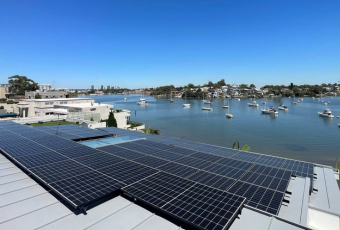
Solar Installations
Professional solar panel installation in Sydney for homes, businesses and strata properties.
Solar Repairs
Reliable solar repairs in Sydney to fix faults, improve performance and keep your solar system working safely.
Solar Cleaning
Professional solar panel cleaning in Sydney to help improve efficiency, output and long-term system performance.
Solar Battery Size FAQs
Find answers to common questions about what size solar battery you need, 10kWh vs 14kWh vs 20kWh batteries and choosing the right home battery capacity in Sydney.
What size solar battery do I need?
The right capacity depends on how much surplus solar you have available, how much electricity you use after sunset, your backup requirements, tariff and future energy needs. There is no universal battery size that suits every home.
Is a 10kWh battery enough for a house?
It can be. A 10kWh battery may suit a home with moderate evening and overnight consumption and enough surplus solar to recharge it regularly.
Is a 14kWh battery better than a 10kWh battery?
Only if your household can make useful use of the additional capacity. A larger battery does not automatically deliver better value.
Is a 20kWh battery too big?
Not necessarily. A 20kWh battery may suit a higher-use or all-electric home, substantial backup requirements or an EV household. It may be oversized for a home with low evening consumption.
What size battery do I need for a 6.6kW solar system?
There is no fixed answer. The important figure is how much of the solar generation remains as surplus after the home has used its daytime electricity.
What size battery do I need for a 10kW solar system?
The right capacity depends on solar exports and evening consumption. A 10kW system can potentially support several different battery sizes depending on how the household uses electricity.
What size battery do I need for a 13.2kW solar system?
A larger solar array may support larger storage, but the battery still needs to be matched to usable surplus generation and household demand.
Should my battery cover my whole night’s electricity use?
Not necessarily. Overnight usage is a useful starting point, but cost, backup reserve, seasonal solar generation and battery utilisation should also be considered.
Can a solar battery be too big?
Yes. Paying for capacity that is rarely charged or discharged can reduce the value of the system.
Can a battery be too small?
Yes. A small battery may fill early and empty early, leaving significant solar exports during the day and grid imports later at night.
Does an EV mean I need a bigger battery?
Potentially, particularly if the EV is charged after sunset. If the vehicle can charge directly from solar during the day, less home-battery capacity may be required.
Can MPV Solar work out the right battery size for my home?
Yes. MPV Solar can assess your solar generation, exports, electricity usage, tariff, backup requirements, existing equipment and future energy plans before recommending an appropriate battery capacity.



MPV Solar is committed to providing industry-leading solar energy solutions across Sydney, backed by a proven track record of successfully completing over 5,000 projects. As a family-owned business, we prioritise personalised service and truly value our clients, ensuring that each system is tailored to meet your unique energy needs.
Copyright 2026. All Rights Reserved.
Created by Codex Digital and Yakka Consulting
Get in Touch
MPV Solar
Unit 3, 43-51 College St,
Gladesville NSW 2111
info@mpvgroup.com.au
(02) 9817 0333
Monday – Friday
8:30 – 5:00pm

