


 Call Us
V2H could allow a compatible electric vehicle to perform some of the same jobs as a home battery, but it does not automatically make stationary battery storage unnecessary. A home battery is permanently connected and available, while an EV comes and goes. The better option depends on your vehicle, solar, backup requirements, electricity use and when the EV is actually home.
If Your EV Has a Huge Battery, Why Buy Another One for the House?
It’s a very reasonable question. Homeowners are increasingly looking at electric vehicles with large batteries and asking: “If my EV can eventually power my house, why would I spend money on a separate solar battery?”
Vehicle-to-Home, or V2H, changes the traditional relationship between the car and the home.
Instead of electricity only flowing from the house into the EV, a compatible bidirectional system can allow stored energy in the EV battery to flow back into the property. That creates an obvious overlap with a dedicated home battery. Both can potentially store energy and provide it to the house later. But they are not interchangeable in every situation.
The biggest difference is very simple: A home battery lives at your house. Your EV doesn’t.
That single distinction can completely change the best energy-storage strategy for a Sydney home. If you’re new to the technology, start with Can Your EV Power Your Home? V2H & V2G Australia 2026 before comparing the two options.
What Does a Home Battery Do?
A dedicated home battery is permanently connected to your property’s electrical system. When paired with rooftop solar, excess electricity generated during the day can be stored rather than immediately exported. That stored electricity can then be used later when solar production falls.
The energy journey typically looks like: Solar → home → battery then later: Battery → home
Depending on the battery and system design, it may also charge from the grid during cheaper electricity periods, maintain a reserve for blackouts or participate in a Virtual Power Plant.
What Does V2H Do?
Vehicle-to-Home uses the EV battery as an electricity source for the house. The vehicle charges as normal, but compatible bidirectional equipment allows electricity to flow back from the car into the home’s electrical system.
That creates a possible energy flow such as: Solar → EV during the day then: EV → home in the evening or: Cheap grid electricity → EV then: EV → home during a more expensive electricity period
In principle, this allows the EV to perform some of the same energy-shifting functions as a stationary battery. But V2H requires more than a large EV battery.
The exact vehicle must support the function, the manufacturer must support that use and compatible bidirectional equipment is required. The Australian Government currently notes that only a limited number of EVs in Australia have V2X capability confirmed by the vehicle manufacturer.
So, Can V2H Replace a Home Battery?
For some households, potentially. For others, no. If your compatible EV is normally parked at home during the hours when you want stored electricity, V2H may be able to cover a significant portion of the role traditionally handled by a home battery.
But if the EV is regularly away from the property, the stored energy leaves with it.Imagine a household where the car leaves at 7am and returns at 6pm. During those hours, the home cannot use the EV battery.
A stationary battery, by contrast, remains connected regardless of where the family is. That can make dedicated storage more predictable for daily solar management and blackout protection.
The Biggest Difference: A Home Battery Is Always Home
This is probably the most important comparison. A stationary battery can charge whenever suitable solar or grid electricity is available and remain ready for household demand.
An EV may be: at work, at school drop-off, at the shops, on a road trip, or simply being driven when the home wants access to stored energy. That means the theoretical size of the EV battery is not the same as the amount of storage genuinely available to the house.
For V2H, availability matters as much as capacity. If the vehicle is usually parked at home for most of the day and night, this becomes less of an issue. If it spends most weekdays away, a dedicated home battery may still have a very clear role.
Which Is Better for Storing Excess Solar?
That depends on when the EV is home. A stationary battery can begin absorbing excess rooftop solar whenever generation exceeds household consumption.
An EV can also potentially absorb excess solar, but only while it is connected. If the vehicle is regularly home during daylight hours, this could work extremely well. For example:
Rooftop solar → household loads → EV charging Later: EV → home
But if the car spends the strongest solar hours away from home, your solar may continue to export electricity while the large EV battery sits somewhere else.A home battery avoids that timing problem.
MPV Solar’s Solar + Battery + EV guide explains why these three technologies need to be considered as one household energy system.
Which Is Better for Blackout Backup?
A dedicated home battery currently offers the more established pathway for most Sydney homes. But even a home battery does not automatically provide backup during an outage. The battery system must be designed and configured to safely disconnect from the grid and support the required circuits.
V2H can potentially provide backup too, but the vehicle, bidirectional charger and electrical system all need to support that operating mode.
And there is another practical issue: if the blackout happens while the EV isn’t home, the EV cannot power the house.
For homeowners prioritising outage resilience above everything else, this distinction is important. Read Best Battery for Blackout Protection in Sydney for MPV Solar’s detailed backup guide.
Can Solar Recharge a Home Battery During a Blackout?
With the right system design, yes. An islandable solar-and-battery system can disconnect from the electricity grid during an outage and continue operating independently.
When solar generation is available, the panels can potentially supply household loads and recharge the stationary battery. That can significantly extend the amount of time a home can remain powered during a prolonged outage.
V2H systems may also provide increasingly sophisticated backup options, but the exact capability depends on the vehicle, charger and system architecture. This should never be assumed from the term “V2H” alone.
Which Has More Storage Capacity?
An EV can have significantly more stored energy than a typical home battery. That sounds like an overwhelming advantage for V2H. But total battery capacity does not tell the whole story.
The EV still needs enough charge for driving. A homeowner may decide to retain a substantial minimum state of charge rather than allowing the house to use the entire battery.
For example, the household may only make energy above a chosen reserve level available for V2H. That means the practical question becomes: How much EV battery capacity am I actually comfortable making available to the house not simply: How large is the EV battery? The vehicle still needs to perform its primary role as transport.
Does V2H Mean You Can Skip a 10kWh or 14kWh Home Battery?
Potentially, but not automatically. If your EV supports V2H, is home when needed and has ample available capacity, a separate 10kWh or 14kWh battery could appear redundant. But a smaller stationary battery may still be useful.
For example, the home battery could manage everyday solar shifting while the EV retains most of its charge for driving. Or the stationary battery could remain available during the hours the EV is away.
Another possibility is using the home battery as the predictable daily storage system while allowing the EV to provide extra capacity during high-demand periods or outages. This is why the future may not always be: V2H or home battery. It may sometimes be:V2H + a smaller home battery.
For dedicated storage sizing, read What Size Solar Battery Do I Need?.
What About the Federal Battery Discount?
This creates an important financial difference in 2026. Eligible stationary battery systems connected to new or existing rooftop solar can access support through the Cheaper Home Batteries Program.
Electric vehicles and portable batteries are specifically not eligible under the program. So when comparing a V2H strategy with purchasing a home battery, don’t simply compare battery capacity.
The actual household decision may involve: cost of compatible V2H equipment versus net installed cost of an eligible stationary battery after the available battery discount.
That can significantly change the financial comparison.
Which Is Better for Everyday Electricity-Bill Savings?
There is no universal winner. A home battery is predictable. It remains connected every day and can be configured around solar generation, electricity tariffs and household consumption.
V2H can potentially provide more available storage, but the financial value depends heavily on when the car is home and how much battery capacity the homeowner is willing to make available.
For example, a home where the EV is parked in the driveway every afternoon may be very well suited to V2H. A home where the EV is used for a long daily commute may see much less opportunity. The correct comparison needs to use real household and driving behaviour.
For dedicated stationary-battery economics, see Solar Battery Payback Period Sydney 2026.
Does V2H Put More Cycles on Your EV Battery?
Using the EV for household energy adds battery activity beyond driving. Battery cycling is therefore one of the considerations when evaluating V2H. This is why manufacturer support matters.
Homeowners should therefore avoid assuming that any technically possible bidirectional setup is automatically approved by the vehicle manufacturer.
The vehicle warranty should be checked before V2H becomes part of the household energy strategy.
What If You Have Two EVs?
This could make V2H considerably more interesting. If a household has two compatible vehicles and one is frequently home, there may be a more reliable source of mobile storage available.
For example, one vehicle might be used for commuting while the second spends more time at the property. That potentially reduces one of V2H’s biggest disadvantages: the battery leaving the house.
But the charger, home electrical system and energy-management strategy still need to support the proposed setup. This is exactly the type of future household load MPV Solar considers when designing EV charging at home.
What If Your EV Is Home During the Day?
Then V2H can become particularly compelling. A vehicle parked at home during strong solar-generation hours can absorb excess rooftop energy rather than allowing it to be exported.
That stored energy could then potentially support the house later. This can work well for people who work from home, households with multiple cars, retirees or anyone whose EV spends substantial daytime periods at the property.
The car’s daily routine becomes part of the energy-design calculation. That is fundamentally different from stationary storage, where the battery’s availability is constant.
Can You Have V2H and a Home Battery Together?
Yes, potentially. And for some future-focused Sydney homes, this may eventually be the strongest configuration.
The home could have: rooftop solar, stationary battery, EV and bidirectional charger
The stationary battery could handle predictable everyday cycling while the EV provides much larger additional storage when connected. The energy-management system would then need to decide how those different resources are prioritised.
For example, the homeowner might want the stationary battery to preserve backup power while the EV handles tariff optimisation. Or the EV might maintain a minimum driving reserve while the home battery handles most evening consumption.
This is more complex than installing a conventional battery, but it also creates considerably more flexibility.
What About V2G?
Vehicle-to-Grid potentially creates another financial pathway. Instead of only supplying the home, a compatible EV can export electricity into the wider grid through approved bidirectional equipment.
Australia is actively expanding V2G programs. In June 2026, the Australian Government announced additional funding supporting hundreds more customers into V2G trials and programs.
That could eventually create more opportunities for an EV battery to generate value beyond the household.But V2G and V2H should not be treated as guaranteed revenue streams.
Vehicle compatibility, electricity retailer arrangements, network approval and program availability all matter.
Which Is Better for a Home With Solar?
For many solar households, a dedicated battery currently offers the more established and predictable storage pathway. It can capture excess solar every day, remains permanently available and can be designed around backup, tariffs and household consumption.
V2H adds a potentially powerful second option.Where the vehicle is compatible and regularly parked at home, it may allow the household to access much more stored energy without purchasing the same amount of stationary battery capacity.
The strongest future system may therefore use each technology for what it does best.
Should You Wait for V2H Instead of Buying a Home Battery Now?
Not necessarily. If you need battery storage today for solar self-consumption, electricity-bill management or blackout backup, waiting for a future V2H setup may mean postponing benefits you could use now.
Australian V2H and V2G availability is developing quickly, but the Australian Government still identifies product availability, standards and connection policies among the barriers to broader adoption.
A home battery is already a mature, widely available technology. V2H is an emerging additional pathway.
The right decision depends on how soon you need storage and whether your current or planned EV has a confirmed Australian V2H pathway.
Could You Install a Smaller Home Battery Now and Use V2H Later?
This is a strategy worth considering. Instead of installing enough stationary storage to cover every conceivable future requirement, a homeowner could install a battery sized around everyday household use and allow a future V2H-capable EV to provide additional capacity when connected.
For example, the stationary battery could manage regular evening consumption and remain available for backup.The EV could later provide extra energy when the household needs it.
Whether this is the right strategy depends on system compatibility and future technology, but it demonstrates why homes should increasingly be designed around expandability and integration rather than treating each energy device independently.
V2H vs Home Battery: Which Is Better?
The better choice depends on your priorities.A dedicated home battery is likely to be stronger where you want predictable daily solar storage, permanent availability and established blackout-backup capability.
V2H becomes more compelling where you have a compatible EV that spends significant time at home and you want to make use of its much larger battery capacity.
And both together may suit households wanting a highly flexible electrified-home energy system.
The question is not simply which battery is bigger. It is: Which storage source will actually be available when your home needs it
What Would MPV Solar Check?
Before recommending a home battery, V2H-ready electrical design or a combination of both, MPV Solar would look at the complete property.
That includes your rooftop solar generation, electricity usage, solar exports, evening consumption, switchboard, electrical supply, backup requirements and EV charging. Your driving habits also matter.
If the EV spends every weekday away from home, the energy strategy should account for that. If it is parked at home for most of the day, the opportunity changes dramatically.
This integrated approach is important because V2H sits at the intersection of solar, battery storage, EV charging and household electrical infrastructure.
Planning a V2H-Ready Electrified Home?
You don’t necessarily have to choose between a home battery and an EV today.
The better starting point is designing your home’s energy system so the technologies can work together.
MPV Solar can assess your existing or proposed solar, home battery, EV charger, switchboard and future V2H requirements as one integrated system.
Explore Solar Battery Installation Sydney, EV Charging or our guide to Can Your EV Power Your Home? V2H & V2G Australia 2026.
Planning solar, battery and EV charging? Talk to MPV Solar about designing a home energy system that works today and is ready for what comes next.
Complete Solar Solutions
Solar Installations, Repairs & Cleaning Across Sydney
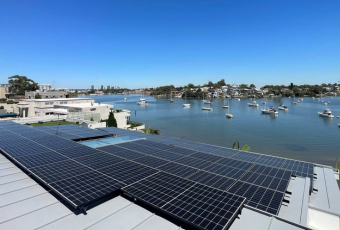
Solar Installations
Professional solar panel installation in Sydney for homes, businesses and strata properties.
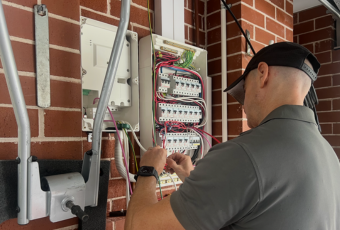
Solar Repairs
Reliable solar repairs in Sydney to fix faults, improve performance and keep your solar system working safely.
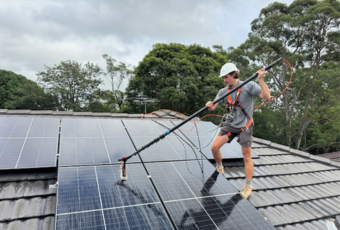
Solar Cleaning
Professional solar panel cleaning in Sydney to help improve efficiency, output and long-term system performance.
V2H vs Home Batteries FAQs
Find answers to common questions about V2H vs home batteries, using an EV as household storage and whether you still need a solar battery if your electric vehicle can power your home.
Do I still need a home battery if my EV has V2H?
Not necessarily. A V2H-compatible EV may provide some of the storage your home needs, but a stationary battery remains available when the vehicle is away. Whether you need both depends on your driving habits, solar generation, backup requirements and household electricity use.
Can an EV replace a solar battery?
Potentially for some households. The main limitation is that the EV battery leaves the property when the vehicle is driven away. A home battery remains connected all the time.
Which is better, V2H or a home battery?
A home battery is generally more predictable for everyday solar storage and backup because it remains permanently connected. V2H may offer much greater storage capacity when a compatible EV is at home.
Can I use a home battery and V2H together?
Potentially, yes. A stationary battery could manage everyday solar storage while a V2H-capable EV provides additional capacity when connected.
Which is better for blackout protection?
For most Sydney homes today, a properly configured stationary battery provides the more established backup pathway. V2H can potentially provide outage power, but the vehicle must be home and the equipment must support backup operation.
Can solar panels charge my EV and then power my house through V2H?
Potentially, yes. A compatible EV can be charged using rooftop solar and later supply some of that stored energy back to the home through V2H equipment.
Does an EV battery qualify for the federal home battery discount?
No. Electric vehicles and portable batteries are excluded from the Cheaper Home Batteries Program. Eligible stationary battery systems must meet the program requirements and be connected to new or existing solar PV.
Is V2H available in Australia now?
Yes, but availability remains limited. Only a small number of EVs currently have manufacturer-confirmed V2X capability in Australia, and compatible bidirectional equipment and connection requirements also need to be considered.
Should I wait for V2H before installing a home battery?
Not necessarily. If you want solar storage or backup now, a dedicated home battery is already an established option. Waiting may make more sense if you are close to purchasing a confirmed V2H-compatible EV and storage is not immediately needed.
Can MPV Solar design a system for both a home battery and future V2H?
Yes. MPV Solar can assess solar, battery storage, EV charging, switchboard capacity and future household electricity requirements together so the system is designed with future bidirectional charging in mind.



MPV Solar is committed to providing industry-leading solar energy solutions across Sydney, backed by a proven track record of successfully completing over 5,000 projects. As a family-owned business, we prioritise personalised service and truly value our clients, ensuring that each system is tailored to meet your unique energy needs.
Copyright 2026. All Rights Reserved.
Created by Codex Digital and Yakka Consulting
Get in Touch
MPV Solar
Unit 3, 43-51 College St,
Gladesville NSW 2111
info@mpvgroup.com.au
(02) 9817 0333
Monday – Friday
8:30 – 5:00pm

