Call Us
Can You Charge an EV From a Normal Power Point?
A standard power point may be enough for some EV owners, but your daily driving, charging time and electrical system determine whether it is the right long-term solution.
Yes, you can charge many electric vehicles from a normal Australian power point using a compatible portable charging cable.
This is known as Level 1 charging, trickle charging or, more casually, using a “granny charger”.
A standard household power point can be a convenient and relatively low-cost way to charge when:
- You drive short or moderate distances
- The vehicle remains parked overnight
- You can plug in regularly
- You do not need to recharge the entire battery quickly
- The power point, wiring and circuit are in suitable condition
The trade-off is charging speed.
A standard 240-volt power point generally provides no more than approximately 2.4 kW, while a dedicated home EV charger typically supplies between 7 kW and 22 kW. Level 1 charging can therefore take up to 24 hours to fully recharge some EV batteries.
That does not automatically mean every EV owner needs a wall charger.
For some Sydney homeowners, the answer will be yes. For others, a dedicated 7 kW charger will provide a safer, faster and more practical long-term charging setup.
Can You Really Plug an EV Into a Household Power Point?
Yes. Australian Government guidance confirms that a standard 240-volt household power point can be used for Level 1 EV charging when the vehicle is connected with an appropriate portable charging cable.
The portable cable usually contains control and safety equipment between the wall plug and the vehicle connector. Depending on the manufacturer, it may be supplied with the car or purchased separately.
The charging setup generally includes:
- A compatible portable EV charging cable
- A plug suited to the power point
- An in-cable control and protection unit
- A vehicle charging connector
- Communication between the cable and vehicle
The cable should be approved for use with the particular vehicle and Australian electrical supply.
The NSW Government recommends using EV charging equipment that carries the Regulatory Compliance Mark.
What Is a Granny Charger?
“Granny charger” is an informal name for a portable EV charging cable that plugs into a household power point.
The name reflects the idea that you could visit a relative, connect the vehicle to an ordinary outlet and slowly add enough energy to continue travelling.
Other terms include:
- Portable EV charger
- Mobile connector
- Level 1 charging cable
- Emergency charging cable
- Trickle charger
- In-cable control and protection device
Despite the casual nickname, a portable EV charger is not simply an extension lead with a vehicle plug attached.
It should contain control and safety functions designed specifically for EV charging and must be used according to the vehicle and charger manufacturer’s instructions.
How Fast Does an EV Charge From a Normal Power Point?
A standard household power point provides a maximum Level 1 charging output of approximately 2.4 kW. That makes it the slowest common way to charge an electric vehicle.
Australian Government guidance says Level 1 charging can take up to 24 hours to fully charge an EV battery. It also notes that the average Australian driver travels around 33 kilometres per day and may use no more than approximately 10% of an EV battery, meaning trickle charging can still cover the daily needs of some drivers.
The actual amount of range added each hour depends on:
- Vehicle efficiency
- Battery temperature
- Charging losses
- Available outlet power
- Portable charger settings
- The vehicle’s onboard charging system
- Weather and driving conditions
Tesla currently states that its Australian Mobile Connector can add approximately 10 kilometres of range per charging hour when used with a household outlet, although results vary by vehicle and conditions.
What Does That Mean in Daily Use?
Consider a homeowner who drives approximately 40 kilometres each weekday. At an indicative charging rate of around 10 kilometres of range per hour, replacing that day’s travel may take roughly four hours. If the car is parked from 7 pm until 7 am, there may be plenty of time available.
Now consider someone who:
- Drives 150 kilometres per day
- Arrives home late
- Needs to leave again early
- Shares the charger with another vehicle
- Regularly returns with a low battery
A normal power point may struggle to replace the required energy within the available charging window.
That is where a dedicated Level 2 charger becomes more useful.
How Long Will It Take to Charge Different Amounts?
Charging time is better calculated according to the energy you need to add rather than the entire battery capacity.
Adding 10 kWh
- At a maximum output of approximately 2.4 kW, adding 10 kWh may take more than four hours after allowing for charging losses.
- For many efficient EVs, that may replace a normal day of shorter urban driving.
Adding 20 kWh
- A 20 kWh top-up may take approximately nine hours or more from a standard outlet.
- This could still fit within an overnight charging period.
Adding 40 kWh
- A 40 kWh recharge may take approximately 18 hours or longer.
- This is unlikely to be fully completed during a typical overnight window.
Adding 60 kWh
- Adding 60 kWh may take more than a full day.
- This illustrates why a normal power point may suit regular top-ups but become inconvenient when the vehicle frequently needs a large recharge.
- These are general estimates. Charging losses, vehicle settings and actual outlet output can increase the time required.
Is It Safe to Charge an EV From a Normal Power Point?
It can be safe when:
- The charging equipment is approved and undamaged
- The outlet is in good condition
- The circuit is suitable
- The equipment is used according to the manufacturer’s instructions
- The cable is connected directly to the outlet
- The connection is protected from moisture and physical damage
The concern is that EV charging can place a relatively high, continuous load on the outlet and circuit for several hours. A kettle may draw significant power, but only for a few minutes. An EV may continue drawing electricity throughout the night. That sustained use can expose weaknesses such as:
- Loose outlet connections
- Ageing wiring
- Damaged fittings
- Poor earthing
- Shared circuit overload
- Heat-damaged contacts
- DIY electrical modifications
- Outdoor weather exposure
A power point that operates a lamp or small appliance without a problem is not automatically suitable for regular overnight EV charging.
Should an Electrician Check the Power Point First?
It is a sensible step, particularly when the power point will become your regular home charging source. An electrician can assess:
- The outlet’s condition
- The circuit supplying it
- Existing cable size
- Earthing
- Safety-switch protection
- Other loads connected to the circuit
- Signs of overheating
- Switchboard condition
- Whether a dedicated circuit would be more appropriate
An assessment is especially worthwhile when:
- The home is older
- The outlet is in a garage or carport
- You do not know when the wiring was installed
- The circuit also supplies other appliances
- The power point feels warm
- The plug does not fit firmly
- The circuit breaker trips
- The vehicle will charge for long periods every day
For regular portable charging, some manufacturers recommend using a properly grounded dedicated circuit and avoiding other loads on the same outlet.
Does an EV Charging Power Point Need a Dedicated Circuit?
A standard power point does not automatically become a dedicated circuit simply because an EV is plugged into it. However, a dedicated circuit can provide a more controlled arrangement for regular charging.
It reduces the likelihood of the charging load competing with:
- Garage power tools
- Freezers
- Pool equipment
- Washing machines
- Dryers
- General household power points
- Workshop equipment
- Outdoor appliances
Whether an existing circuit is suitable depends on its design, condition and connected loads. An electrician may recommend:
- Using the existing outlet
- Installing a new 10-amp outlet on a dedicated circuit
- Installing a 15-amp outlet and compatible portable charger
- Installing a fixed 7 kW wall charger
- Upgrading part of the switchboard
- Adding load management
The best option depends on how regularly you charge and how much electricity the vehicle needs each day.
Can a Normal Power Point Overheat While Charging an EV?
A damaged, loose or unsuitable outlet can overheat under a sustained load. Stop charging and arrange an electrical inspection if you notice:
- The plug or outlet feels unusually hot
- The power point is discoloured
- There is a burning smell
- The outlet crackles or buzzes
- The charging cable repeatedly stops
- The plug feels loose
- The circuit breaker or safety switch trips
- There are scorch marks
- The plastic surrounding the outlet appears distorted
A slight increase in temperature around charging equipment may not always indicate a fault, but an outlet that becomes hot, smells unusual or shows visible damage should not continue to be used.
Do not attempt to tighten, open or repair a power point yourself.
Can You Use an Extension Lead to Charge an EV?
You should connect the portable EV charger directly to the power point rather than using an extension cord, double adaptor or power board.
- Extension cords
- Multi-outlet adaptors
- Multi-plugs
- Conversion plugs
- Power strips
Extension equipment can introduce additional connections, voltage drop, heat and physical-damage risks. It may also be incorrectly rated for the sustained charging load.
When the supplied portable charger cannot comfortably reach the vehicle, the better solution is normally to have a suitable outlet or fixed charger installed closer to the parking position.
Can You Charge an EV From a Power Board or Double Adaptor?
No. A portable EV charging cable should not be connected through a power board, double adaptor or multi-plug device.
The charger should plug directly into a suitable wall outlet.
Power boards are generally designed for smaller household devices, not continuous vehicle charging.
A shared adaptor also makes it easier for someone to connect another appliance to the same outlet while the EV is charging.
Can You Use an Outdoor Power Point?
Potentially, but the entire charging arrangement must be suitable for the location. Consider:
- Whether the outlet is appropriately weather protected
- The rating and condition of the portable charger
- Exposure to rain
- Water running along the cable
- Vehicle movement
- Trip hazards
- The possibility of accidental impact
- Security and tampering
- Whether the cable crosses a footpath or shared area
Manufacturer instructions must be followed.
Tesla’s Mobile Connector guidance, for example, warns against using a damaged or wet outlet, allowing water to run towards the electrical connection or exposing unsuitable components to severe weather.
A licensed electrician can recommend a properly positioned outdoor outlet or weather-rated wall charger where the vehicle is parked outside.
Is It Safe to Leave an EV Charging Overnight?
EVs are designed to manage their charging process, and overnight home charging is common. However, the equipment and electrical installation must be suitable.
Before relying on overnight power-point charging:
- Use the correct portable charger
- Follow the manufacturer’s instructions
- Connect directly to the wall outlet
- Avoid damaged cables or plugs
- Keep the control unit off the ground where required
- Check that the outlet is secure and in good condition
- Keep the cable away from vehicle tyres and walkways
- Stop using the equipment if it overheats or behaves unexpectedly
Charging overnight can be practical because the car is parked for several hours, allowing a slow Level 1 connection to restore the previous day’s travel.
What Is the Difference Between a 10-Amp and 15-Amp Outlet?
A standard Australian household power point is generally rated at 10 amps.
A 15-amp outlet is designed to supply more current and has a larger earth pin so that a 15-amp plug cannot be inserted into an ordinary 10-amp outlet.
A compatible portable EV charger used with a correctly installed 15-amp outlet may charge faster than a standard 10-amp setup. However:
- The outlet must be professionally installed
- The circuit must be appropriately designed
- The portable charger must support the connection
- The vehicle may limit the charging rate
- The installation remains slower than many 7 kW wall chargers
- You must not modify a plug or adaptor to force compatibility
Should You Install a 15-Amp Power Point or a 7 kW Charger?
A 15-amp outlet may suit homeowners who want:
- Faster portable charging than a standard outlet
- Lower daily driving requirements
- A removable charging cable
- A relatively simple electrical upgrade
- Occasional rather than intensive charging
A dedicated 7 kW charger may be better when you want:
- Significantly faster charging
- A permanent home charging station
- App monitoring
- Charging schedules
- Solar-surplus charging
- Dynamic load management
- A tethered cable ready to use
- Greater convenience
- Support for higher weekly kilometres
Dedicated Level 2 chargers typically operate between 7 kW and 22 kW and can charge an EV around three to ten times faster than a standard power point. Government guidance estimates that they may add approximately 30 to 80 kilometres of range per charging hour.
The better option depends on whether you are trying to solve an occasional charging need or create a reliable long-term home charging system.
When Is a Normal Power Point Enough?
Power-point charging may be enough when:
- You drive fewer than approximately 50 kilometres on most days
- The EV is parked overnight
- You can charge most nights
- You have access to public charging when needed
- You own a plug-in hybrid with a smaller battery
- Your workplace provides charging
- You do not need smart or solar charging controls
- The outlet and circuit have been assessed as suitable
It may also work as:
- A temporary solution while waiting for a wall charger
- A backup option
- Occasional destination charging
- A secondary charger for a second vehicle
- A low-cost setup for very light vehicle use
The Australian Government acknowledges that a standard power point may provide enough charging for normal daily driving, particularly when the vehicle can remain plugged in overnight or during the day.
When Should You Upgrade to a Dedicated EV Charger?
Consider a dedicated charger when:
- Your daily travel exceeds what the outlet can replace overnight
- You frequently return home with a low battery
- The car is only parked for short periods
- You own more than one EV
- You want to charge directly from excess solar
- You want automatic off-peak scheduling
- Your existing outlet or circuit is unsuitable
- You are tired of unpacking and reconnecting a portable cable
- You want faster charging before long trips
- You are upgrading the home’s electrical system
- You are planning a solar battery
- You want load management
A dedicated charger provides greater speed, but the larger benefit may be better control.
Compatible chargers can potentially coordinate charging with:
- Rooftop solar
- Electricity tariffs
- Home battery priorities
- Household electrical demand
- Departure times
- Multiple vehicles
Can You Charge From a Power Point Using Rooftop Solar?
Yes. When your rooftop solar system is generating electricity, a portable charger connected to a standard power point can use some of that solar energy. However, a basic portable charger will not necessarily know how much excess solar is available. For example:
- The charger is drawing 2.4 kW
- Your solar system has 1.5 kW available after household use
- The remaining power may be imported from the grid
A solar-compatible smart wall charger can provide more control by adjusting its output according to surplus generation.
The NSW Government recommends charging during the day when you have rooftop solar and using lower-cost tariff periods when charging from the grid.
Power-point charging can still make use of solar, but it generally lacks the advanced energy-management features offered by an integrated wall charger.
Can You Schedule Power-Point Charging?
Many EVs allow charging schedules to be set through the vehicle or its mobile app. This means you may be able to:
- Start charging after off-peak rates begin
- Stop charging at a selected battery level
- Set a departure time
- Delay charging until later in the evening
- Charge during the middle of the day when solar is available
The scheduling occurs through the vehicle rather than the power point itself unless a compatible smart EV outlet is installed.
Will Power-Point Charging Increase My Electricity Bill?
Yes, unless all the electricity is supplied by otherwise unused rooftop solar. Your EV’s electricity consumption depends mainly on:
- Distance travelled
- Vehicle efficiency
- Charging losses
- Electricity tariff
- Charging time
- Solar contribution
The outlet type affects how quickly the energy is delivered, but it does not dramatically change how much energy the car requires for a given journey.
A slower charger may take longer, but the vehicle still needs approximately the same number of kilowatt-hours.
You may be able to reduce charging costs by:
- Charging from excess rooftop solar
- Using an off-peak tariff
- Scheduling charging during lower-cost periods
- Avoiding expensive public fast charging where practical
- Choosing an appropriate electricity plan
Home charging can be one of the lowest-cost ways to charge an EV, particularly when the household has rooftop solar or access to off-peak rates.
Can an Old Sydney Home Use Power-Point EV Charging?
Possibly, but the age and condition of the electrical system should be considered.
Many older Sydney homes were wired before households commonly used:
- Large air-conditioning systems
- Electric hot water
- Induction cooking
- Solar inverters
- Home batteries
- EV charging
An older property may have:
- Ageing wiring
- Ceramic fuses
- Limited safety-switch protection
- Overloaded circuits
- Loose outlets
- Multiple undocumented alterations
- Insufficient switchboard space
A normal outlet may appear convenient, but the circuit behind it could already supply several other areas of the home.
MPV can inspect the outlet, circuit and switchboard before recommending whether you should use the existing power point, install a dedicated outlet or move directly to a Level 2 charger.
Does a Dedicated EV Charger Need a Dedicated Circuit?
Yes. A fixed Level 2 home charger is directly connected to the home’s electricity supply and must be installed by a licensed electrician. Depending on the property, the installation may require:
- A dedicated charging circuit
- New cabling
- Circuit protection
- Safety-switch protection
- Switchboard modifications
- Load management
- Supply upgrades
- Solar monitoring equipment
Australian Government guidance notes that a dedicated charger may require a switchboard or electricity supply upgrade.
This is why charger selection should begin with an electrical assessment rather than an online product purchase.
Normal Power Point vs Dedicated EV Charger
Choose a Normal Power Point When:
- Your daily driving is relatively low
- Overnight charging provides enough time
- The outlet and circuit are suitable
- You want a simple or temporary solution
- You own a plug-in hybrid
- You have reliable public or workplace charging
- You do not require smart solar integration
Consider a 15-Amp Outlet When:
- Standard charging is slightly too slow
- You want to continue using a portable cable
- The vehicle supports the higher portable charging rate
- An electrician confirms the circuit can be installed appropriately
- You do not need the features of a wall charger
Choose a Dedicated Wall Charger When:
- You need faster and more predictable charging
- You drive longer distances
- The car has a large battery
- You want solar-surplus charging
- You need load management
- You want scheduled charging and energy monitoring
- You expect to add a second EV
- You want a permanent, convenient solution
Why a Wall Charger May Be More Convenient
Charging speed is not the only difference.
A dedicated wall charger may offer:
- A permanently mounted cable
- Faster charging
- Solar integration
- App monitoring
- Charging history
- User access controls
- Dynamic load balancing
- Scheduled charging
- Automatic software updates
- Power sharing between multiple chargers
A portable charger may need to be unpacked, connected and stored after use. Leaving it permanently connected outside may not suit the manufacturer’s storage and weather instructions.
For homeowners who charge most days, the convenience of arriving home and plugging into a fixed charger can become a meaningful benefit.
Should You Buy a Wall Charger Before Calling an Electrician?
It is usually better to have the property assessed first.
The electrician should consider:
- Vehicle make and model
- Maximum AC charging speed
- Daily kilometres
- Single-phase or three-phase power
- Switchboard capacity
- Existing high-demand appliances
- Solar inverter
- Home battery
- Charger location
- Cable distance
- Wi-Fi coverage
- Future vehicle plans
Buying the charger first can leave you with equipment that:
- Is unnecessarily powerful
- Cannot use your solar system properly
- Lacks load management
- Does not suit your electrical supply
- Has the wrong cable arrangement
- Cannot support a future second EV
Why Choose MPV for an EV Charging Assessment?
MPV does not approach EV charging as a charger-only installation. Its in-house electrical and solar capabilities allow the team to assess:
- The existing power point
- Circuit condition
- Switchboard capacity
- Dedicated charging options
- Solar generation
- Inverter compatibility
- Battery integration
- Load-management requirements
- Current and future EV use
MPV Solar provides EV charging solutions across Sydney, supported by MPV Group’s licensed electrical division. Its process includes assessment, system design, in-house installation and ongoing aftercare.
This means MPV can recommend the most practical option, even when the answer is that a suitable existing power point can cover your current charging needs.
Have Your Home Assessed Before You Rely on Power-Point Charging
A normal power point may be all you need. It may also be too slow, poorly located or connected to a circuit that was never intended to carry a sustained vehicle-charging load every night.
MPV can assess:
- Your existing outlet
- Circuit and switchboard condition
- Daily driving distance
- Vehicle charging capacity
- Available charging time
- Solar and battery system
- 10-amp, 15-amp and Level 2 options
- Future EV requirements
You will then receive a recommendation based on how you actually use your vehicle and home, not a one-size-fits-all sales pitch.
Not sure whether your existing power point is suitable for regular EV charging? Ask MPV to assess your outlet, wiring, switchboard and daily charging needs before recommending the right solution.
Complete Solar Solutions
Solar Installations, Repairs & Cleaning Across Sydney
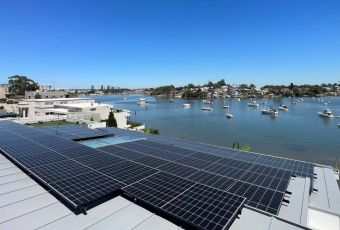
Solar Installations
Professional solar panel installation in Sydney for homes, businesses and strata properties.
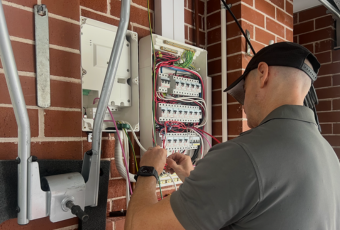
Solar Repairs
Reliable solar repairs in Sydney to fix faults, improve performance and keep your solar system working safely.
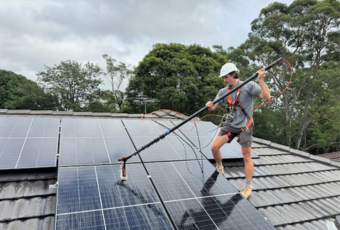
Solar Cleaning
Professional solar panel cleaning in Sydney to help improve efficiency, output and long-term system performance.
FAQs About Charging an EV From a Power Point
Find answers to the most common questions Sydney homeowners ask about normal power-point charging, portable EV cables, charging speeds and dedicated home chargers.
Can I charge an EV from a normal Australian power point?
Yes. A standard 240-volt power point can provide Level 1 EV charging when used with a compatible portable charging cable. It is slower than a dedicated wall charger but may be enough for low or moderate daily driving.
How long does it take to charge an EV from a normal power point?
A complete recharge can take up to 24 hours, depending on battery size and vehicle conditions. Replacing a smaller amount of normal daily driving may only require several hours.
How much range does a normal power point add per hour?
The result depends on the vehicle’s efficiency and charging equipment. Tesla currently estimates approximately 10 kilometres of range per hour from its Australian Mobile Connector when connected to a household outlet.
What is a granny charger?
A granny charger is an informal term for a portable Level 1 EV charging cable that connects the vehicle to a household power point.
Is it safe to charge an EV overnight from a power point?
It can be safe when the outlet, circuit and charging equipment are suitable and the manufacturer’s instructions are followed. Stop charging if the outlet becomes hot, damaged, loose or discoloured.
Should an electrician check my outlet before I charge an EV?
An assessment is recommended when you plan to use the outlet regularly, particularly in an older home or when the condition and circuit capacity are unknown.
Can I use an extension lead with an EV charger?
No. Australian Government guidance recommends connecting the portable EV charging cable directly to the power point rather than using an extension cord or power board.
Can I plug an EV charger into a power board?
No. Portable EV chargers should be connected directly to a suitable wall outlet and not through a power board, double adaptor or multi-plug.
Can a power point overheat while charging an EV?
A loose, damaged or unsuitable outlet may overheat under a sustained charging load. Stop charging if you notice excessive heat, discolouration, burning smells, buzzing or repeated circuit trips.
Is a 15-amp power point better for EV charging?
A compatible 15-amp outlet and portable charger may provide faster charging than a standard 10-amp connection. The outlet and circuit must be installed by a licensed electrician.
Is a 15-amp outlet as fast as a 7 kW charger?
No. A 7 kW wall charger generally provides substantially faster charging and may also offer solar integration, smart scheduling and load-management features.
Does a fixed EV charger require a dedicated circuit?
A fixed Level 2 charger requires a properly designed electrical installation completed by a licensed electrician. Switchboard or supply upgrades may also be needed.
Is a normal power point enough for daily EV charging?
It may be enough when you drive moderate distances and the vehicle remains parked overnight. Drivers covering longer distances or needing faster turnaround may benefit from a dedicated charger.
Can I use rooftop solar when charging from a normal outlet?
Yes. The vehicle can use solar electricity available within the home while charging. A basic portable charger may also draw grid electricity when solar generation is insufficient.
Is a wall charger safer than a normal power point?
A professionally installed wall charger provides a purpose-designed charging circuit and protection. A suitable power point can also be used, but the outlet, wiring and circuit must be in good condition.
Can MPV install a dedicated EV charging power point?
Yes. MPV can assess the property and recommend a suitable dedicated outlet or Level 2 EV charger based on the vehicle, electrical capacity and charging requirements.
Blog
Related articles
Catch up on the latest MPV Solar news and insights.



MPV Solar is committed to providing industry-leading solar energy solutions across Sydney, backed by a proven track record of successfully completing over 5,000 projects. As a family-owned business, we prioritise personalised service and truly value our clients, ensuring that each system is tailored to meet your unique energy needs.
Copyright 2026. All Rights Reserved.
Created by Codex Digital and Yakka Consulting
Get in Touch
MPV Solar
Unit 3, 43-51 College St,
Gladesville NSW 2111
info@mpvgroup.com.au
(02) 9817 0333
Monday – Friday
8:30 – 5:00pm