Call Us
Government programs, discounts, certificate values, eligibility requirements, finance arrangements and approved products can change. Check current Australian and NSW Government program requirements before proceeding. MPV Solar can provide advice about solar, battery and electrical system design, but final eligibility for government incentives and finance is determined by the relevant program, finance provider and accredited certificate provider.
Thinking About a Home Battery? 2026 Could Be the Time.
The solar battery rebate in NSW for 2026 could help make battery storage more affordable for eligible Sydney households.
The Australian Government’s Cheaper Home Batteries Program provides an upfront discount of around 30% on eligible battery systems. NSW households may also be able to access a zero-interest Home Energy Saver loan of up to $15,000, an upcoming discount of up to $4,000 and an additional Virtual Power Plant incentive.
With several programs available, understanding what you can claim and what size battery is right for your home, can quickly become confusing.
MPV Solar can assess your existing solar system, electricity usage, inverter, switchboard and future energy requirements to recommend a battery designed around your home.
We don’t simply recommend the biggest battery available. We help you choose the right solar and battery system for the way your household uses electricity now and how it may use electricity in the future.
Book Your FREE Solar & Battery Assessment
Solar Battery Rebates in NSW: The Quick Answer
What battery rebates and incentives are available in NSW in 2026?
Eligible NSW households may currently be able to access:
Federal Cheaper Home Batteries Program
An upfront discount of around 30% on eligible batteries connected to a new or existing solar system.
A zero-interest loan of up to $15,000 for eligible homeowners and landlords undertaking approved energy-saving upgrades.
NSW Home Energy Saver Discount
An upcoming discount of up to $4,000 for eligible lower-income households and concession card holders. Applications are not open yet.
NSW Virtual Power Plant Incentive
An additional incentive for connecting an eligible solar battery to a participating Virtual Power Plant.
Your eligibility and the actual value of each incentive will depend on your household, property, battery system, installation date and chosen providers.
Not sure what support may apply to your home? Check My Battery Rebate Options
How Does the Federal Solar Battery Rebate Work in 2026?
The Australian Government’s Cheaper Home Batteries Program is the main upfront solar battery incentive available to NSW households in 2026.
Although it is commonly called a battery rebate, the benefit is generally delivered as an upfront discount through the Small-scale Renewable Energy Scheme.
Eligible battery installations create Small-scale Technology Certificates, known as STCs. In most cases, the customer assigns these certificates to an eligible agent or retailer in exchange for a discount on the installed price.
The program provides a discount of around 30% on a range of eligible battery systems. The exact value is not fixed and can vary according to:
- The battery’s usable capacity
- The applicable STC factor
- The installation date
- The current certificate value
- The battery configuration
- Whether all eligibility requirements are met
Your battery installer should clearly show the applicable STC discount in your quotation.
Which batteries are eligible for the federal discount?
An eligible battery system generally needs to:
- Have a nominal capacity between 5 kWh and 100 kWh
- Be connected to a new or existing solar PV system
- Use approved battery equipment
- Meet current product and installation requirements
- Be installed by an appropriately accredited installer
- Meet all Small-scale Renewable Energy Scheme eligibility requirements
The program can support battery systems with a nominal capacity of up to 100 kWh. However, STCs are only available for the first 50 kWh of eligible usable battery capacity.
Eligibility should always be checked before accepting a quotation or arranging an installation.
What Changed With the Battery Rebate on 1 May 2026?
The federal battery rebate did not end on 1 May 2026. Instead, the way the discount is calculated changed.
From 1 May 2026:
- The general STC factor reduced
- The factor began declining more frequently
- Battery support became tiered according to usable capacity
- Larger batteries began receiving progressively less support per additional kilowatt-hour
For batteries installed between May and December 2026, the base STC factor is 6.8.
The factor then tapers according to battery size:
Usable battery capacity STC factor applied
First 14 kWh 100%
Capacity above 14 kWh to 28 kWh 60%
Capacity above 28 kWh to 50 kWh 15%
This means the first 14 kWh of usable battery capacity receives the strongest level of federal support.
It does not mean that the battery discount has disappeared, and it does not mean that every home should install a 14 kWh battery.
The rebate is also based on the battery’s installation date, not simply the date the customer signs a quotation.
Is 14 kWh the Best Battery Size for the 2026 Rebate?
Not necessarily. A battery with usable capacity of up to 14 kWh receives the strongest STC factor under the current tiered structure. However, the best solar battery size for your home should be based on your energy requirements, not the rebate threshold alone.
For example, a smaller household with moderate evening electricity use may not fully use a 14 kWh battery each day.
A larger household with air conditioning, a pool, electric hot water, induction cooking, an EV charger or significant overnight consumption may benefit from more storage.
MPV Solar considers:
- Average daily electricity consumption
- Evening and overnight electricity usage
- Existing solar generation
- Surplus electricity exported to the grid
- Electricity tariff structure
- Battery charging and discharge patterns
- Inverter compatibility
- Available switchboard capacity
- Backup power requirements
- Pool and air-conditioning loads
- Electric vehicle ownership
- Future EV charging plans
- Planned home electrification
- Expected changes to household energy use
Bigger isn’t automatically better
An oversized battery may cost more without delivering proportionately greater savings if your solar system cannot regularly charge it or your home cannot regularly use the stored electricity. An undersized battery may leave you purchasing more electricity from the grid during the evening. The right approach is to size the battery around your home, not around a promotional package or rebate headline.
Find Out What Size Battery Your Home Actually Needs
Book My FREE Solar & Battery Assessment
How Much Is the Solar Battery Rebate in NSW?
There is no single fixed dollar amount that applies to every battery installation. The federal discount is calculated using:
- Eligible usable battery capacity
- The STC factor applying on the installation date
- The tiered capacity structure
- Certificate values
- Product and installation eligibility
This means two batteries with different capacities may receive different discounts.
It also means a larger battery will not necessarily receive the same percentage of support across its entire usable capacity.
The first 14 kWh receives the full applicable STC factor, the next capacity band receives 60% of the factor and capacity above 28 kWh receives 15% of the factor, up to the program limit.
MPV Solar can provide a tailored quotation showing the applicable battery discount based on the proposed system and expected installation date.
Can I Get a $15,000 Interest-Free Loan for a Solar Battery in NSW?
Eligible NSW homeowners and landlords may be able to access a zero-interest Home Energy Saver loan of up to $15,000. Applications for the loan are open now, with no current closing date. Approved loans can be repaid over a period of up to 10 years and may be used for a range of eligible energy-saving home improvements.
These include:
- Rooftop solar systems
- Residential batteries
- Switchboard upgrades
- Level 2 EV chargers
- Heat pump water heaters
- Solar water heaters
- Reverse-cycle air conditioning
- Induction cooktops
- DC ceiling fans
- Ceiling insulation
- Draught-proofing
- Double glazing
- Eligible home energy assessments
Who may be eligible for the Home Energy Saver loan?
To be eligible for the loan, applicants generally need to:
- Own the property
- Be an Australian citizen or permanent resident
- Have a combined annual taxable household income of up to $210,000
- Meet the participating finance provider’s requirements
- Select eligible products and approved suppliers
The loan is funded by the NSW Government but delivered through participating finance providers. Loan approval is therefore subject to eligibility checks and the provider’s application process.
Can I Use the $15,000 Loan for Solar and a Battery Together?
Potentially, yes. Both rooftop solar and residential batteries are included as eligible upgrades under the NSW Home Energy Saver program.
A Sydney homeowner may use the program to help fund:
- A new solar and battery system
- A battery added to an existing solar system
- A solar system expansion and battery installation
- A battery and required switchboard upgrade
- Solar, battery storage and an EV charger
- A broader home electrification project
The appropriate combination depends on the property, quotation, available finance, program eligibility and participating provider requirements.
This creates an opportunity to assess your complete home energy system rather than treating the battery as a standalone appliance.
Solar. Battery. Switchboard. EV Charger. One Team.
What Is the $4,000 NSW Home Energy Saver Discount?
The NSW Government has also announced a Home Energy Saver discount of up to $4,000 for eligible households.
Discount applications are coming soon and are not yet open.
The discount is intended for eligible homeowners and renters who:
- Have a combined annual household income of up to $80,000; or
- Hold an eligible concession card
Eligible concession cards currently include:
- Health Care Card
- Low Income Health Care Card
- Pensioner Concession Card
- Veteran Gold Card
Eligible upgrades are expected to include residential batteries, rooftop solar and other approved energy-saving improvements. Full discount guidelines and product requirements will be available when applications open.
Can renters apply for the $4,000 discount?
The NSW Government states that an eligible tenant named on the property lease may be able to apply for the discount.
However, installing rooftop solar, a battery, switchboard equipment or other permanent electrical infrastructure will generally require the property owner’s approval.
Applicants should check the final program rules once discount applications open.
Can I Combine the $4,000 Discount and $15,000 Loan?
Eligible households may potentially qualify for both the upcoming discount of up to $4,000 and the zero-interest loan of up to $15,000.
The NSW Government recommends that people who want to use the discount and loan toward the same purchase wait and apply for the discount first.
The loan may then be used toward eligible remaining costs, subject to:
- Discount eligibility
- Loan eligibility
- Product requirements
- Finance approval
- Approved suppliers
- Final program guidelines
Because the $4,000 discount is not yet open, households considering both forms of assistance should monitor the NSW Government program information before proceeding.
MPV Solar can prepare and explain the solar, battery and associated electrical components required for your proposed project. Final approval for government assistance remains with the relevant program and provider.
Can I Combine the Federal Battery Discount With NSW Incentives?
Different incentives may potentially be used together, provided the household, equipment and installation meet the requirements of each program.
For example:
- The federal Cheaper Home Batteries Program may reduce the upfront eligible battery price
- A Home Energy Saver loan may help finance eligible remaining project costs
- The upcoming Home Energy Saver discount may reduce eligible costs for qualifying households
- The NSW VPP incentive may provide additional value for connecting an eligible battery to a participating Virtual Power Plant
It is important not to assume that every household will qualify for every incentive.
Eligibility should be confirmed before proceeding, and the final quotation should clearly identify any discount that has been included.
What Is the NSW Virtual Power Plant Battery Incentive?
A Virtual Power Plant, or VPP, connects many individual solar batteries through software so their stored electricity can be coordinated.
A participating VPP may draw electricity from connected batteries during selected periods of high electricity demand.
In return, the battery owner may receive benefits such as:
- An upfront incentive
- Ongoing payments
- Electricity bill credits
- Preferential energy rates
- Other provider-specific benefits
The exact arrangement varies between VPP providers.
Which batteries are eligible for the NSW VPP incentive?
From 1 July 2026, eligible batteries with more than 2 kWh and up to 50 kWh of capacity can qualify for the NSW VPP incentive.
The value of the incentive is calculated using usable battery capacity up to 28 kWh.
The NSW VPP incentive can also be combined with the Australian Government’s Cheaper Home Batteries Program for eligible systems.
Do I have to join a VPP to receive the federal battery rebate?
No. Joining a VPP is not generally required to access the federal Cheaper Home Batteries Program.
The VPP incentive is a separate NSW incentive for eligible battery owners who choose to connect their battery to a participating Virtual Power Plant.
Before joining a VPP, review:
- How often the provider may access your battery
- The minimum reserve available to your household
- Whether backup capacity is protected
- Contract length
- Exit conditions
- Upfront and ongoing payments
- Electricity tariff arrangements
- Battery and inverter compatibility
A VPP can suit some households, but the provider and contract should be considered carefully.
Can I Add a Battery to My Existing Solar System?
In many cases, yes.
The federal battery program can apply to eligible batteries connected to an existing solar PV system.
You do not necessarily need to replace your entire solar system to add battery storage.
Before recommending a battery, MPV Solar can assess:
- The age of the existing solar system
- Solar panel capacity
- Current system performance
- Daily solar generation
- Surplus electricity exports
- Existing inverter type
- Battery compatibility
- Available switchboard capacity
- Suitable battery location
- Current and future electricity use
- Backup power requirements
- EV charging plans
Depending on the existing equipment, an AC-coupled battery may be suitable. Other homes may benefit from a hybrid inverter, solar system expansion or a broader system upgrade.
Already Have Solar? Find Out if Your Existing System Is Battery-Ready
[Internal link: Can You Add a Battery to an Existing Solar System?]
Can I Claim the Battery Rebate When Adding a Battery to Existing Solar?
Potentially, yes, provided an eligible battery has not already received an STC claim at the property and the new installation meets all program requirements.
The federal program generally allows only one battery STC claim per address.
If a battery has already received support under the federal program, a later replacement, expansion or upgrade will generally not qualify for another battery STC claim.
Different rules may apply to batteries installed before the federal battery program commenced.
This is an important consideration when selecting a modular battery or planning to expand battery capacity later. The system should be sized with both current requirements and realistic future needs in mind.
Do I Need a New Inverter to Install a Solar Battery?
Not always.
Whether you need a new inverter depends on:
- The type and age of your existing inverter
- Whether the system is AC-coupled or DC-coupled
- Battery compatibility
- Current solar capacity
- Backup power requirements
- Planned solar expansion
- Manufacturer requirements
- The condition of the existing system
Some batteries can be added using an AC-coupled configuration without replacing the existing solar inverter.
In other situations, installing a hybrid inverter or upgrading the existing system may provide a better long-term solution.
MPV Solar can assess the existing system and recommend an appropriate configuration rather than replacing equipment unnecessarily.
Should I Add More Solar Before Installing a Battery?
Sometimes.
A home battery needs sufficient energy available to charge it.
If your current solar system produces little surplus electricity after meeting daytime household demand, it may not fully charge a large battery regularly.
In this situation, the better solution may be:
Existing Solar → Solar Expansion → Battery
For another household, it may simply be:
Existing Solar → Battery
And for a household planning an electric vehicle:
Solar → Battery → Switchboard → EV Charger
The correct approach depends on:
- Solar system size
- Roof space
- Daytime consumption
- Electricity exports
- Battery capacity
- Evening energy use
- EV charging
- Future appliance upgrades
A proper solar and battery assessment can identify whether additional solar generation should form part of the project.
Do I Need a Switchboard Upgrade for a Solar Battery?
Not every solar battery installation requires a switchboard upgrade.
However, a switchboard assessment is important, particularly in older Sydney properties or homes planning several electrical upgrades.
A switchboard upgrade may be recommended if:
- The switchboard contains ceramic fuses
- Safety switches are missing
- There is insufficient capacity
- Existing circuits are overcrowded
- The switchboard is damaged or non-compliant
- Solar, battery and EV equipment will be added
- The home is moving from gas to more electric appliances
- A supply or phase upgrade may be needed
The NSW Home Energy Saver program includes eligible switchboard upgrades, so qualifying homeowners may be able to incorporate this work into a broader energy upgrade project.
[Internal link: MPV Group Switchboard Upgrades Sydney]
Can a Solar Battery Charge My Electric Vehicle?
Yes, depending on the size and configuration of the solar, battery and EV charging system.
However, using a home battery to charge an EV is not always the most efficient or economical approach.
An EV battery can be much larger than a household solar battery. Charging an EV from the home battery may quickly use the stored electricity that would otherwise power the house overnight.
Where practical, direct daytime charging using surplus rooftop solar may provide better value.
MPV can assess:
- Solar generation
- Household battery capacity
- EV battery size
- Driving and charging patterns
- EV charger type
- Switchboard capacity
- Single-phase or three-phase supply
- Smart solar charging options
- Future energy needs
The goal is not simply to install an EV charger. It is to design a home energy system that works together.
[Internal link: EV Charger Installation]
Is a Solar Battery Worth It in Sydney in 2026?
A solar battery may be worthwhile for Sydney households that generate surplus solar electricity during the day and purchase significant electricity from the grid during the evening.
However, the answer depends on the individual home.
Factors that affect battery value include:
- Existing solar generation
- Daytime electricity consumption
- Evening and overnight consumption
- Electricity tariffs
- Solar feed-in tariffs
- Battery capacity
- Final installed cost
- Available government incentives
- Battery warranty
- Expected cycle life
- VPP participation
- Blackout backup requirements
- EV charging
- How long you expect to remain in the property
The government discount and finance options can improve affordability, but a battery should still be selected based on realistic usage and expected benefits.
A battery may be especially worth assessing if you:
- Export substantial surplus solar during the day
- Buy electricity back from the grid at higher evening rates
- Have high evening electricity use
- Want greater energy independence
- Need selected blackout backup
- Plan to purchase an EV
- Are electrifying more of your home
- Have a larger solar system with unused generation
The best way to determine whether a battery is worth it is to review your actual electricity bills, solar production and household consumption.
Can a Home Battery Power My House During a Blackout?
Some battery systems can provide backup power during a blackout, but backup operation is not automatic with every battery installation.
Blackout capability depends on:
- Battery model
- Inverter type
- Backup gateway or controller
- System configuration
- Protected circuits
- Available battery charge
- Total household load
- Whether whole-home or selected-circuit backup is required
Some homeowners only need essential circuits backed up, such as:
- Refrigeration
- Lighting
- Internet equipment
- Selected power points
- Security systems
Others may want broader backup capability.
Backup requirements should be discussed before the system is designed and quoted, as they can affect equipment selection and installation costs.
Think Beyond the Battery: Build an Electrified Home
A battery should not be viewed in isolation.
Australian homes are increasingly combining:
- Rooftop solar
- Solar battery storage
- Electric vehicles
- Smart EV chargers
- Reverse-cycle air conditioning
- Heat pump hot water
- Induction cooking
- Smart energy management
- Home automation
- Backup power
Each new electrical technology can affect the amount of electricity the household uses and when it uses it.
This means a battery that suits your home today may need to accommodate very different energy use in the future.
One Home. One Energy System. One Team.
As part of the MPV Group, MPV Solar can help coordinate the broader solar and electrical infrastructure required for a modern, electrified home.
Solar – Generate clean electricity from your roof and reduce the amount of power purchased from the grid.
Battery – Store eligible surplus solar electricity for use later in the day or overnight.
Switchboard – Make sure the home’s electrical infrastructure is safe, compliant and capable of supporting new technology.
EV Charger – Charge an electric vehicle conveniently at home and explore smart charging using available solar generation.
Learn about EV Charging installation
Solar System Expansion – Increase solar generation when an existing system is too small for the household’s current or future electricity needs.
From Road to Roof, MPV Has Your Home Connected.
Get a Free Solar and Battery Assessment
Not Sure Which Battery or Rebate Applies to You? Let MPV Solar assess your home and help you understand:
✓ Whether your existing solar system is battery-ready
✓ How much excess solar electricity you currently generate
✓ What battery capacity may suit your household
✓ Whether your inverter is compatible
✓ Whether you should expand your solar system
✓ Whether your switchboard needs upgrading
✓ Whether blackout backup should be included
✓ How an EV may affect future electricity use
✓ Which current battery incentives may apply
✓ What should be included in your battery quotation
Whether you already have solar or are considering a complete solar and battery system, MPV can help you make a more informed decision.
Store More Solar. Use More of Your Own Power.
Complete Solar Solutions
Solar Installations, Repairs & Cleaning Across Sydney
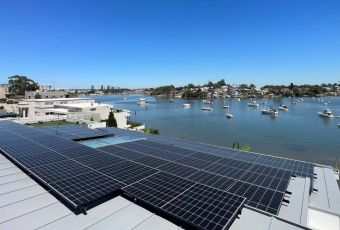
Solar Installations
Professional solar panel installation in Sydney for homes, businesses and strata properties.
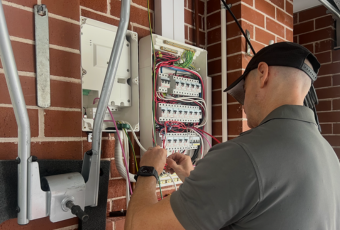
Solar Repairs
Reliable solar repairs in Sydney to fix faults, improve performance and keep your solar system working safely.
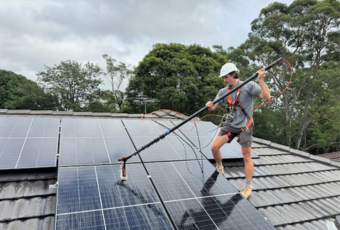
Solar Cleaning
Professional solar panel cleaning in Sydney to help improve efficiency, output and long-term system performance.
Frequently Asked Questions About Solar Battery Rebates in NSW
insert text here
What is the solar battery rebate in NSW in 2026?
The main upfront battery incentive available in NSW is the Australian Government’s Cheaper Home Batteries Program. It provides an upfront discount of around 30% on eligible batteries connected to new or existing solar systems.
NSW households may also be able to access the Home Energy Saver loan, upcoming Home Energy Saver discount and VPP incentive.
Is there a separate NSW battery installation rebate?
The previous general NSW battery installation incentive is no longer available for new installations.
The main battery installation discount is now provided through the federal Cheaper Home Batteries Program. NSW continues to offer other forms of support, including the VPP incentive and Home Energy Saver program.
Did the battery rebate end on 1 May 2026?
No. The federal battery rebate did not end on 1 May 2026.
The STC factor and calculation structure changed from that date, with progressively lower support applying to usable battery capacity above 14 kWh and 28 kWh.
How much is the solar battery rebate in NSW?
There is no fixed dollar rebate for every installation.
The value depends on the battery’s eligible usable capacity, installation date, applicable STC factor, certificate value and whether all equipment and installation requirements are met.
Is the battery rebate really 30%?
The Australian Government describes the Cheaper Home Batteries Program as providing a discount of around 30% on eligible battery systems.
The actual dollar discount will vary between systems and installation dates.
What size battery gets the best rebate in 2026?
The first 14 kWh of usable battery capacity receives the strongest STC factor under the current tiered structure.
However, this does not necessarily mean that 14 kWh is the best battery size for every home. Battery sizing should be based on solar generation, electricity use, backup requirements and future energy plans.
Is a 13.5 kWh or 14 kWh battery a good size?
It can be suitable for many households, but the right size depends on how much electricity the home uses and how much surplus solar is available to charge the battery.
MPV Solar can assess your actual energy profile before recommending a battery size.
Which battery sizes are eligible for the federal discount?
Eligible systems generally need to have a nominal capacity between 5 kWh and 100 kWh.
STC support is available for up to the first 50 kWh of eligible usable battery capacity.
Can I receive the rebate if I already have solar panels?
Potentially, yes.
An eligible battery can be connected to an existing solar PV system, provided the property, battery and installation meet the program requirements.
Can I get the rebate without solar panels?
The eligible battery needs to be connected to a new or existing solar PV system.
If you do not already have rooftop solar, MPV Solar can design a combined solar and battery solution.
Can I claim another battery rebate if I expand the system later?
Generally, only one battery STC claim can be made at an address.
If a battery has already received STCs, a later expansion, replacement or upgrade will generally not qualify for another claim. This makes future planning important when choosing the initial battery system.
Can I use the NSW $15,000 loan for a home battery?
Eligible NSW property owners may be able to use the Home Energy Saver zero-interest loan for a residential battery.
Applicants must meet the household income, ownership, residency, product and finance-provider requirements.
Can I use the $15,000 loan for solar and a battery together?
Potentially, yes. Rooftop solar and residential batteries are both eligible upgrade categories under the Home Energy Saver program.
Can the Home Energy Saver loan cover a switchboard upgrade?
Yes. Eligible switchboard upgrades are included in the Home Energy Saver program.
This may be useful for an older home preparing for solar, a battery, EV charging or broader electrification.
Can the Home Energy Saver loan cover an EV charger?
Eligible Level 2 EV chargers are included in the Home Energy Saver program.
Applicants must still meet the loan and product eligibility requirements.
When does the $4,000 NSW Home Energy Saver discount open?
Applications are coming soon, but the NSW Government has not yet published an opening date.
Households should check the current program information before making decisions based on the discount.
Who will qualify for the $4,000 discount?
The discount is intended for eligible homeowners and tenants with a combined annual household income of up to $80,000 or an eligible concession card.
Final product and application guidelines will be available when the program opens.
Can I combine the $4,000 discount and $15,000 loan?
Potentially, yes. The NSW Government recommends that eligible households wanting to use both toward the same purchase wait and apply for the discount first. The loan may then be used for eligible remaining costs, subject to approval.
Can I combine the federal rebate and NSW VPP incentive?
Yes, eligible households can combine the federal Cheaper Home Batteries Program discount with the NSW VPP incentive.
The battery and VPP arrangement must meet the requirements of both programs.
Do I have to join a VPP to get the federal battery rebate?
No. Joining a Virtual Power Plant is not generally required to receive the federal battery discount.
The NSW VPP incentive is separate and optional.
Which batteries qualify for the NSW VPP incentive?
Eligible batteries with capacity greater than 2 kWh and up to 50 kWh can qualify.
The incentive amount is based on usable battery capacity up to 28 kWh.
Can I add a battery to my existing solar system?
In many cases, yes.
The existing panels, inverter, solar generation and switchboard should be assessed to determine the best battery configuration.
Will I need a new inverter?
Not always. Some batteries can be installed using an AC-coupled configuration, while other homes may benefit from a hybrid inverter or broader system upgrade.
Should I install more solar before adding a battery?
You may need additional solar if the existing system does not generate enough surplus electricity to regularly charge the proposed battery.
MPV Solar can review your solar production and household usage before recommending a solution.
Can my battery power the home during a blackout?
Some battery systems can provide blackout backup when appropriately configured.
Backup capability depends on the battery, inverter, gateway, protected circuits and installation design.
Can I charge my EV using a home battery?
Yes, but it may not always be the most economical option.
Direct charging from surplus daytime solar may provide better value in some homes. The right approach depends on solar generation, battery capacity and EV charging patterns.
Is a solar battery worth it in Sydney?
It may be worthwhile if your home exports surplus solar during the day and purchases significant grid electricity during evenings or peak periods.
The answer depends on electricity use, tariffs, solar generation, battery costs, incentives and how long you plan to remain in the property.
How do I choose the right solar battery?
Consider:
- Usable battery capacity
- Solar generation
- Evening electricity use
- Inverter compatibility
- Backup requirements
- Warranty
- Installation quality
- EV plans
- VPP participation
- Local aftercare
MPV Solar can assess these factors and recommend a battery system designed for your Sydney home.
Blog
Related articles
Catch up on the latest MPV Solar news and insights.



MPV Solar is committed to providing industry-leading solar energy solutions across Sydney, backed by a proven track record of successfully completing over 5,000 projects. As a family-owned business, we prioritise personalised service and truly value our clients, ensuring that each system is tailored to meet your unique energy needs.
Copyright 2026. All Rights Reserved.
Created by Codex Digital and Yakka Consulting
Get in Touch
MPV Solar
Unit 3, 43-51 College St,
Gladesville NSW 2111
info@mpvgroup.com.au
(02) 9817 0333
Monday – Friday
8:30 – 5:00pm